Field Guide · 14 minute read

Every Liyue Visual in Genshin Impact, Mapped to a Real Museum Object

Liyue Harbor wasn't invented from scratch. The karst peaks, the porcelain teacups, the Adepti, the bronze ceremonial cauldrons — every layer of Liyue maps onto a specific Chinese museum tradition. Here is the field guide.

7 visual lineages23 specific objects5 museums on 3 continents

Since 2020, Genshin Impact's Liyue region has been the single most-played introduction to Chinese material culture for non-Chinese audiences. Tens of millions of players who had never heard of the Song dynasty know what a Liyue sky looks like. That sky is borrowed.

miHoYo's art team studied the canon. Liyue's mountains are quoted from 11th-century painted scrolls. Its harbour recreates a specific Northern Song urban scroll. Its god of commerce wears the symbolism of a 3,200-year-old bronze cauldron. Its porcelain dishes are direct descendants of Yuan-Ming Jingdezhen kilns. The references are not subtle once you know what to look for.

This guide walks the seven visual lineages most heavily quoted in Liyue, and for each one points at three or four real objects you can actually visit — in Beijing, Shanghai, Wuhan, New York, Cleveland, or London.

Visual lineage

1. Jueyun Karst — the painted-mountain skyline

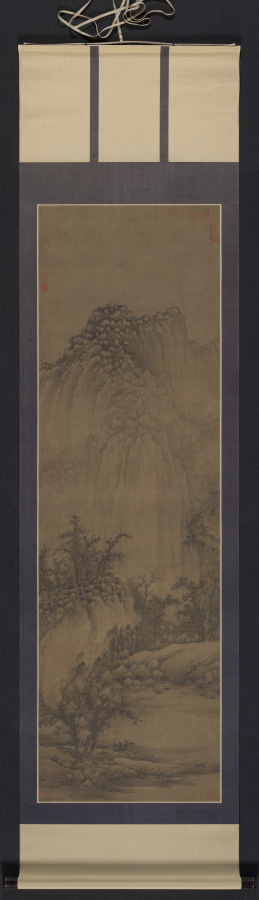
In the game: Liyue's most iconic silhouette — vertical limestone peaks rising out of mist, with a tiny pavilion clinging to a ledge — is not invented. It is a region of southern China called karst country (Guilin, Zhangjiajie, Huangshan), filtered through nine centuries of Chinese landscape painting. miHoYo borrowed both the geology and the way painters had already framed it.

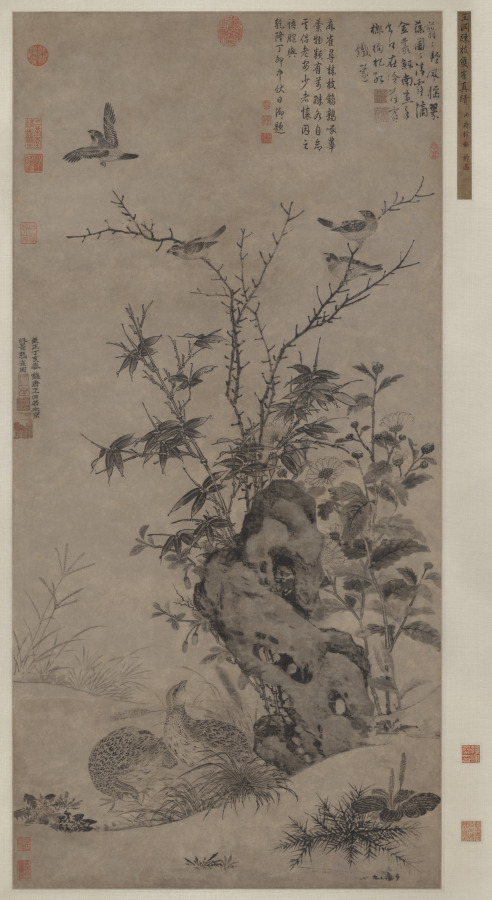
The real root: From the 10th century onward, the dominant Chinese landscape mode was 'high distance' (高远): a vertical hanging-scroll composition with mountains stacked vertically, mist between layers, and a human figure tiny against the rock. Two of the founding scrolls of that mode are not in China — they passed through Japanese collectors and ended up in Cleveland.
Visual lineage

2. Liyue Harbor — Song-dynasty urbanism resurrected

In the game: Liyue Harbor is the most lovingly detailed urban environment in any Chinese game: stone quays, multi-storey wooden buildings, hanging market signs, vendors shouting prices, courier offices. The visual reference is unambiguous — it is Song-dynasty Hangzhou or Quanzhou, the most cosmopolitan harbour cities of the medieval world.

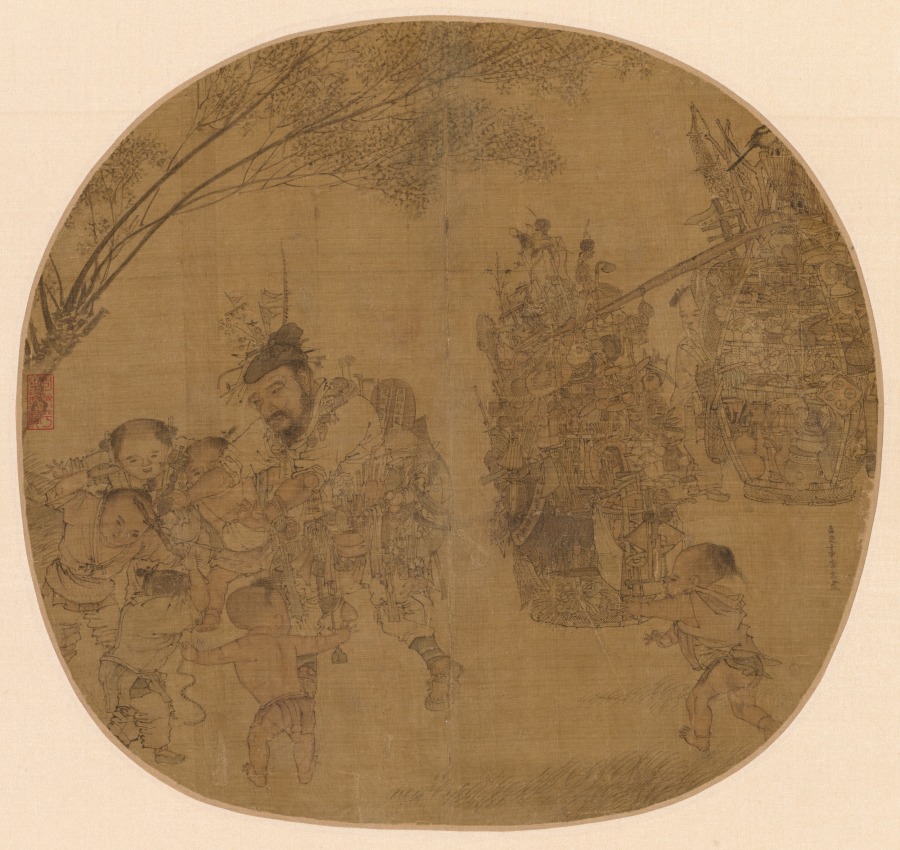
The real root: We know what Song-dynasty urban life looked like because of one painting: Zhang Zeduan's Along the River During the Qingming Festival. It is a five-metre handscroll inventory of Northern Song daily life — every shop sign, every porter's load, every bridge bottleneck. It is also the visual canon every later Chinese reconstruction of historical city life draws from.

Visual lineage

3. Rex Lapis — the Geo Archon and the bronze cauldron

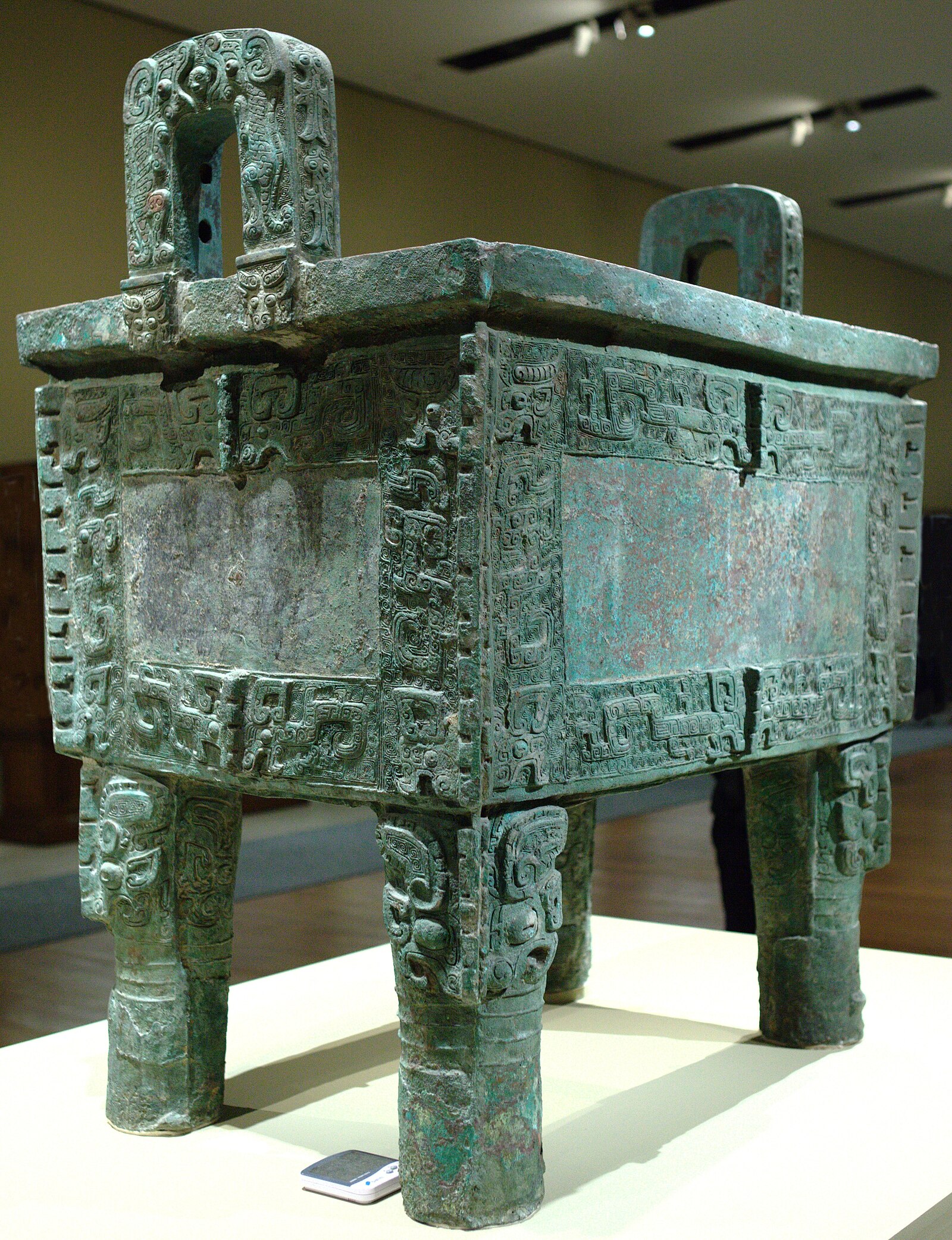
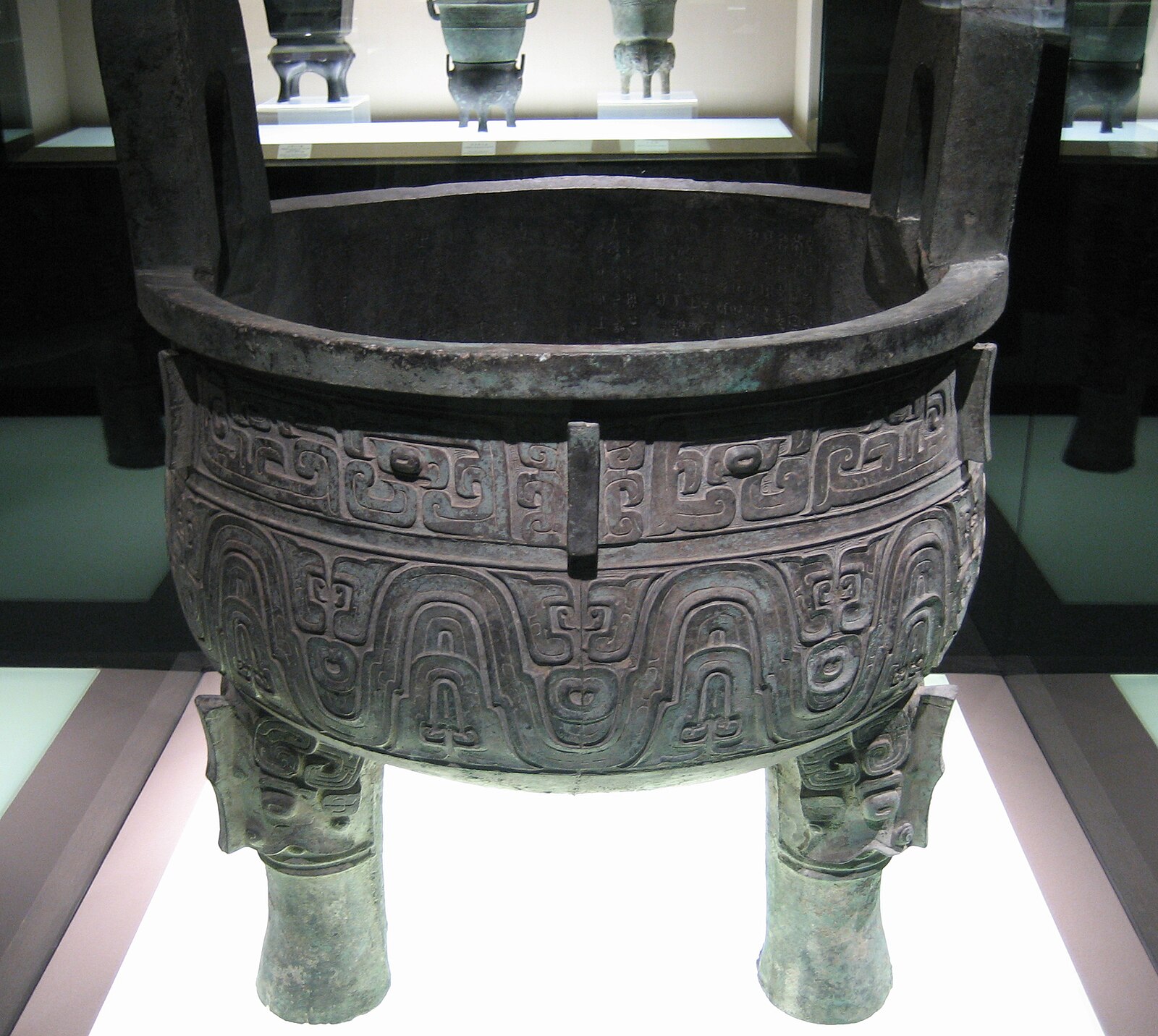
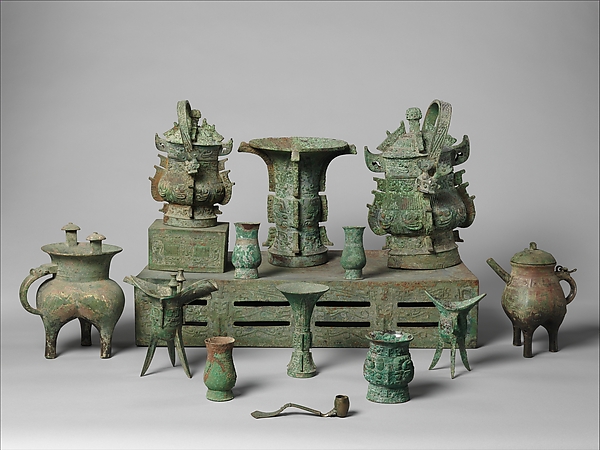
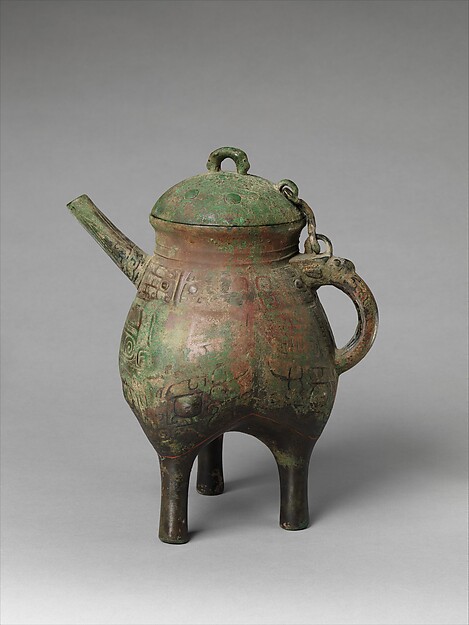
In the game: Rex Lapis (Morax / Zhongli) is Liyue's god of contracts, commerce, and stone. The character's ceremonial visuals — golden geometric ornament, dragon iconography, the recurring three-legged ritual vessel — point at one specific Chinese object: the ding (鼎), a ritual bronze cauldron. In the Geo Archon's quest line the ding is treated as the symbol of governance itself.

The real root: That treatment is not artistic licence. For 2,000 years of Chinese history, the ding was the political symbol of the state. Whoever held the Nine Tripods of the Zhou held the Mandate of Heaven. The phrase “to ask the weight of the tripods” (问鼎) still means “to make a play for power” in modern Chinese.

Visual lineage

4. The Adepti — Tang tomb spirits and Liao luohans

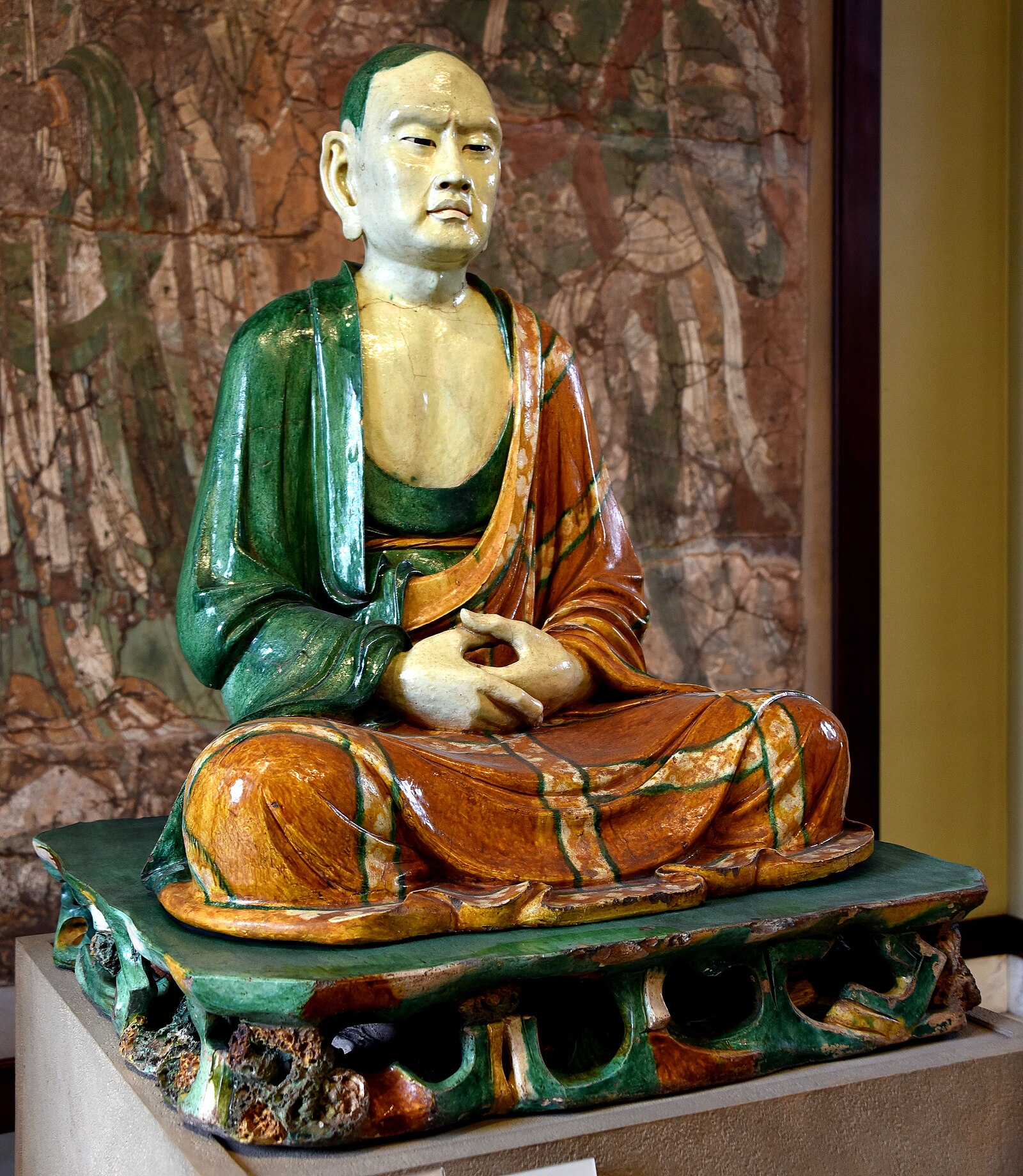
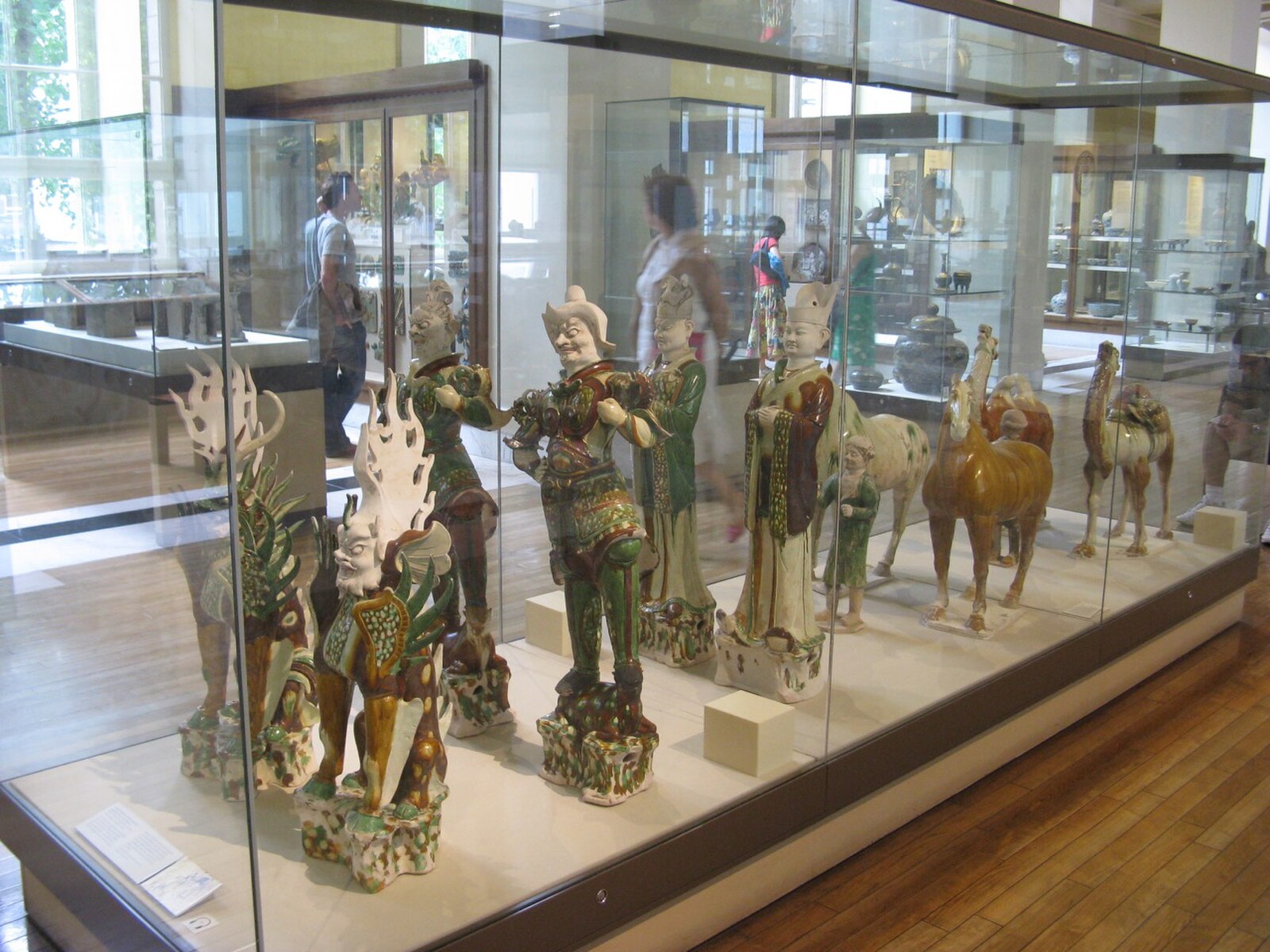
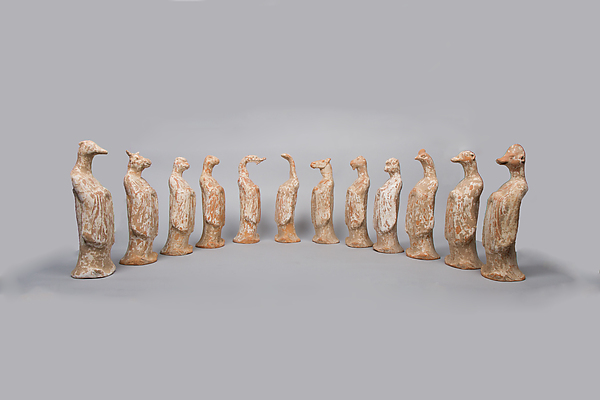
In the game: Liyue's Adepti — Cloud Retainer the crane, Mountain Shaper, Moon Carver, Madame Ping — are immortal beings part-human, part-animal, drawn into vows that bind them to the land. They are visualised somewhere between Tang tomb guardians and Buddhist arhats: too dignified to be cartoons, too uncanny to be human.

The real root: That register has a real pedigree. Tang aristocrats were buried with sancai-glazed earth-spirit guardians, half-human half-beast. Liao monasteries built life-size ceramic luohans (arhats) with portrait-realistic faces. Both traditions push past human likeness toward something hieratic and supernatural. Genshin's Adepti are the spiritual descendants.

Visual lineage

5. Liyue costumes — silk, jade, and a Qing court portrait

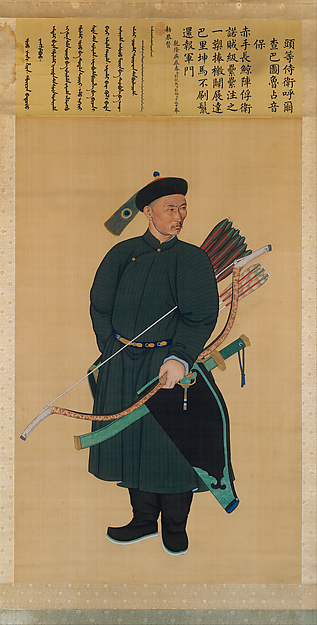
In the game: Beidou's pirate captain coat, Yun Jin's Peking opera robes, Hu Tao's mortuary fortune-teller hat, Zhongli's scholar suit — Genshin Liyue did not just borrow 'East Asian fantasy' clothes. Each costume points at a specific Chinese sartorial tradition. The historical reference points span from Han jade ornaments to Qing court regalia.

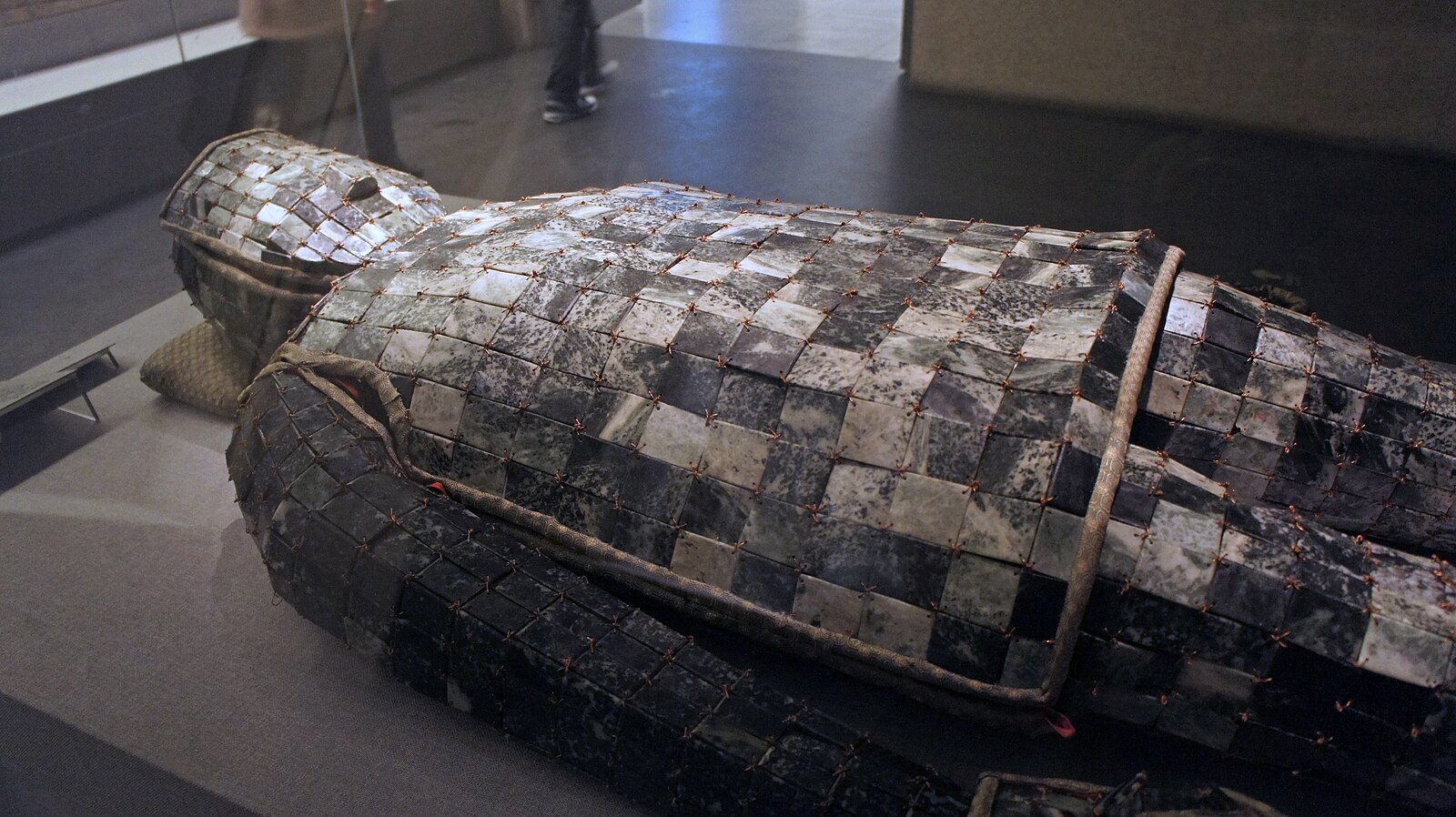
The real root: Chinese costume history has the longest unbroken record of any global tradition: jade pendants from 5,000-year-old burials, Tang silk from desert tombs, Qing court portraits in full regalia. The most rewarding way into Liyue's wardrobe is through the specific museum objects that taught the artists what each layer should look like.

Visual lineage

6. Tea, wine, and the porcelain that built a global empire

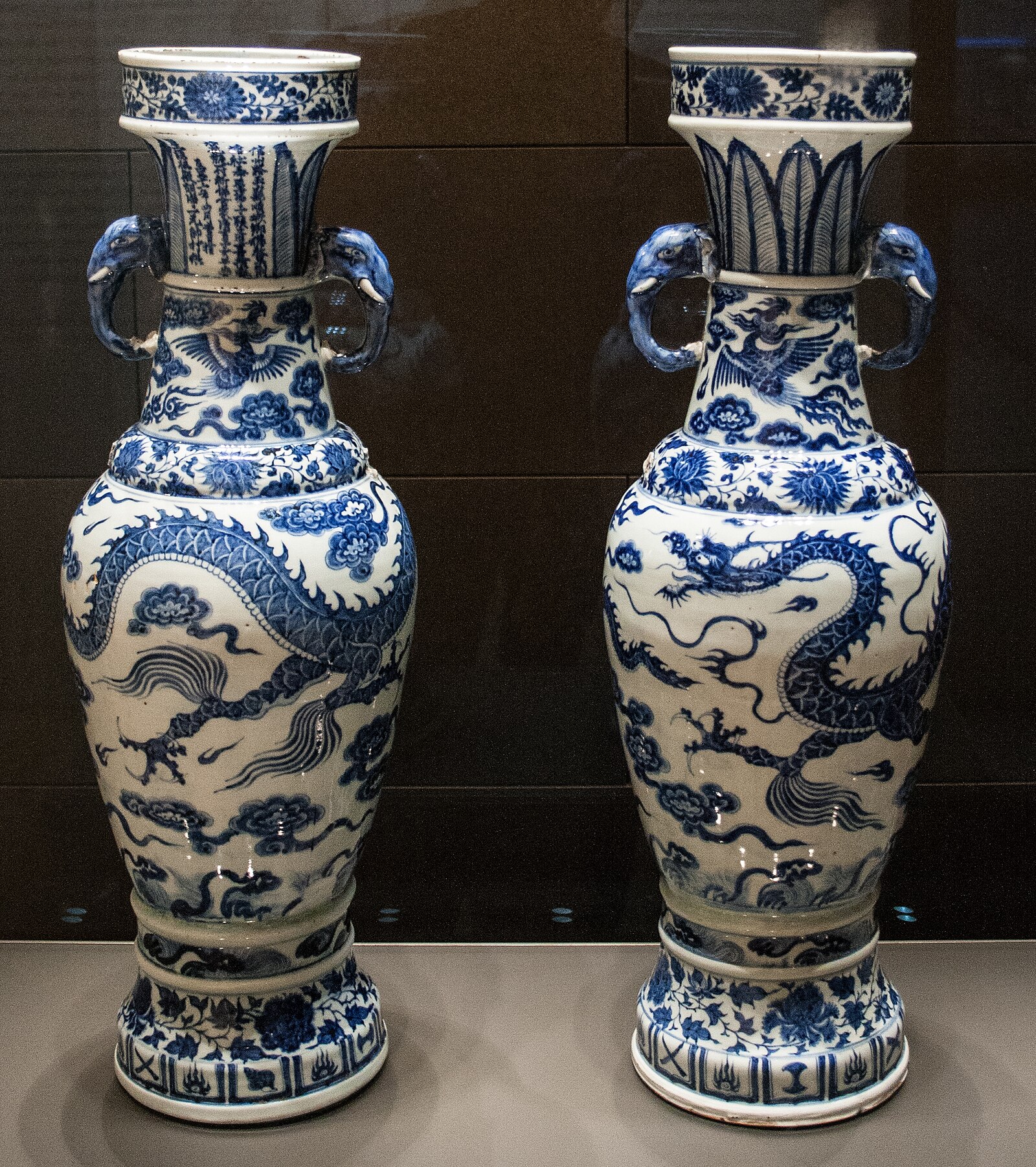
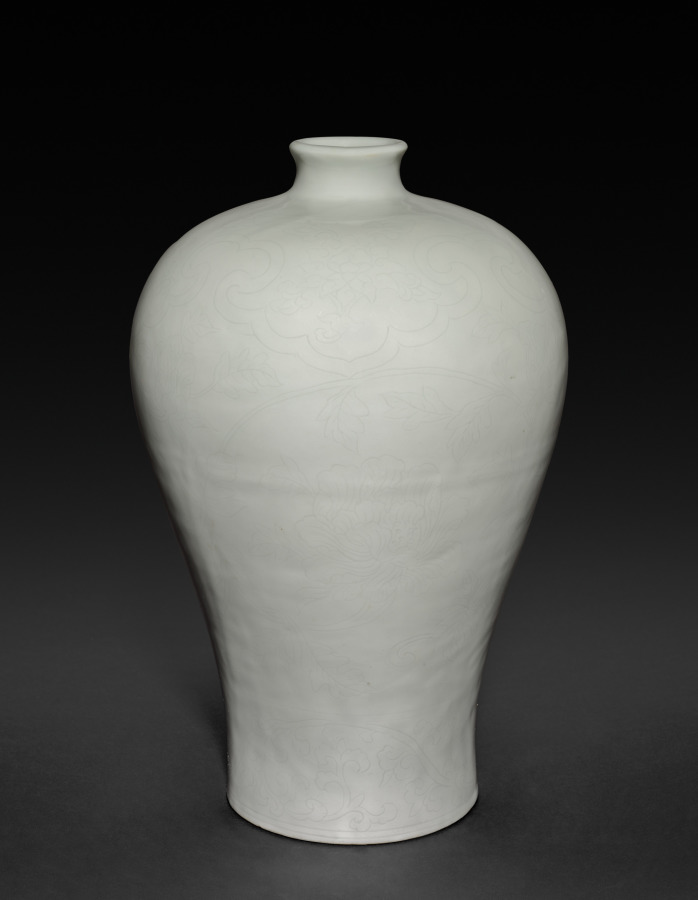
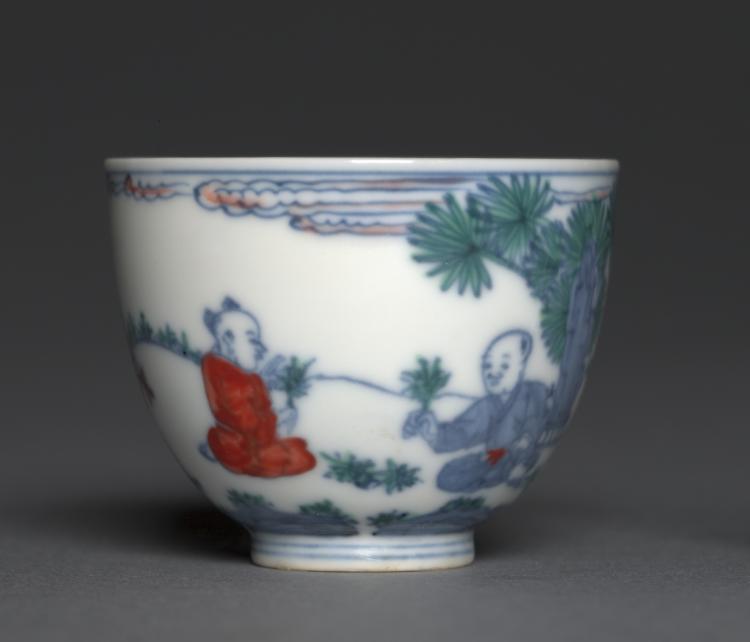
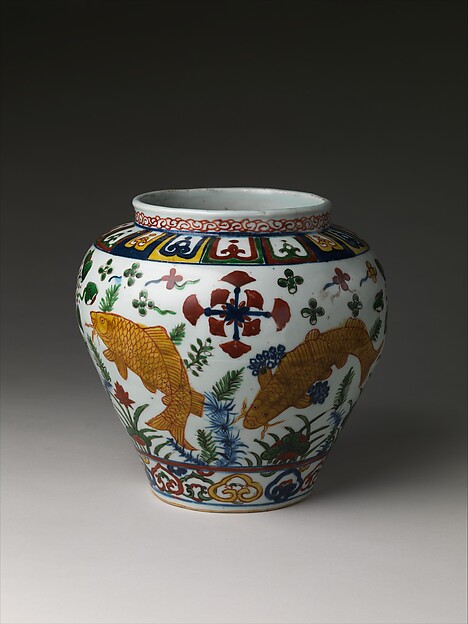
In the game: Walk into a Liyue restaurant and look at the table. The plates, the wine cups, the tea bowls — they speak fluent Yuan-Ming Jingdezhen. Cobalt-blue dragon scrolls; pale tianbai monochromes; tiny doucai cups painted with children at play. miHoYo did its homework, and the homework is shelved in the ceramic galleries of the world's great museums.

The real root: From the early 14th century, the Jingdezhen kilns turned underglaze cobalt and overglaze enamel into the most prestigious commodity on the planet. Yuan blue-and-white re-routed Eurasian trade. Yongle tianbai redefined what 'imperial' meant. Chenghua doucai sets auction records that make headlines. Each is a complete decorative-arts world Liyue can reach into.

Visual lineage

7. Weapons & wonders — bronze, jade, and the Silk Road

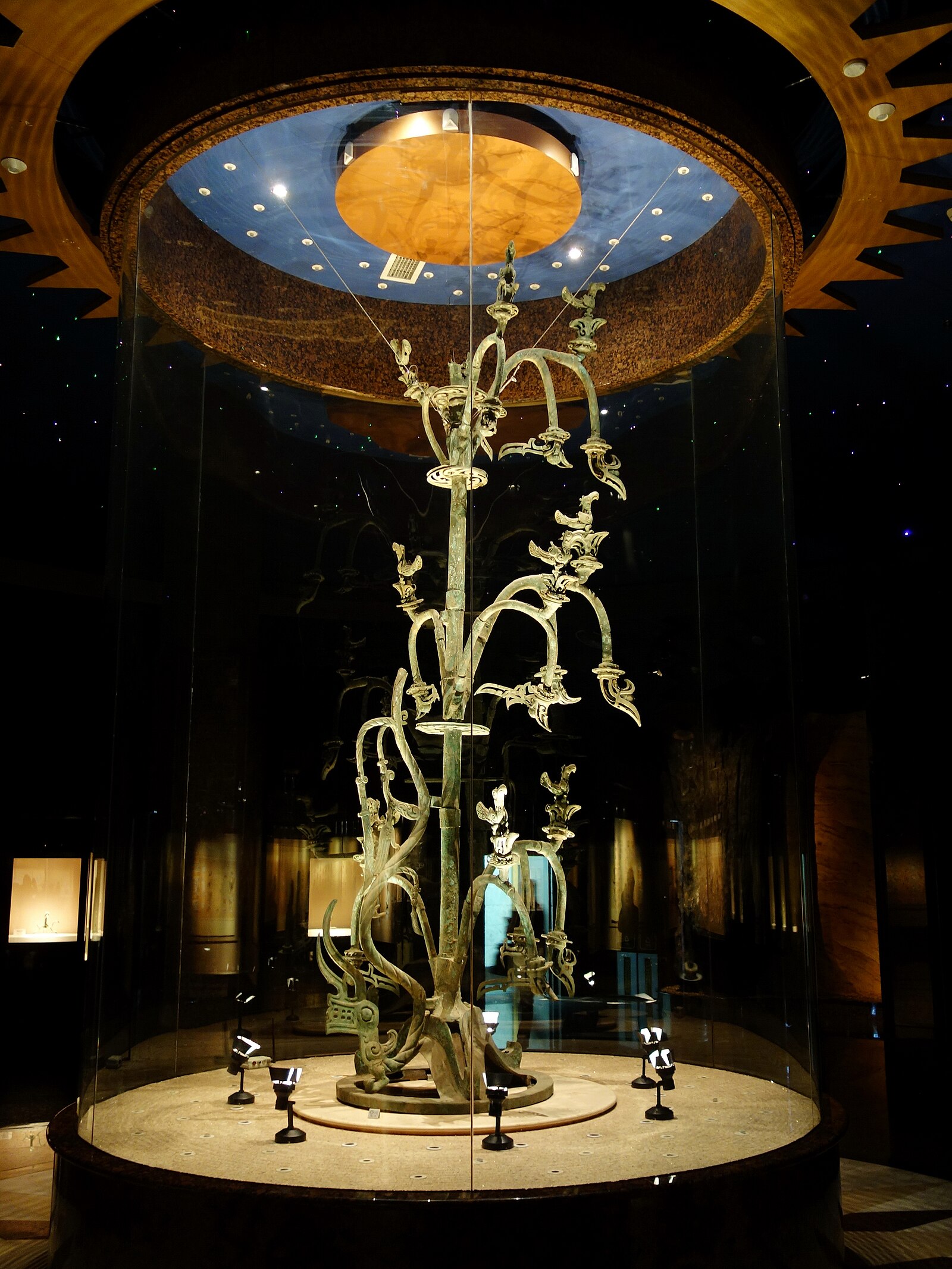
In the game: Liyue's weapon visuals are eclectic on purpose: Zhongli's polearm carries dragon ornament; Beidou's claymore wears Ming-style fittings; the jade and bronze trinket items scattered across the world reference everything from Warring States ritual to Tang Silk Road luxury. The unifying thread is craft: every weapon and every collectible says this is something Chinese craftsmen had already mastered 2,500 years ago.

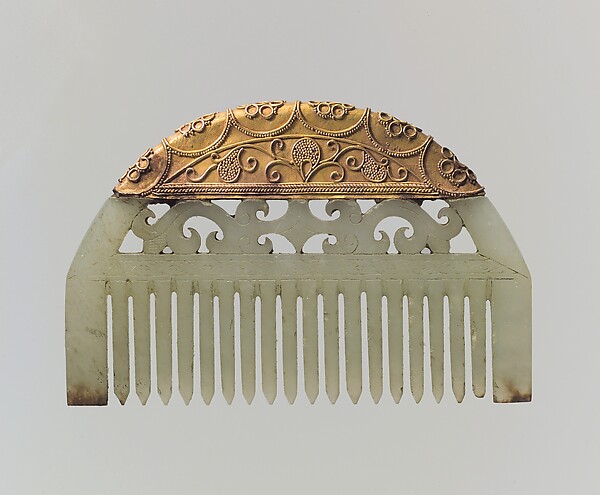
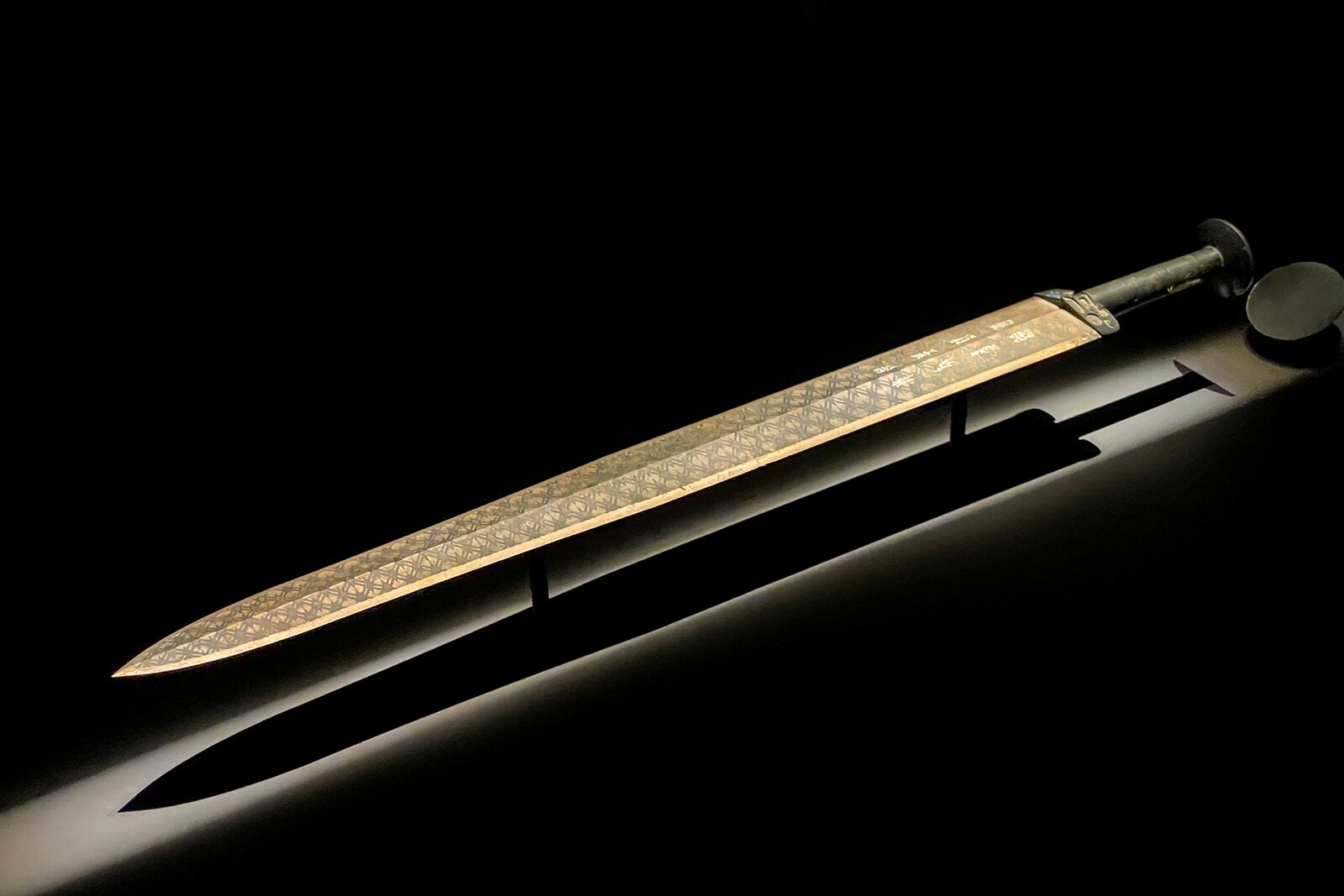
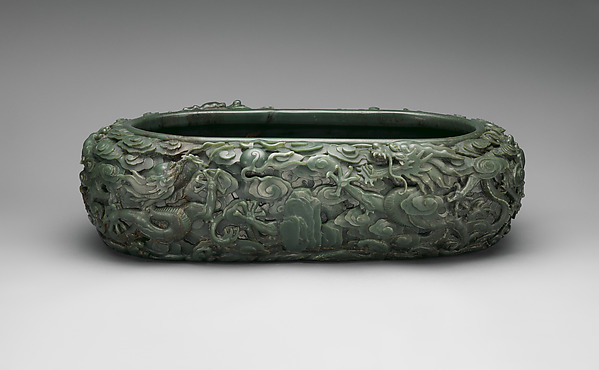
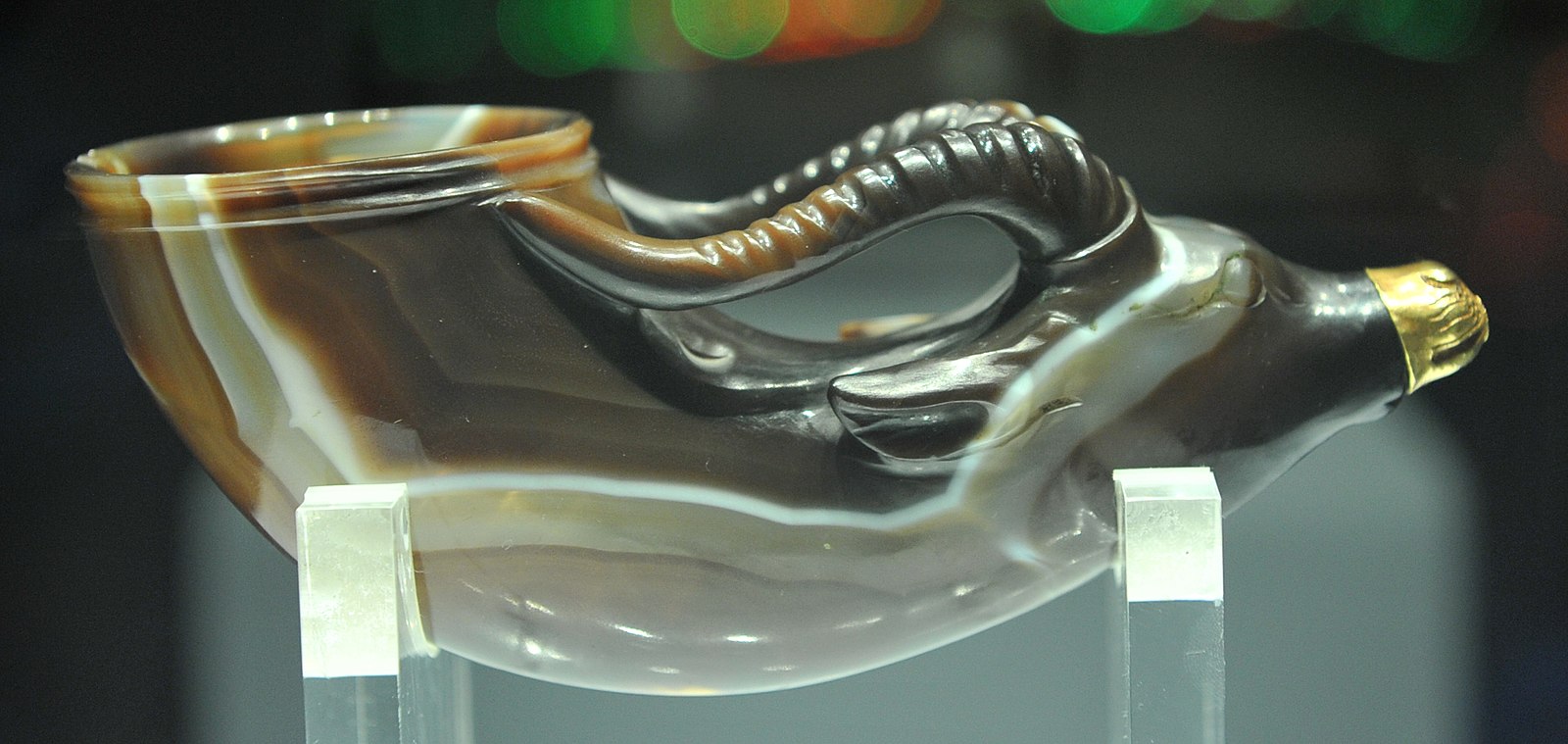
The real root: The Sword of Goujian (Warring States) survived 2,500 years buried in a swamp without rusting — partly because of a chromium-oxide coating Chinese metallurgists had figured out two millennia before the West. Tang craftsmen welded jade onto granulated gold using techniques borrowed from the Hellenistic world. Qing jade carvers turned 90-kilo nephrite boulders into imperial basins. Liyue's collectibles compress all of this into pickup loot.

Already a Liyue scholar? Try the next field guide.

We do this for the games and shows that take Chinese material culture seriously. Two more after this one:

  • Black Myth: Wukong, museum-by-museum. Yungang Buddhas, Sanxingdui masks, Shang ritual bronzes, Cleveland landscape scrolls — the original AAA Chinese game decoded one boss at a time. Read it →
  • Ne Zha 2 (哪吒之魔童闹海), decoded. Lotus rebirth, the Four Dragon Kings, the Sky-Ribbon — every symbol in 2025's biggest animated film mapped onto real Tang Buddhas, Ming dragon dishes, and Sanxingdui bronzes. Read it →
  • Empresses in the Palace (甄嬛传), mapped. The dragon robes, jade hairpins, and cobalt tea service behind the most-watched Qing palace drama ever made. Read it →
  • Inspirations index. The full pop-culture cross-reference: every game, film, and C-drama we have mapped against real artifacts. Browse →

For the full inventory of Chinese masterpieces in Western museums, see our Treasures Abroad index.

About this guide

Researched and written by China Heritage. Object photographs and metadata are CC0 / public domain releases from The Met Open Access, Cleveland Open Access, and Wikimedia Commons. Connections drawn between game and artifact are art-historical inferences, not miHoYo statements; see Methodology for our standards. Genshin Impact and Liyue are trademarks of HoYoverse / miHoYo and are used here for descriptive, educational purposes.