Set of Twelve Zodiac Animals
唐十二生肖俑
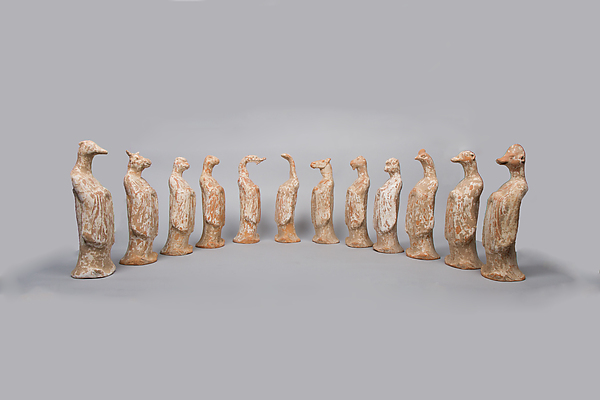
A complete set of the twelve Chinese zodiac animals, each modelled on a human body — rat, ox, tiger, rabbit, dragon, snake, horse, goat, monkey, rooster, dog, pig. They stood guard in the four directions around a Tang tomb.
Object Facts
- Period
- Tang dynasty (618–907)
- Date
- 8th century
- Medium
- Earthenware with white slip
- Dimensions
- Each approx. H. 30.5 cm
- Held by
- The Metropolitan Museum of Art
New York, USA - Accession
- 2000.662.7a–l
Gift of Charlotte C. Weber, 2000
Why it matters
The twelve-zodiac system itself is ancient, but this astonishing idea — fusing each creature onto a courtier's body — is pure Tang iconographic invention and the direct ancestor of every twelve-zodiac artwork since.
How it travelled
Acquired by the American collector Charlotte C. Weber and gifted to the Met in 2000. Full surviving sets are exceedingly rare; this one probably came from a single undisturbed tomb excavated in mid-20th-century Henan or Shaanxi.
Frequently asked questions
Where can I see Set of Twelve Zodiac Animals?+
Set of Twelve Zodiac Animals is held by the The Metropolitan Museum of Art in New York, USA. Accession number 2000.662.7a–l. Online catalogue record: https://www.metmuseum.org/art/collection/search/49381.
When was Set of Twelve Zodiac Animals created?+
Set of Twelve Zodiac Animals dates to 8th century, during the Tang dynasty (618–907).
What is Set of Twelve Zodiac Animals made of?+
Set of Twelve Zodiac Animals is a tomb figures executed in earthenware with white slip, measuring Each approx. H. 30.5 cm.
How did Set of Twelve Zodiac Animals end up at the The Met?+
Acquired by the American collector Charlotte C. Weber and gifted to the Met in 2000. Full surviving sets are exceedingly rare; this one probably came from a single undisturbed tomb excavated in mid-20th-century Henan or Shaanxi.
Can I reuse the photograph of Set of Twelve Zodiac Animals?+
Yes. The The Met has released the image under Creative Commons Zero (CC0), so it is free for any use, commercial or non-commercial, with no attribution required (though attribution is appreciated).
More Chinese pieces at The Met
Other Chinese works in the The Metropolitan Museum of Art collection.
Tang dynasty · Paintings
Night-Shining White
照夜白图
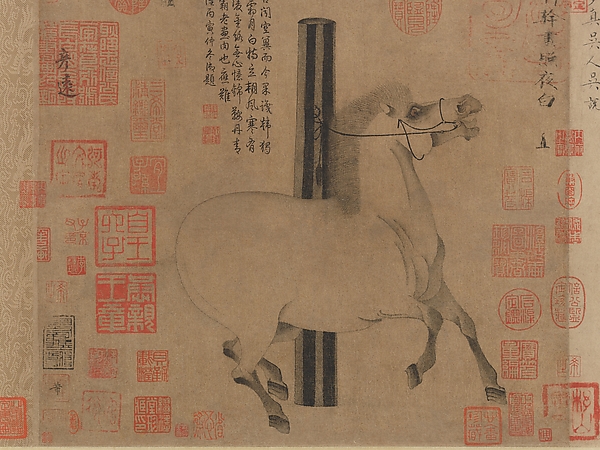
The single most celebrated painting of a horse in Chinese art. Han Gan's ink drawing of Emperor Xuanzong's favourite charger, 'Night-Shining White', has been treasured by collectors for over 1,270 years — its scroll is covered end to end in colophons and seals of the emperors, scholars, and dealers through whose hands it passed.
Tang dynasty · Tomb Pottery
Sancai-Glazed Horse
唐三彩马
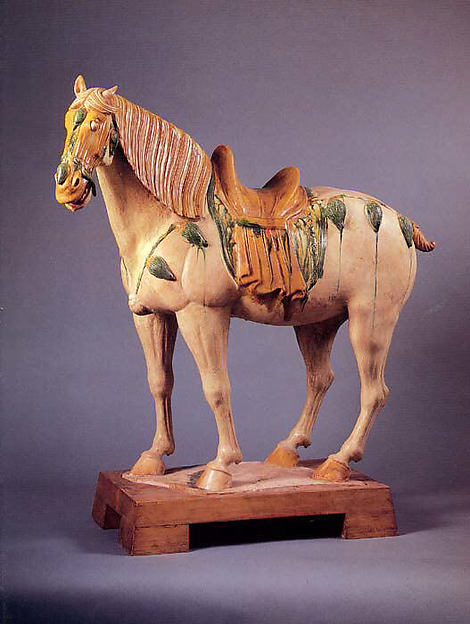
A nearly life-size ceramic horse glazed in the signature amber, green, and cream of Tang sancai ware. Its powerful stance and flared nostrils capture the Ferghana chargers that Tang emperors imported at ruinous expense along the Silk Road.
Northern Wei dynasty · Sculpture
Buddha Maitreya (Mile)
弥勒佛立像
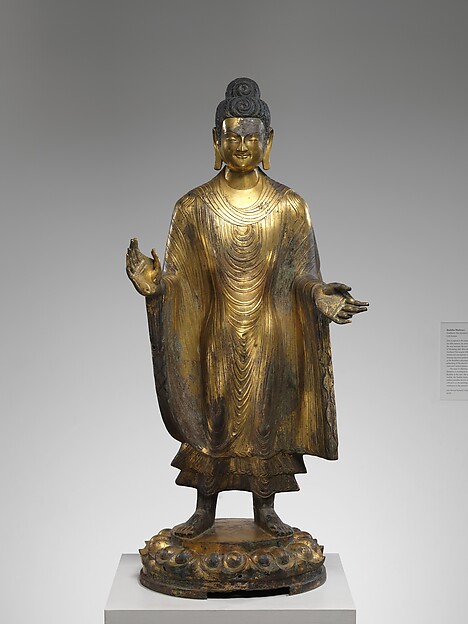
The earliest precisely-dated monumental Chinese Buddhist bronze known to survive anywhere. An inscription on the base tells us it was cast in 486 CE by a nun named Fayi and 66 of her fellow devotees.
From the same era
Other treasures abroad sharing themes or period with this work.
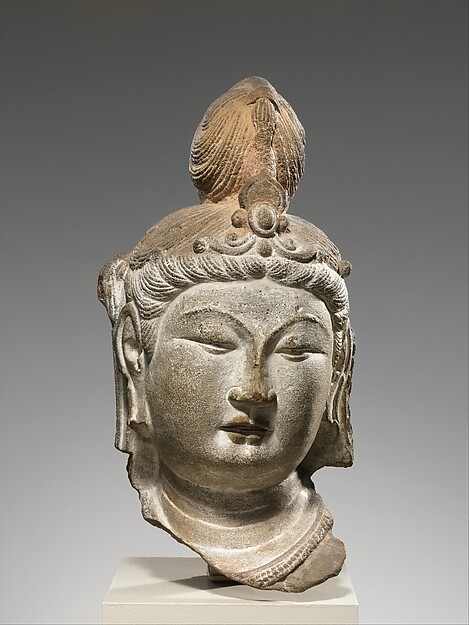
Tang dynasty · Sculpture
Head of a Bodhisattva
菩萨石刻头像
A serene Tang-dynasty bodhisattva head, sliced clean from a once-colossal cave-temple statue. Its softly downcast eyes and jewelled crown represent the mature classical style that spread from Longmen across East Asia.

Original: Eastern Jin · Paintings
Admonitions of the Court Instructress
女史箴图
The earliest surviving Chinese narrative figure painting on silk — illustrations to a 3rd-century Confucian text instructing palace women on proper conduct. The Eastern Jin master Gu Kaizhi is the painter of record; the surviving handscroll is a faithful Tang-dynasty copy.
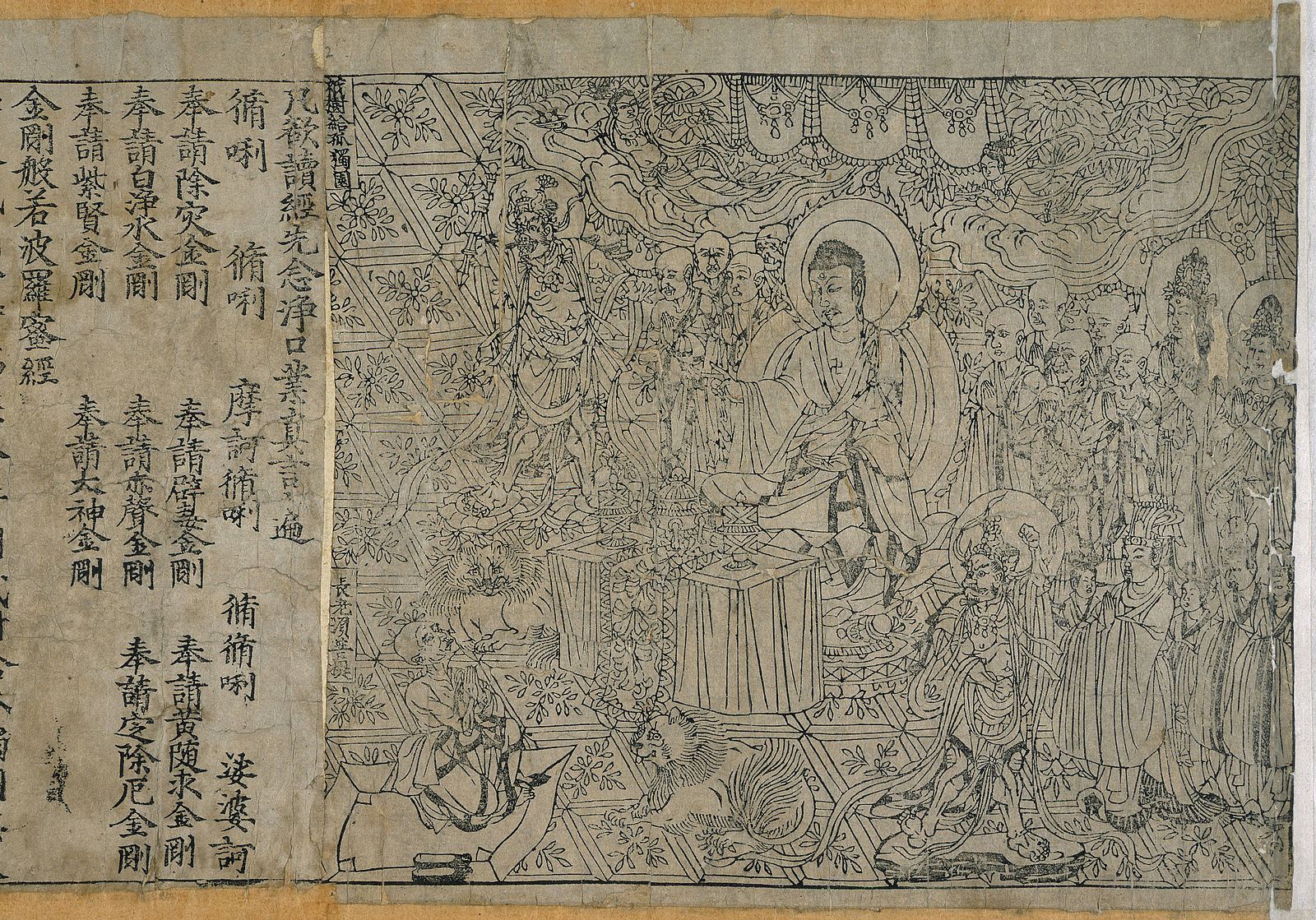
Tang dynasty · Books / Prints
Diamond Sutra (868 CE)
金刚经
The world's earliest complete dated printed book. The colophon names the donor, Wang Jie, and dates the printing to the 13th day of the 4th month, 9th year of the Xiantong reign — 11 May 868 — almost 600 years before Gutenberg.