Bronze Spouted Ritual Water Vessel (He)
西周青铜盉
A spouted ritual He vessel for pouring water in the ceremonies of ancestor worship. The body wears the classic Western Zhou taotie mask, the handle is a coiled dragon, and the lid is finialed with a small bird.
Object Facts
- Period
- Western Zhou dynasty (1046–771 BCE)
- Date
- late 11th century BCE
- Medium
- Bronze, lost-wax cast
- Dimensions
- H. 28.6 cm; W. (handle to spout) 23.5 cm
- Held by
- The Metropolitan Museum of Art
New York, USA - Accession
- 24.72.5a, b
Munsey Fund, 1931
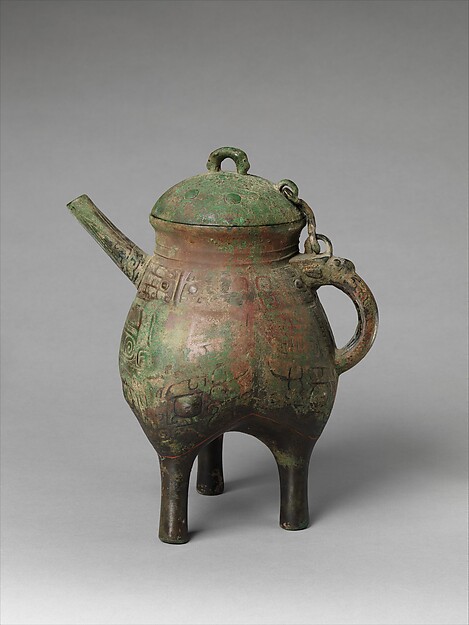
Why it matters
Part of the Met's complete Western Zhou ritual altar set (24.72.1–.14) — a once-in-a-millennium archaeological grouping. Without the He, the choreography of the ritual would be incomplete: it is the vessel that mediates between the food and wine vessels in the offering sequence.
How it travelled
Reportedly excavated at Baoji, Shaanxi in the early 20th century. Sold by the Paris-based dealer C. T. Loo and acquired by the Met as part of the altar group in 1931, supported by the Munsey Fund.
Frequently asked questions
Where can I see Bronze Spouted Ritual Water Vessel (He)?+
Bronze Spouted Ritual Water Vessel (He) is held by the The Metropolitan Museum of Art in New York, USA. Accession number 24.72.5a, b. Online catalogue record: https://www.metmuseum.org/art/collection/search/42168.
When was Bronze Spouted Ritual Water Vessel (He) created?+
Bronze Spouted Ritual Water Vessel (He) dates to late 11th century BCE, during the Western Zhou dynasty (1046–771 BCE).
What is Bronze Spouted Ritual Water Vessel (He) made of?+
Bronze Spouted Ritual Water Vessel (He) is a water vessel executed in bronze, lost-wax cast, measuring H. 28.6 cm; W. (handle to spout) 23.5 cm.
How did Bronze Spouted Ritual Water Vessel (He) end up at the The Met?+
Reportedly excavated at Baoji, Shaanxi in the early 20th century. Sold by the Paris-based dealer C. T. Loo and acquired by the Met as part of the altar group in 1931, supported by the Munsey Fund.
Can I reuse the photograph of Bronze Spouted Ritual Water Vessel (He)?+
Yes. The The Met has released the image under Creative Commons Zero (CC0), so it is free for any use, commercial or non-commercial, with no attribution required (though attribution is appreciated).
More Chinese pieces at The Met
Other Chinese works in the The Metropolitan Museum of Art collection.
Tang dynasty · Paintings
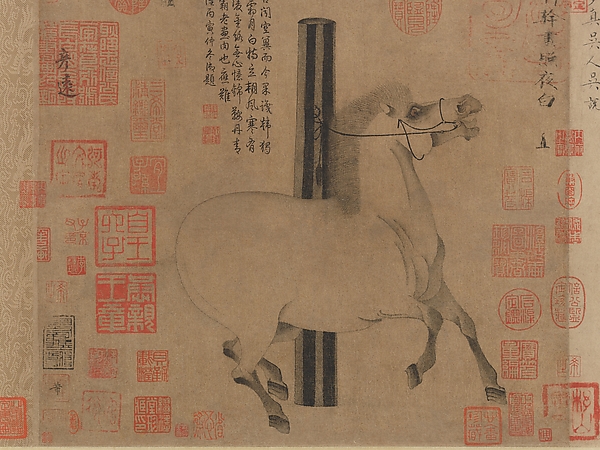
Night-Shining White
照夜白图
The single most celebrated painting of a horse in Chinese art. Han Gan's ink drawing of Emperor Xuanzong's favourite charger, 'Night-Shining White', has been treasured by collectors for over 1,270 years — its scroll is covered end to end in colophons and seals of the emperors, scholars, and dealers through whose hands it passed.
Tang dynasty · Tomb Pottery
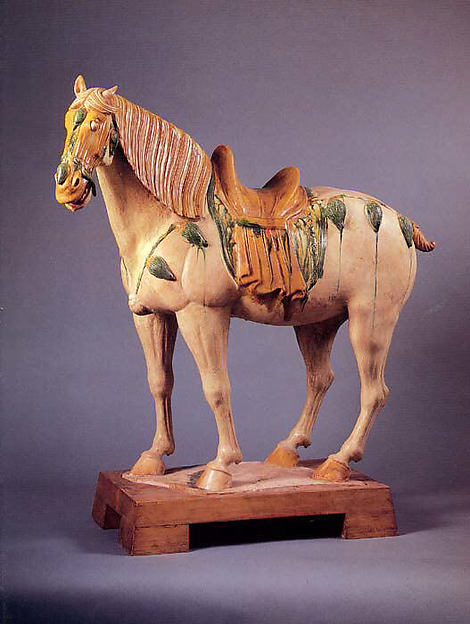
Sancai-Glazed Horse
唐三彩马
A nearly life-size ceramic horse glazed in the signature amber, green, and cream of Tang sancai ware. Its powerful stance and flared nostrils capture the Ferghana chargers that Tang emperors imported at ruinous expense along the Silk Road.
Northern Wei dynasty · Sculpture
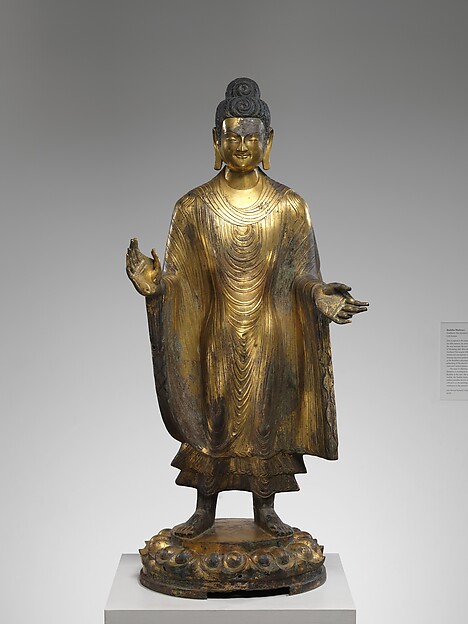
Buddha Maitreya (Mile)
弥勒佛立像
The earliest precisely-dated monumental Chinese Buddhist bronze known to survive anywhere. An inscription on the base tells us it was cast in 486 CE by a nun named Fayi and 66 of her fellow devotees.
From the same era
Other treasures abroad sharing themes or period with this work.
Shang–Western Zhou transition · Metalwork
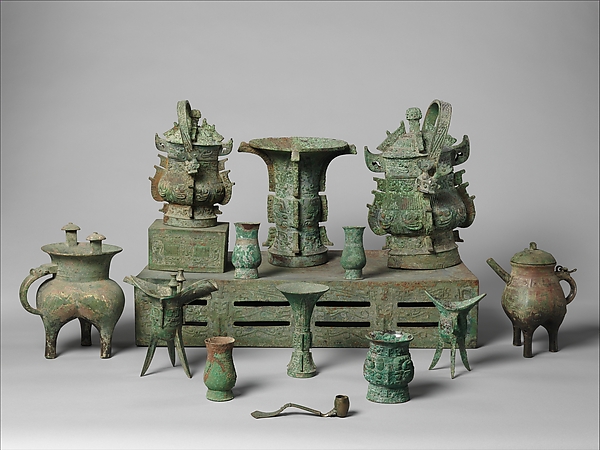
Ritual Altar Set
商周青铜礼器祭祀组
The only complete Western Zhou ritual altar set known outside China: a bronze table plus thirteen wine and food vessels used together in ancestor worship. Together they tell us exactly how a Zhou aristocratic family communicated with their dead.
Late Shang dynasty, Anyang phase · Metalwork
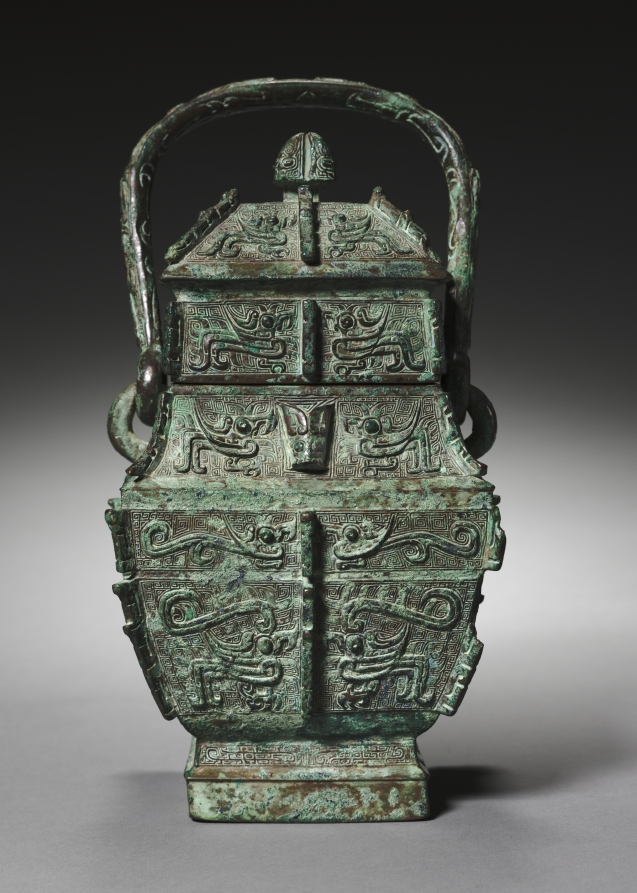
Square Wine Container (Fangyou)
商方卣
A rare squared-section ritual wine container from the late Shang capital at Anyang. The body is wrapped in bands of crested birds (kuifeng) silhouetted against a dense ground of spiral leiwen — and the perfectly squared profile is itself a technical brag, far harder to cast than the standard rounded shape.
Tang dynasty · Tomb Pottery
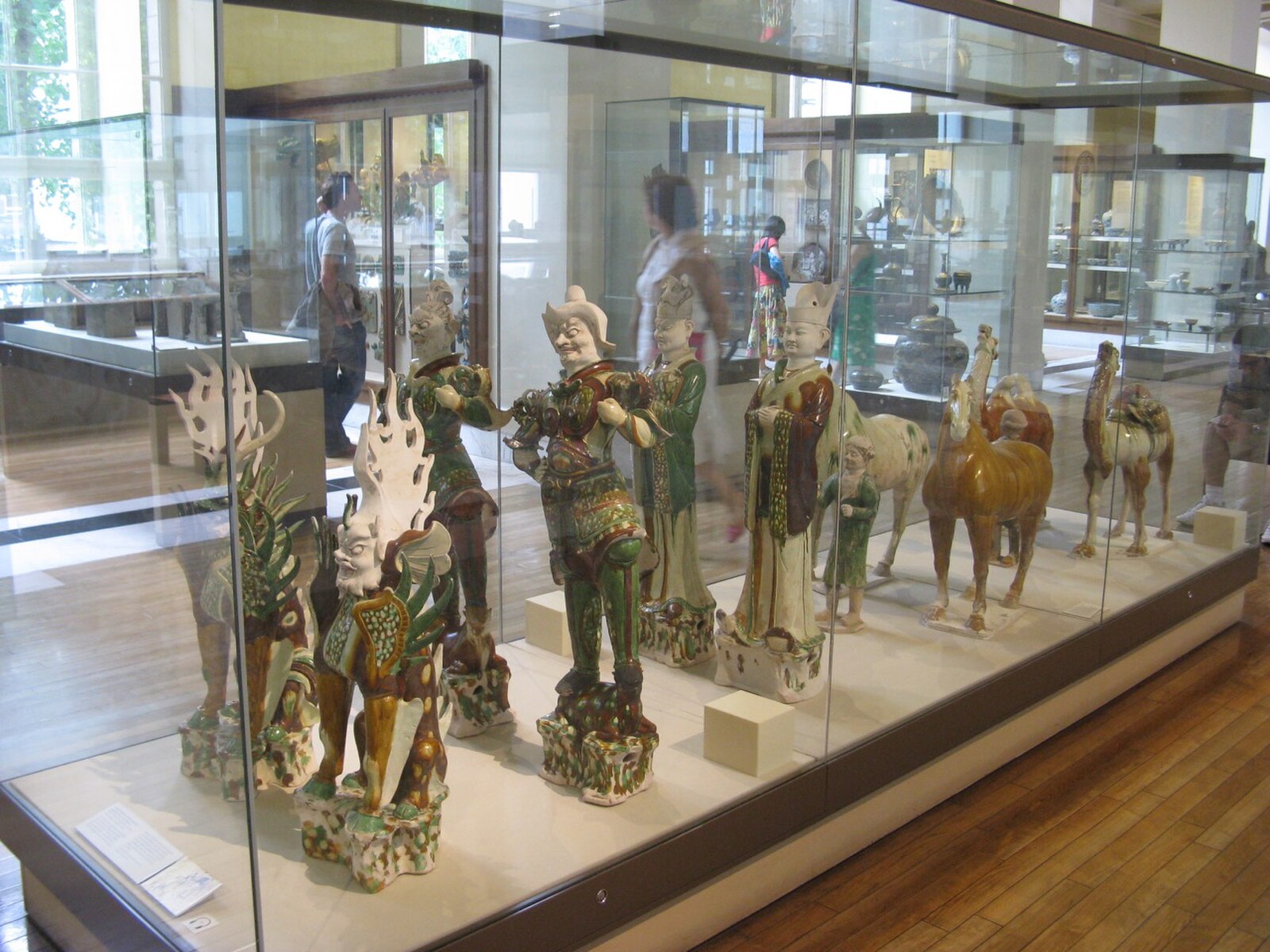
Tomb Figures of General Liu Tingxun
唐刘廷洵墓三彩俑组
A complete tomb assemblage of 13 sancai-glazed figures buried with the Tang general Liu Tingxun in 728 CE: two horses, two camels, two civil officials, two military officials, two earth spirits, two guardian kings, and a single tomb attendant. Together they form the choreography of an idealised afterlife court.