
Cultural Context
Rather than a generic 'East Asian fantasy' pastiche, Liyue draws specifically from Tang and Song dynasty architecture, Shang-Zhou bronze iconography, traditional Chinese mountain landscape painting, and Jingdezhen blue-and-white porcelain. The character designs reference Tang tri-color figurines (唐三彩), jade ornaments, and literati aesthetics. The region's patron deity Rex Lapis (Morax) is explicitly framed around the ding as a symbol of governance. For tens of millions of non-Chinese players, Liyue has become an accidental gateway to Chinese material culture — searches for 'real-life inspiration for Liyue' have been among the most popular Chinese-culture queries on Google since 2020.
Real Artifacts Behind the Work
3 direct connections to Chinese cultural heritage.
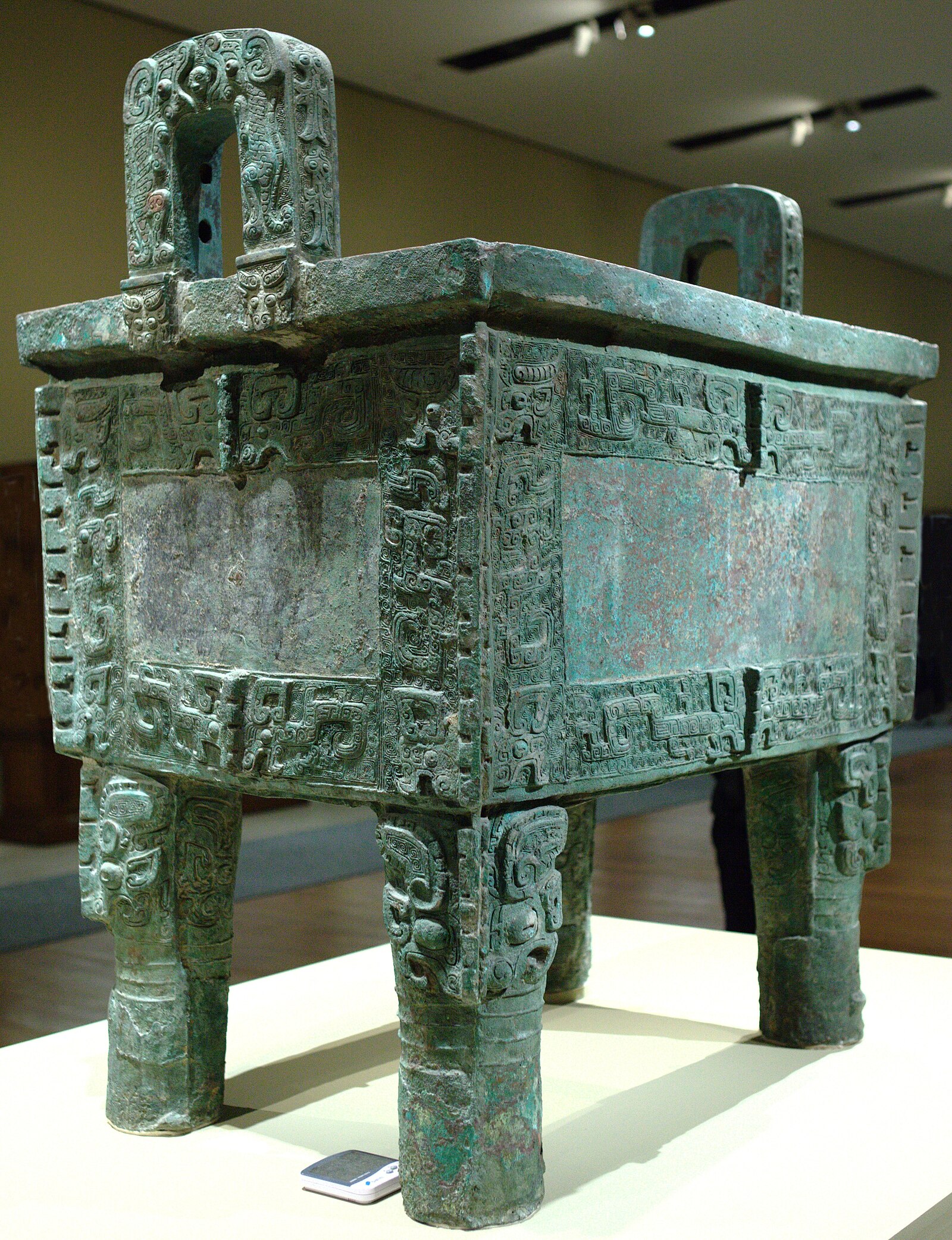
The Connection
Rex Lapis (the Geo Archon) is thematically tied to the ding as the symbol of state authority — a concept inherited directly from the real-world role of vessels like the Simuwu Ding in Shang-Zhou political ritual.
Read the full story →
The Connection
Liyue Harbor's household decor, vendor items, and event rewards are saturated with blue-and-white porcelain patterns descended from Yuan-Ming Jingdezhen traditions.
Read the full story →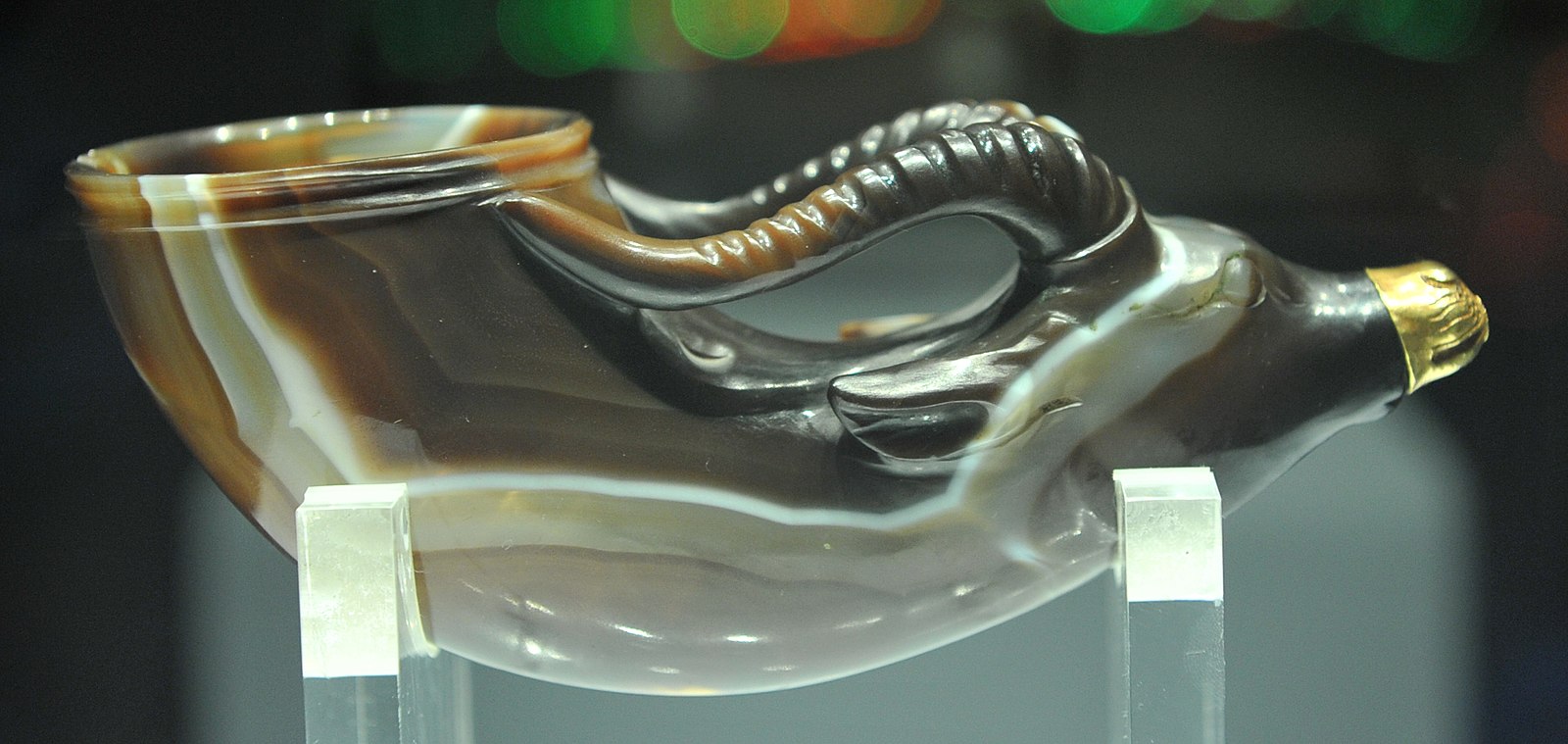
The Connection
Liyue's fusion of Chinese and Central Asian visual motifs echoes real Tang Silk Road artifacts — the beast-head agate rhyton being one of the most iconic surviving examples.
Read the full story →Related Themes

Tang Dynasty Silk Road Treasures
When Chang'an was the most cosmopolitan city on Earth
For three centuries, the Tang capital of Chang'an absorbed Persian silver, Sogdian music, Indian Buddhism, and Byzantine gold — and produced artifacts that fused them all.
1 artifact →
Blue-and-White Porcelain Masterpieces
The ceramic tradition that conquered the world
Cobalt blue on white porcelain became the first truly global luxury good — from Yuan China to Ottoman palaces, Dutch still lifes, and Delft kilns.
1 artifact →

Bronze Dings Through the Ages
The ritual cauldrons that embodied Chinese state power
The ding (鼎) — a three- or four-legged bronze cauldron — was not just a cooking vessel. For 2,000 years, it was the political and spiritual symbol of Chinese civilization itself.
3 artifacts →
Song City Life and Painting
Markets, bridges, scrolls, and the invention of urban China
The Song dynasty made everyday life worthy of monumental art. Its scrolls preserve streets, bridges, shops, boats, workers, and festival crowds with astonishing documentary density.
3 artifacts →
Mythic Animals and Cosmic Order
Dragons, beasts, trees, masks, and the invisible structure of the universe
Chinese art repeatedly turns animals and hybrid beings into maps of the cosmos — from Sanxingdui birds and bronze masks to Shang taotie, jade beasts, and porcelain dragons.
6 artifacts →
Field guide · 14 min read
Want every Liyue visual decoded, harbor to karst?
7 visual lineages — the karst peaks, the Song-dynasty harbour, the bronze cauldron of Rex Lapis, the Adepti, the Ming porcelain — mapped to specific museum objects.
Read the field guide →Frequently asked questions
What real Chinese artifacts inspired Genshin Impact — Liyue?+
Genshin Impact — Liyue draws on multiple real Chinese artifacts and traditions, most notably: Simuwu Ding (Houmuwu Ding), Blue-and-White Porcelain Plum Vase (Xiao He Chases Han Xin), Beast-Head Agate Cup. Each is documented in a Chinese museum and many are visible to the public today. See the connections section above for specific scene-by-scene references.
Where can I see the artifacts that inspired Genshin Impact — Liyue?+
The artifacts referenced by Genshin Impact — Liyue are held by: National Museum of China, Nanjing Museum, Shaanxi History Museum. Most have public galleries with regular visitor hours; a few have travelled to international exhibitions.
Who created Genshin Impact — Liyue?+
Genshin Impact — Liyue was developed by miHoYo / HoYoverse and released in 2020. It is a game produced in China.
Is Genshin Impact — Liyue historically accurate?+
Genshin Impact — Liyue is a creative work, not a documentary. It draws inspiration from real Chinese material culture but adapts and dramatises freely. Our role at China Heritage is to identify which historical references the work is drawing on, with citations to museum primary sources, so curious viewers can separate the historical core from the creative invention.
Where can I learn more about Chinese material culture after Liyue?+
Start with our long-form field guide, "Every Liyue Visual in Genshin Impact, Mapped to a Real Museum Object" — it walks the seven major visual lineages of Liyue (karst landscape painting, Song urban culture, the bronze cauldron, the Adepti, costumes, porcelain, jade) and points at 23 specific objects you can visit.