Simuwu Ding (Houmuwu Ding)
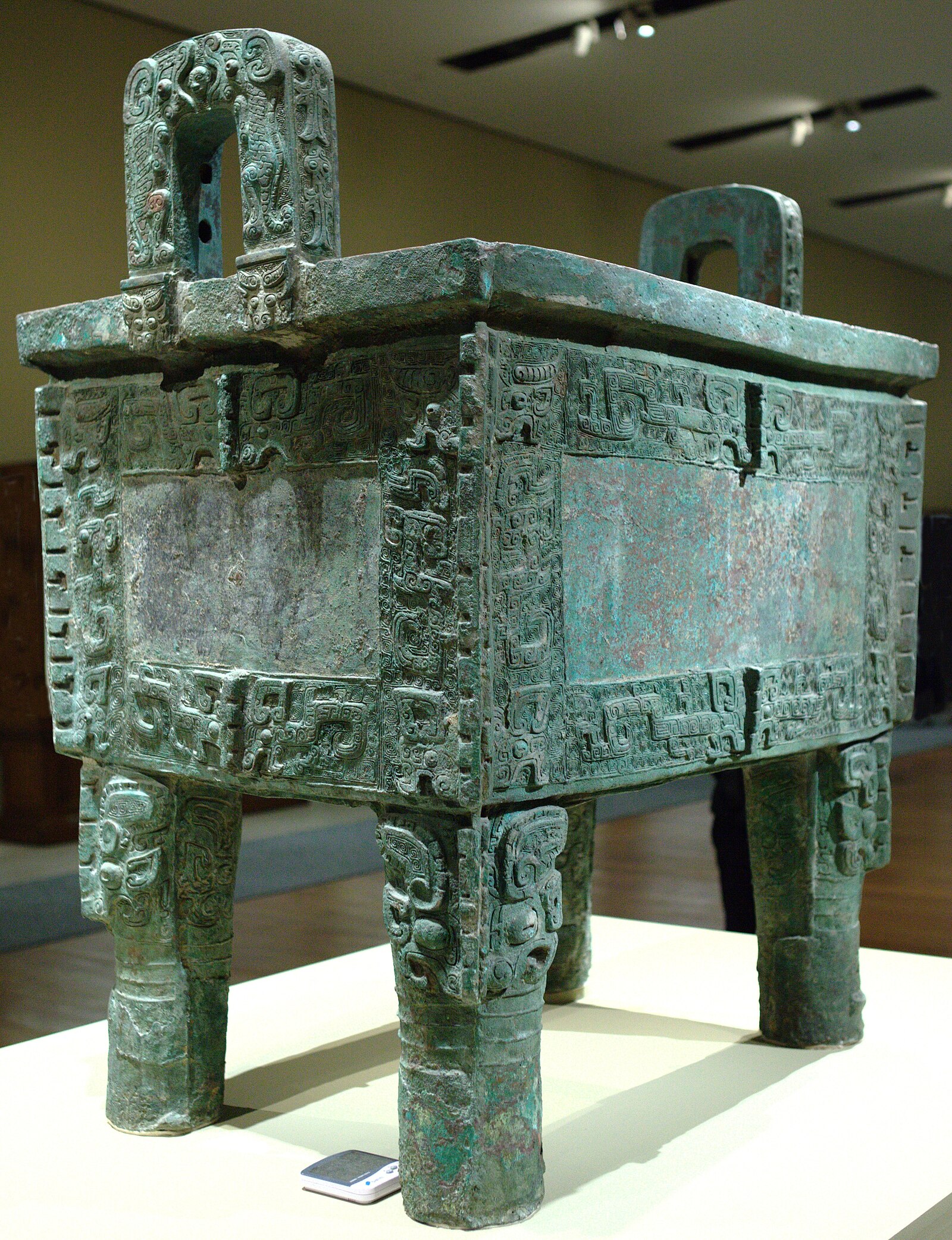
The heaviest piece of bronze work ever found in the ancient world — a monumental ritual vessel weighing 832.84 kg that required the coordinated effort of hundreds of craftsmen.
The Story
This colossal rectangular ding (鼎) was cast as a ritual vessel for royal ancestor worship during the late Shang Dynasty. At 832.84 kg, it remains the heaviest ancient bronze vessel ever discovered anywhere in the world. Creating it required an estimated 1,000 kg of raw materials and the coordinated labor of 200-300 craftsmen working simultaneously. The inscription inside reads 'Si Mu Wu' (later reinterpreted as 'Hou Mu Wu'), believed to reference a queen of the Shang royal house. It was discovered by a farmer in 1939 in Anyang, Henan Province, and locals buried it again to prevent Japanese troops from seizing it during WWII. It was finally recovered in 1946.
Why It Matters
Represents the absolute pinnacle of Bronze Age metallurgy and demonstrates the extraordinary organizational capability of the Shang state.
Frequently Asked Questions
1. What is Simuwu Ding (Houmuwu Ding)?
The heaviest piece of bronze work ever found in the ancient world — a monumental ritual vessel weighing 832.84 kg that required the coordinated effort of hundreds of craftsmen.
2. When was Simuwu Ding (Houmuwu Ding) made?
Simuwu Ding (Houmuwu Ding) dates to c. 1300–1046 BC, during the Late Shang Dynasty.
3. Where can I see Simuwu Ding (Houmuwu Ding)?
Simuwu Ding (Houmuwu Ding) is held by National Museum of China in China. Check the linked collection record or museum website before visiting because display rotations can change.
4. Why is Simuwu Ding (Houmuwu Ding) important?
Represents the absolute pinnacle of Bronze Age metallurgy and demonstrates the extraordinary organizational capability of the Shang state.
5. What is Simuwu Ding (Houmuwu Ding) made of?
Simuwu Ding (Houmuwu Ding) is classified as bronze and made of Bronze.
Fun Facts
It weighs 832.84 kg — heavier than a grand piano
Villagers hid it underground to prevent Japanese looting during WWII
Making it required about 1,000 kg of copper, tin, and lead
The casting process needed 200-300 workers operating simultaneously
Where to See It
Public collections holding this artifact or closely related pieces.
In Popular Culture
Modern games, films, and TV shows that draw on this artifact.
The Connection
Monumental bronze cauldrons with taotie (animal-mask) motifs appear as ritual objects in multiple chapters, clearly modeled after Shang-Zhou dings like the Simuwu Ding.
The Connection
Rex Lapis (the Geo Archon) is thematically tied to the ding as the symbol of state authority — a concept inherited directly from the real-world role of vessels like the Simuwu Ding in Shang-Zhou political ritual.

The Connection
The film's depiction of ancestral and ritual spaces features massive bronze cauldrons with taotie motifs, evoking Shang-Zhou ritual dings like the Simuwu Ding.
The Connection
Shang court rituals in the film prominently feature massive bronze dings modeled directly on the Simuwu Ding and other major Anyang-period vessels.
The Connection
The heavy bronze vessels and temple interiors in the franchise draw from the visual vocabulary of Shang-Zhou ritual bronzes like the Simuwu Ding.
Part of These Themes
Bronze Dings Through the Ages
The ritual cauldrons that embodied Chinese state power
The ding (鼎) — a three- or four-legged bronze cauldron — was not just a cooking vessel. For 2,000 years, it was the political and spiritual symbol of Chinese civilization itself.
3 artifacts →
Imperial Power and Court Life
How objects made authority visible inside the palace
From bronze cauldrons and jade suits to porcelain vases and court paintings, imperial China turned objects into a language of rank, legitimacy, and ritual performance.
5 artifacts →

Warriors, Weapons, and Empire
The material culture of conquest, defense, and military memory
Chinese military heritage is not only swords and soldiers. It includes bronze technology, mass production, tomb armies, court ritual, and the stories later dynasties told about heroic violence.
5 artifacts →
Mythic Animals and Cosmic Order
Dragons, beasts, trees, masks, and the invisible structure of the universe
Chinese art repeatedly turns animals and hybrid beings into maps of the cosmos — from Sanxingdui birds and bronze masks to Shang taotie, jade beasts, and porcelain dragons.
6 artifacts →

Oracle Bones & Shang Writing
The Oldest Chinese Sentences We Can Still Read
Oracle bones from Yinxu preserve the earliest large body of Chinese writing — royal questions burned into turtle shells and ox bones more than 3,000 years ago.
3 artifacts →
Related Artifacts
Bronze / Musical Instrument
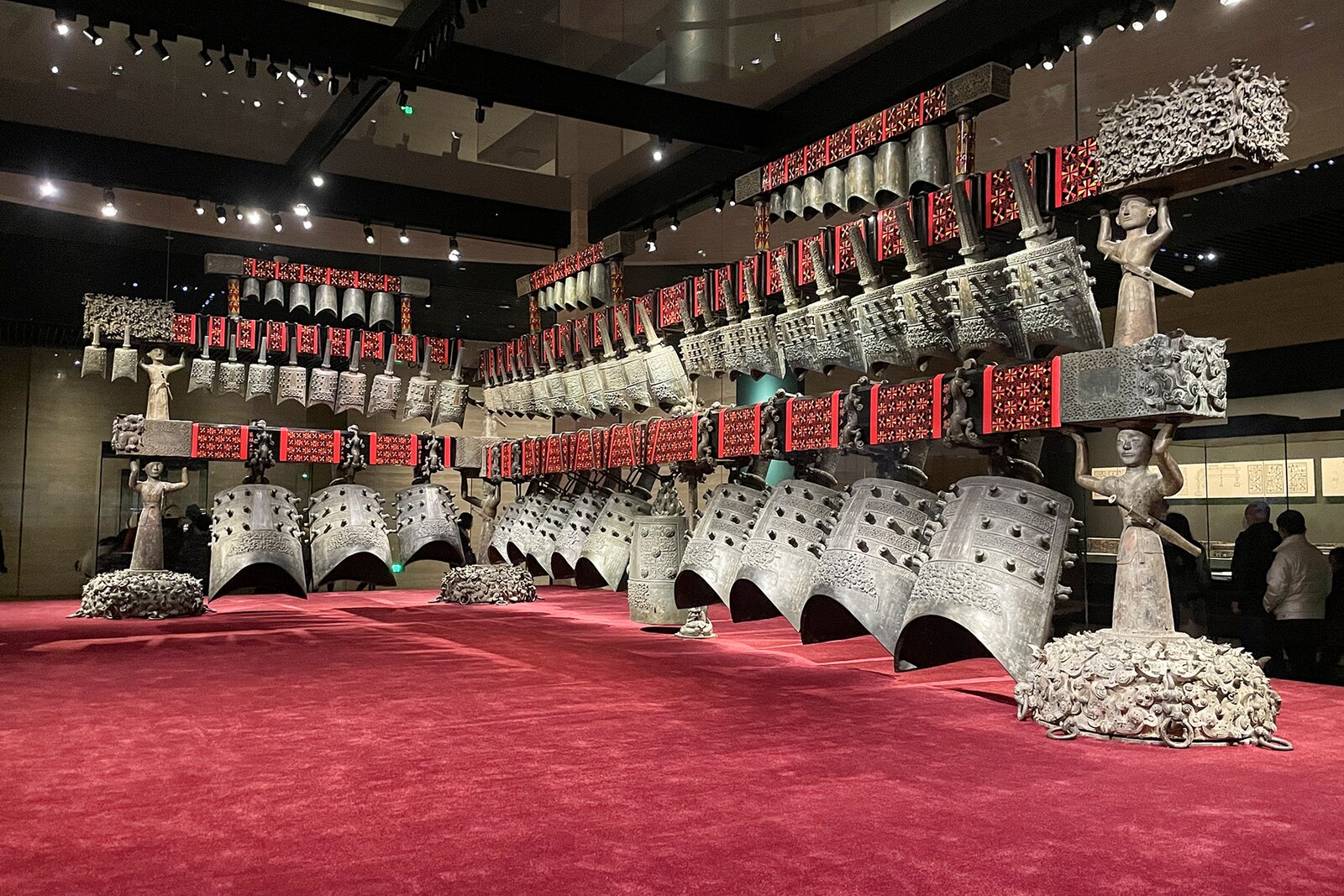
Bianzhong of Marquis Yi of Zeng
A set of 65 bronze bells that, after 2,400 years underground, can still produce music spanning five octaves with perfect tonal accuracy.
Bronze
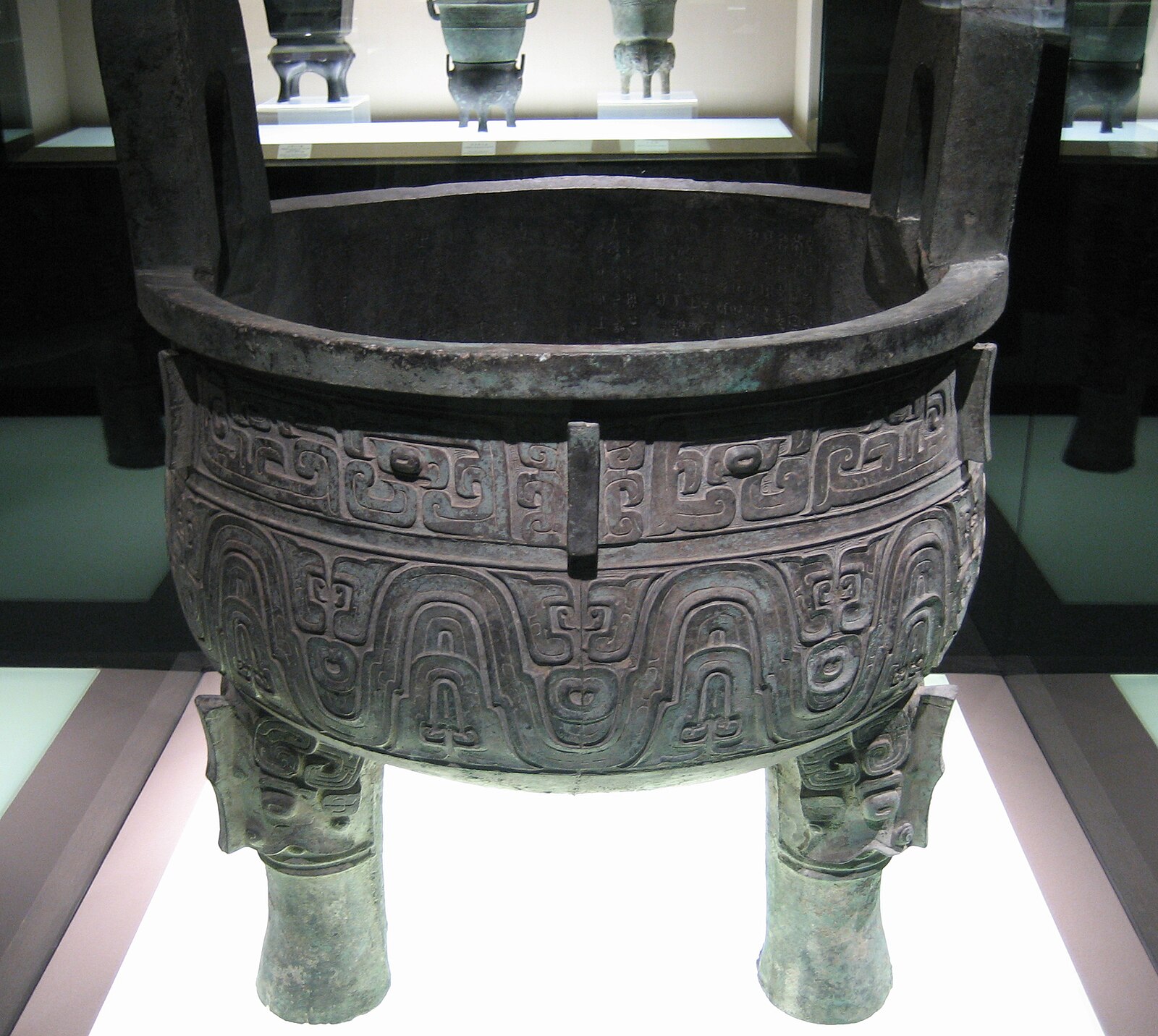
Da Ke Ding (Large Ke Tripod)
One of the most important inscribed bronze vessels of the Western Zhou Dynasty, bearing 290 characters that document a key moment in Chinese feudal history.
Sources & References
- ·Wikipedia — Houmuwu ding(CC-BY-SA 3.0)
- ·National Museum of China
Content informed by the sources above. Where Wikipedia text is used, it is licensed under CC-BY-SA 3.0.