Portrait of the Imperial Guard Zhanyinbao
占音保画像
A life-size formal portrait of Zhanyinbao, an imperial bodyguard rewarded for distinguished service in the Qianlong emperor's western campaigns. He stands in full-length court armor, sabre drawn, with a Manchu-language inscription enumerating his exploits.
Object Facts
- Period
- Qing dynasty, Qianlong reign (1735–1796)
- Date
- dated 1760
- Artist
- Unidentified Qing court artist
- Medium
- Hanging scroll; ink and color on silk
- Dimensions
- 188.6 × 95.1 cm (image)
- Held by
- The Metropolitan Museum of Art
New York, USA - Accession
- 1986.206
Purchase, The Dillon Fund Gift, 1986
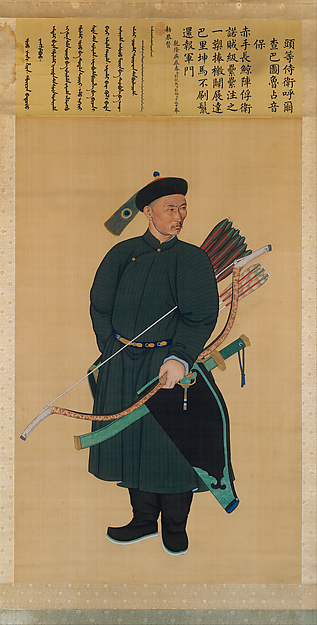
Why it matters
One of fifty heroic portraits Qianlong commissioned for the Ziguang Pavilion (紫光阁) in 1760. The series fused European chiaroscuro brought to court by the Jesuit painter Castiglione with traditional Chinese full-length figure conventions — a pivotal experiment in 18th-century cross-cultural portraiture.
How it travelled
The Ziguang Pavilion portraits were dispersed during the Boxer Rebellion of 1900, when the eight-nation alliance occupied Beijing. Most surviving examples are now in Berlin, Paris, and a handful in North America. The Met acquired this one in 1986.
Frequently asked questions
Where can I see Portrait of the Imperial Guard Zhanyinbao?+
Portrait of the Imperial Guard Zhanyinbao is held by the The Metropolitan Museum of Art in New York, USA. Accession number 1986.206. Online catalogue record: https://www.metmuseum.org/art/collection/search/49249.
When was Portrait of the Imperial Guard Zhanyinbao created?+
Portrait of the Imperial Guard Zhanyinbao dates to dated 1760, during the Qing dynasty, Qianlong reign (1735–1796).
Who made Portrait of the Imperial Guard Zhanyinbao?+
Portrait of the Imperial Guard Zhanyinbao is attributed to Unidentified Qing court artist. The work is a hanging scroll executed in hanging scroll; ink and color on silk.
How did Portrait of the Imperial Guard Zhanyinbao end up at the The Met?+
The Ziguang Pavilion portraits were dispersed during the Boxer Rebellion of 1900, when the eight-nation alliance occupied Beijing. Most surviving examples are now in Berlin, Paris, and a handful in North America. The Met acquired this one in 1986.
Can I reuse the photograph of Portrait of the Imperial Guard Zhanyinbao?+
Yes. The The Met has released the image under Creative Commons Zero (CC0), so it is free for any use, commercial or non-commercial, with no attribution required (though attribution is appreciated).
More Chinese pieces at The Met
Other Chinese works in the The Metropolitan Museum of Art collection.
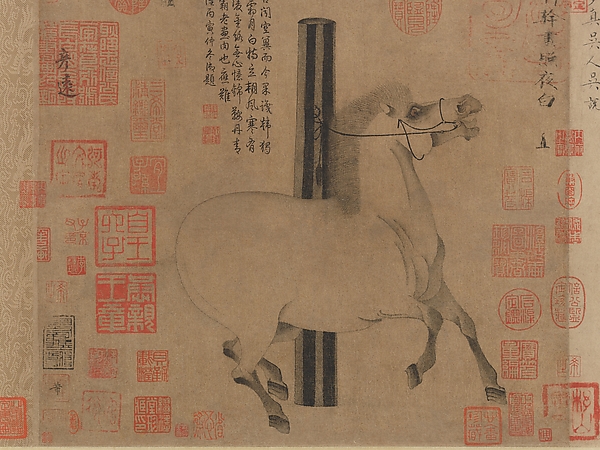
Tang dynasty · Paintings
Night-Shining White
照夜白图
The single most celebrated painting of a horse in Chinese art. Han Gan's ink drawing of Emperor Xuanzong's favourite charger, 'Night-Shining White', has been treasured by collectors for over 1,270 years — its scroll is covered end to end in colophons and seals of the emperors, scholars, and dealers through whose hands it passed.
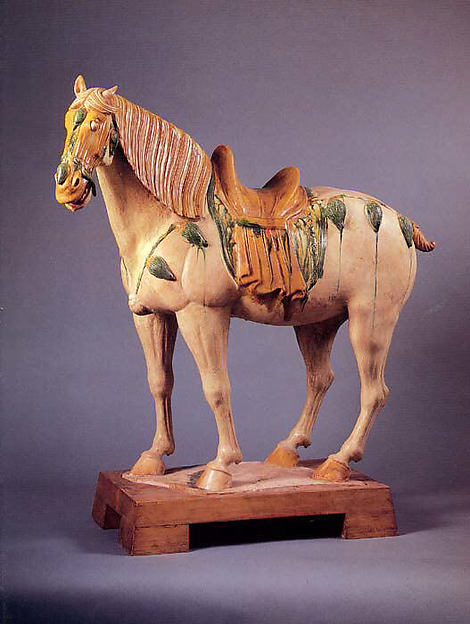
Tang dynasty · Tomb Pottery
Sancai-Glazed Horse
唐三彩马
A nearly life-size ceramic horse glazed in the signature amber, green, and cream of Tang sancai ware. Its powerful stance and flared nostrils capture the Ferghana chargers that Tang emperors imported at ruinous expense along the Silk Road.
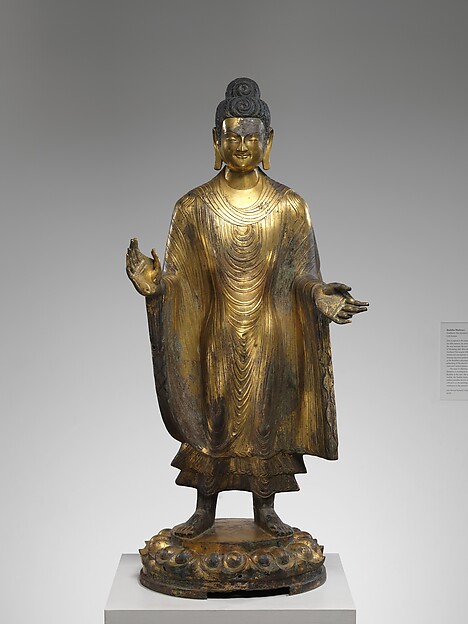
Northern Wei dynasty · Sculpture
Buddha Maitreya (Mile)
弥勒佛立像
The earliest precisely-dated monumental Chinese Buddhist bronze known to survive anywhere. An inscription on the base tells us it was cast in 486 CE by a nun named Fayi and 66 of her fellow devotees.
From the same era
Other treasures abroad sharing themes or period with this work.
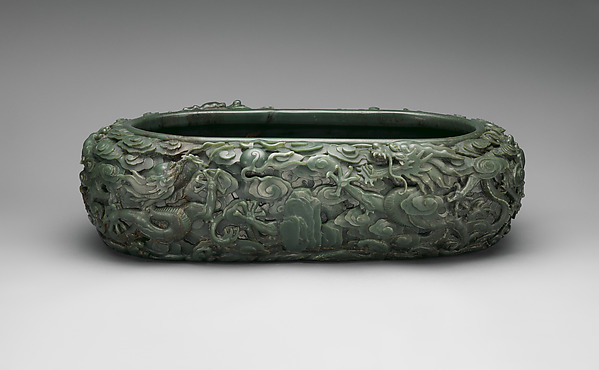
Qing dynasty, Qianlong reign · Jade
Imperial Jade Basin
清乾隆御制玉海
A monumental jade basin carved from a single Khotan nephrite boulder for the Qianlong emperor in 1774. The exterior bears a long imperial poem in the emperor's own hand, recording his pride in the artisans who could turn a stone into a vessel.
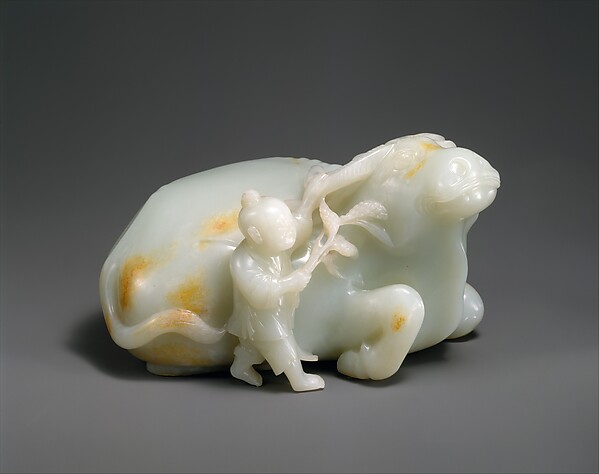
Qing dynasty · Jade
Boy with Water Buffalo
清玉雕牧童与水牛
A pale-celadon nephrite carving of a small boy reclining on the back of a docile water buffalo. The motif draws on the Chan Buddhist parable of the herder taming the bull, and on the broader Confucian ideal of pastoral simplicity.