Treasures Abroad
Chinese cultural heritage lives not only in Beijing, Xi'an, and Shanghai. Millions of artefacts left China during the turmoils of the 19th and 20th centuries, and the best of them are now anchors of the world's great museums. Each piece below is drawn from the open-access collection of its holding institution, with a short account of how it crossed oceans.
The Metropolitan Museum of Art
New York, USA · 14 pieces
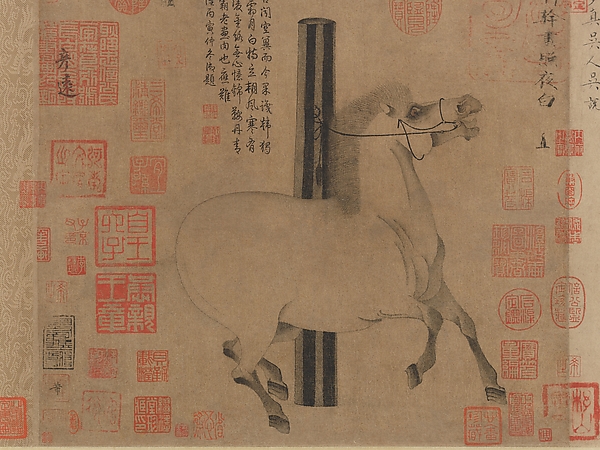
Tang dynasty · Paintings
Night-Shining White
照夜白图
The single most celebrated painting of a horse in Chinese art. Han Gan's ink drawing of Emperor Xuanzong's favourite charger, 'Night-Shining White', has been treasured by collectors for over 1,270 years — its scroll is covered end to end in colophons and seals of the emperors, scholars, and dealers through whose hands it passed.
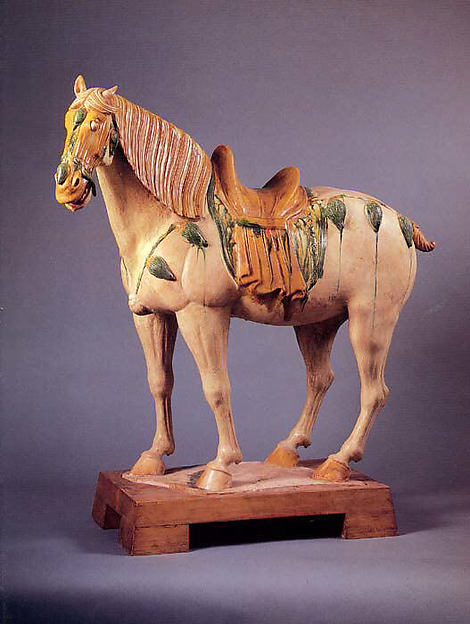
Tang dynasty · Tomb Pottery
Sancai-Glazed Horse
唐三彩马
A nearly life-size ceramic horse glazed in the signature amber, green, and cream of Tang sancai ware. Its powerful stance and flared nostrils capture the Ferghana chargers that Tang emperors imported at ruinous expense along the Silk Road.
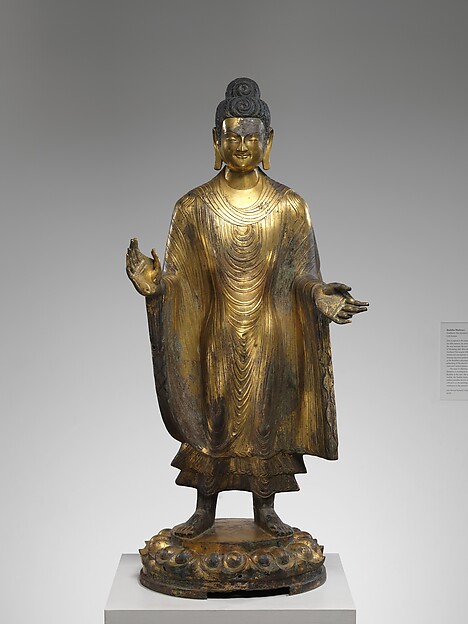
Northern Wei dynasty · Sculpture
Buddha Maitreya (Mile)
弥勒佛立像
The earliest precisely-dated monumental Chinese Buddhist bronze known to survive anywhere. An inscription on the base tells us it was cast in 486 CE by a nun named Fayi and 66 of her fellow devotees.
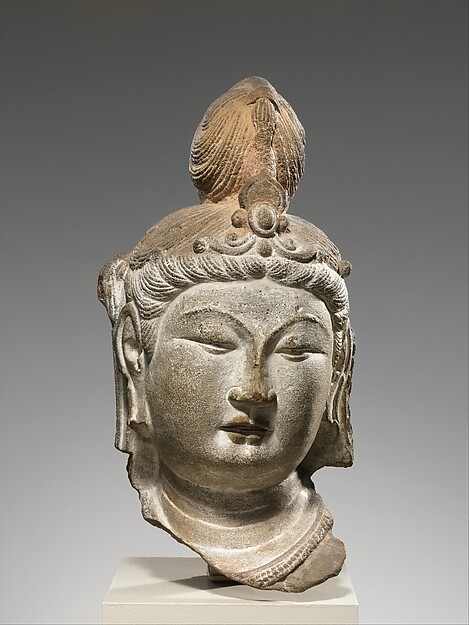
Tang dynasty · Sculpture
Head of a Bodhisattva
菩萨石刻头像
A serene Tang-dynasty bodhisattva head, sliced clean from a once-colossal cave-temple statue. Its softly downcast eyes and jewelled crown represent the mature classical style that spread from Longmen across East Asia.
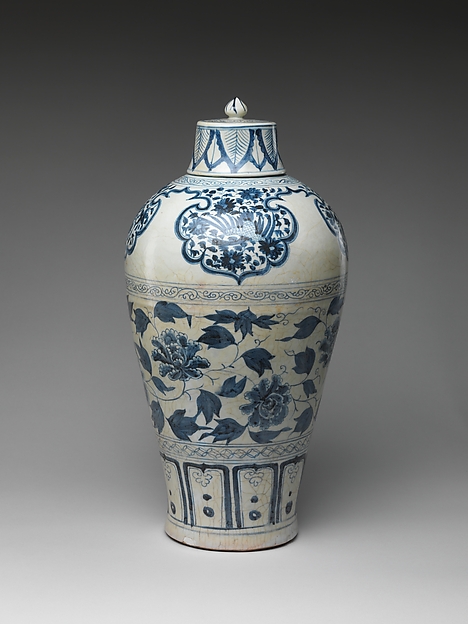
Yuan dynasty · Ceramics
Bottle with Peony Scroll
青花缠枝牡丹纹梅瓶
A quintessential Yuan blue-and-white meiping, its shoulders wrapped in a dense peony scroll painted in cobalt imported from Persia via the Silk Road. Early blue-and-whites were made first for export to the Islamic world — only later did Chinese collectors embrace the palette.
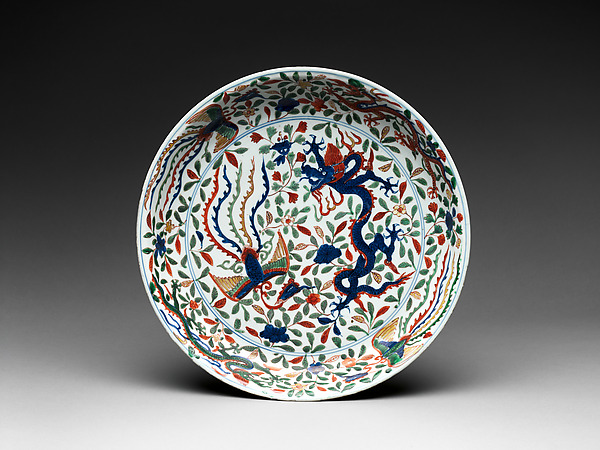
Ming dynasty, Wanli mark and period · Ceramics
Dish with Dragon and Phoenix
明万历五彩龙凤纹大盘
An imperial Wanli wucai ('five-colour') dish, bearing the reign mark of one of the Ming dynasty's most profligate emperors. A five-clawed dragon (the emperor) and a phoenix (the empress) circle one another in a conventional symbol of imperial harmony.
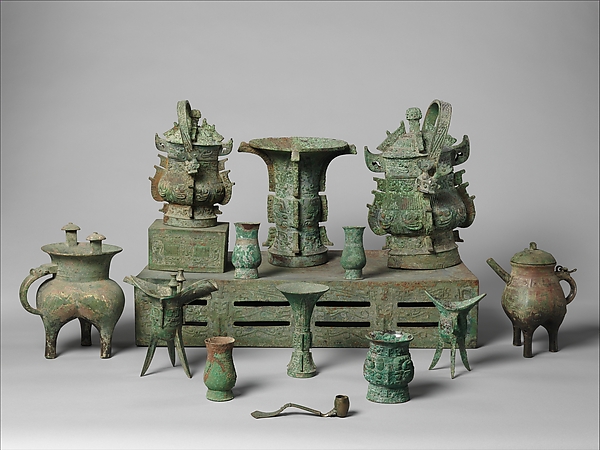
Shang–Western Zhou transition · Metalwork
Ritual Altar Set
商周青铜礼器祭祀组
The only complete Western Zhou ritual altar set known outside China: a bronze table plus thirteen wine and food vessels used together in ancestor worship. Together they tell us exactly how a Zhou aristocratic family communicated with their dead.
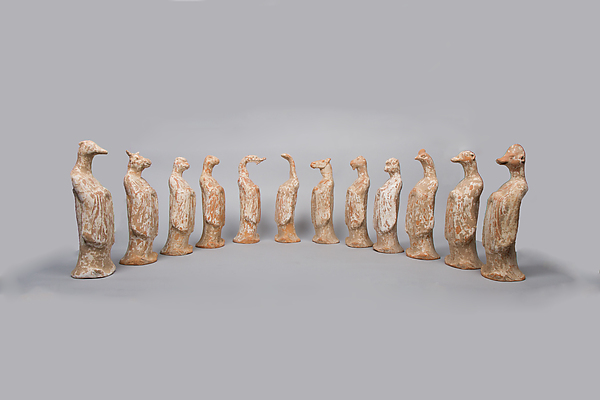
Tang dynasty · Ceramics
Set of Twelve Zodiac Animals
唐十二生肖俑
A complete set of the twelve Chinese zodiac animals, each modelled on a human body — rat, ox, tiger, rabbit, dragon, snake, horse, goat, monkey, rooster, dog, pig. They stood guard in the four directions around a Tang tomb.
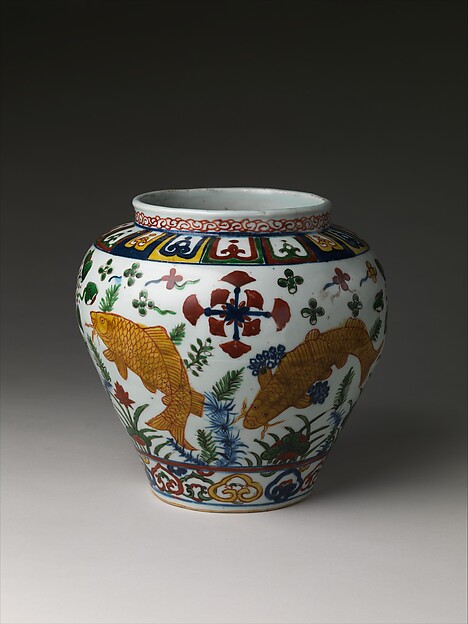
Ming dynasty, Jiajing mark and period · Ceramics
Jar with Carp in a Lotus Pond
明嘉靖五彩鱼藻纹罐
A masterpiece of Jiajing wucai porcelain: carp gliding through tangled lotus stems, painted in five overglaze enamels above an underglaze cobalt outline. The carp (鲤, lǐ) puns on profit (利) and is one of the densest auspicious symbols in Chinese decorative art.
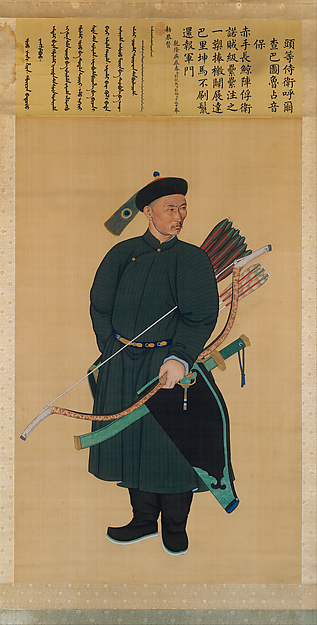
Qing dynasty, Qianlong reign · Paintings
Portrait of the Imperial Guard Zhanyinbao
占音保画像
A life-size formal portrait of Zhanyinbao, an imperial bodyguard rewarded for distinguished service in the Qianlong emperor's western campaigns. He stands in full-length court armor, sabre drawn, with a Manchu-language inscription enumerating his exploits.
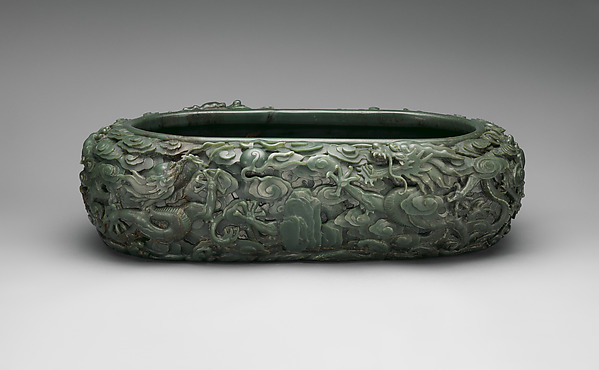
Qing dynasty, Qianlong reign · Jade
Imperial Jade Basin
清乾隆御制玉海
A monumental jade basin carved from a single Khotan nephrite boulder for the Qianlong emperor in 1774. The exterior bears a long imperial poem in the emperor's own hand, recording his pride in the artisans who could turn a stone into a vessel.
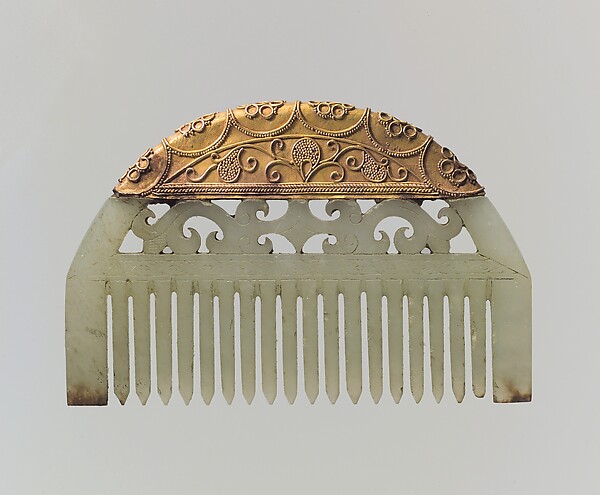
Eastern Han dynasty · Jade
Jade-and-Gold Comb
东汉嵌玉金梳
A miniature Eastern Han hair comb: a slab of pale nephrite jade clipped into a tracery of granulated gold work depicting two confronted dragons among clouds. A jewel built for an aristocratic woman's coiffure.
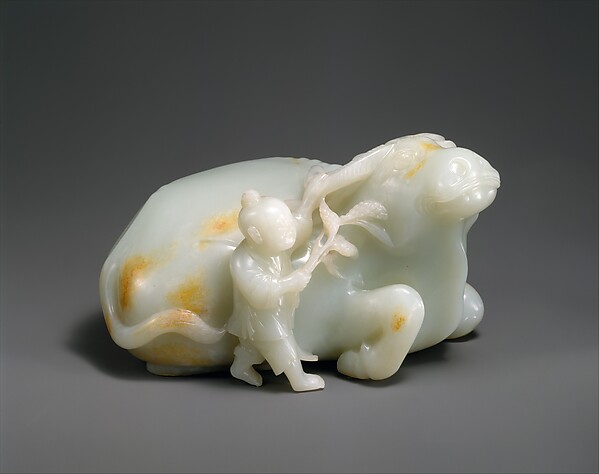
Qing dynasty · Jade
Boy with Water Buffalo
清玉雕牧童与水牛
A pale-celadon nephrite carving of a small boy reclining on the back of a docile water buffalo. The motif draws on the Chan Buddhist parable of the herder taming the bull, and on the broader Confucian ideal of pastoral simplicity.
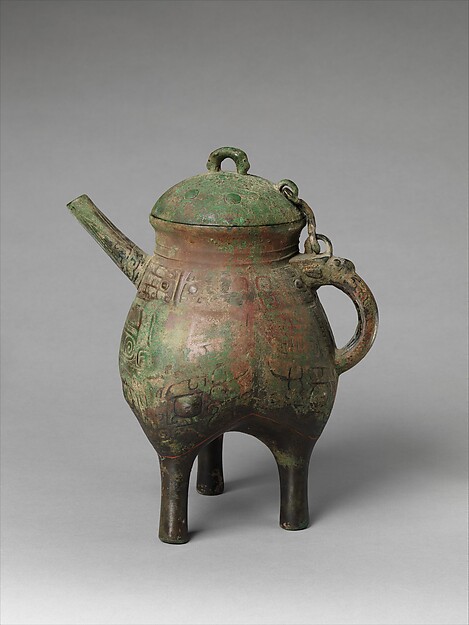
Western Zhou dynasty · Metalwork
Bronze Spouted Ritual Water Vessel (He)
西周青铜盉
A spouted ritual He vessel for pouring water in the ceremonies of ancestor worship. The body wears the classic Western Zhou taotie mask, the handle is a coiled dragon, and the lid is finialed with a small bird.
The Cleveland Museum of Art
Cleveland, USA · 8 pieces
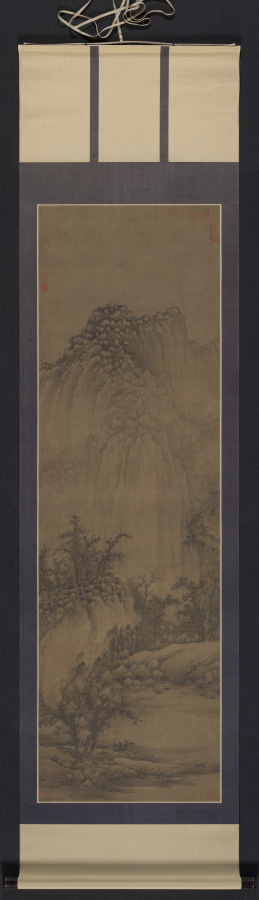
Northern Song dynasty · Paintings
Buddhist Retreat by Stream and Mountains
溪山兰若图
A towering ink mountain dominates the composition, capped with the round 'alum-head' boulders and wet ink dots that became Juran's signature. The Buddhist hermitage at the foot of the cliff is almost hidden — the point is the immensity of nature, not the human dwelling.
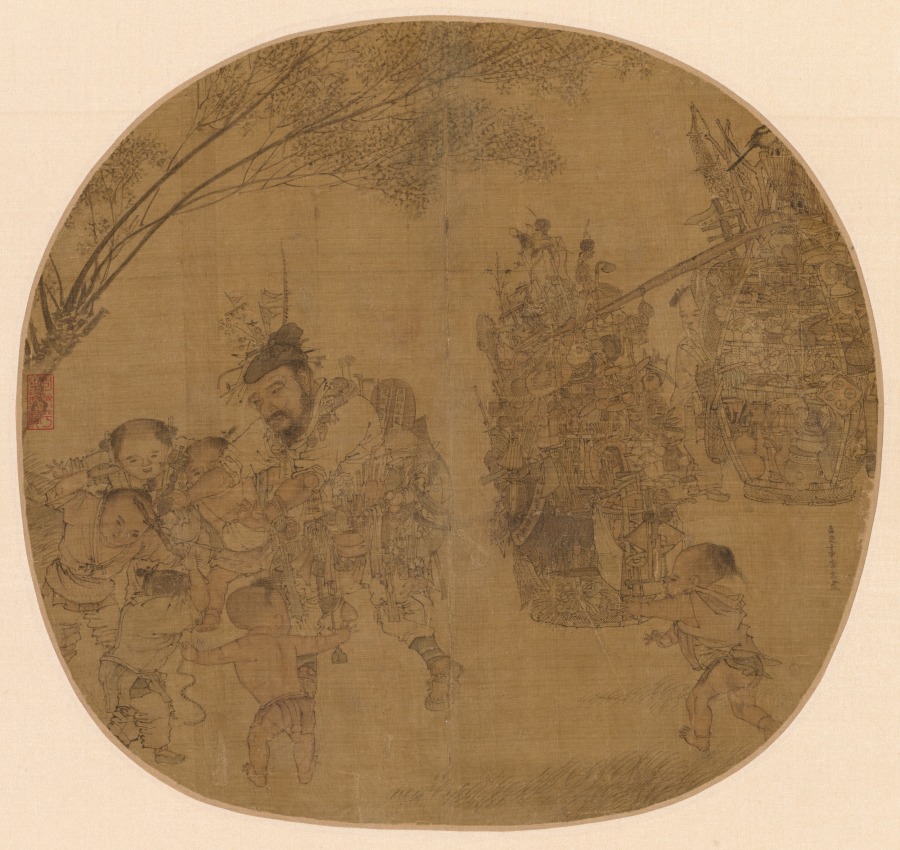
Southern Song dynasty · Paintings
The Knickknack Peddler
货郎图
A tiny silk album leaf packed with detail: a peddler's two enormous baskets bristling with hundreds of toys, fans, brushes, and skull-shaped trinkets, while children attack a snake nearby. Painted in 1212 for the Southern Song court of Emperor Ningzong.

Southern Song dynasty · Paintings
Cloudy Mountains
云山图
Mi Youren painted this handscroll in 1130 to thank a host who had sheltered him after the Jurchen invasion drove the Song court south. The mountains dissolve into mist; the brushwork is built almost entirely from layered wet dots — the famous 'Mi-dots' pioneered by his father, Mi Fu.
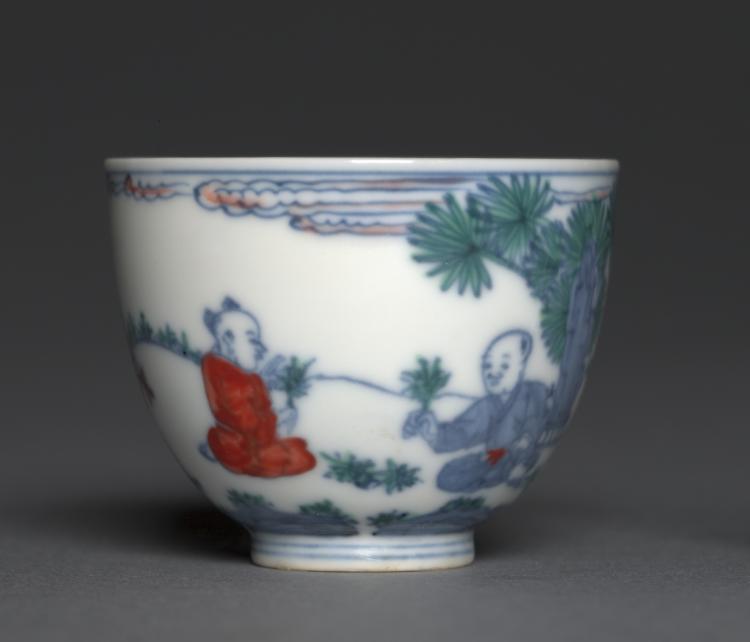
Ming dynasty, Chenghua mark and period · Ceramics
Wine Cup with Children at Play
明成化斗彩婴戏纹杯
Just two inches tall, this Chenghua doucai cup is the rarest of all classic Chinese porcelains. The body is paper-thin and translucent; the children at play are outlined in cobalt under the glaze, then completed in red, green, and yellow enamels above it — a two-firing technique perfected only at Chenghua's kilns.
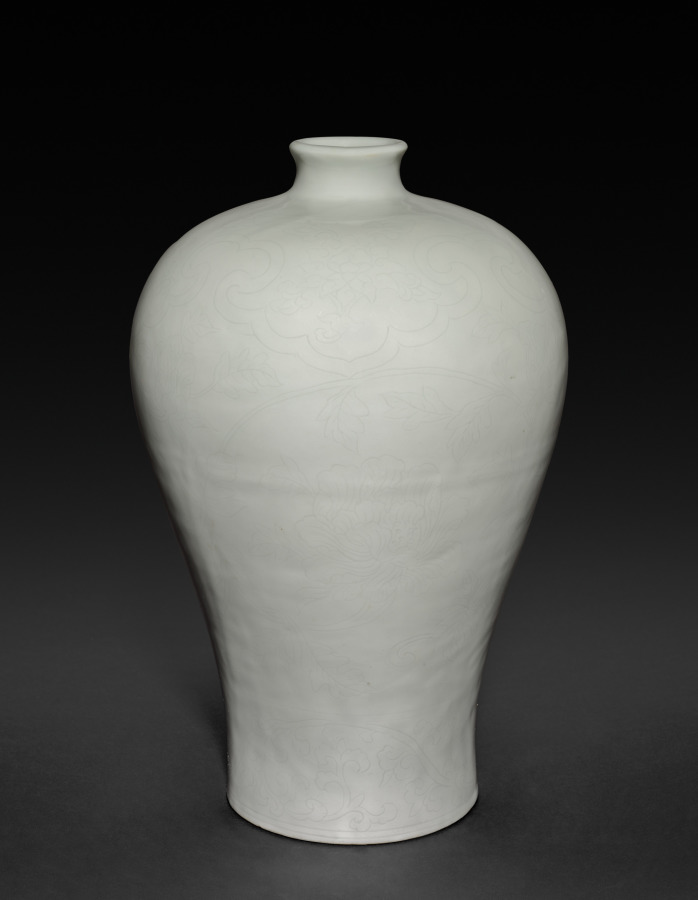
Ming dynasty, Yongle reign · Ceramics
'Sweet White' Meiping with Cloud Collars
明永乐甜白釉暗花梅瓶
A Yongle imperial meiping in tianbai (甜白, 'sweet white') glaze: a milky white porcelain so pure that the Yongle emperor used it for ritual offerings on the imperial altar. The decoration is incised into the body so faintly you only see it when light catches the surface — the so-called anhua, 'hidden decoration'.
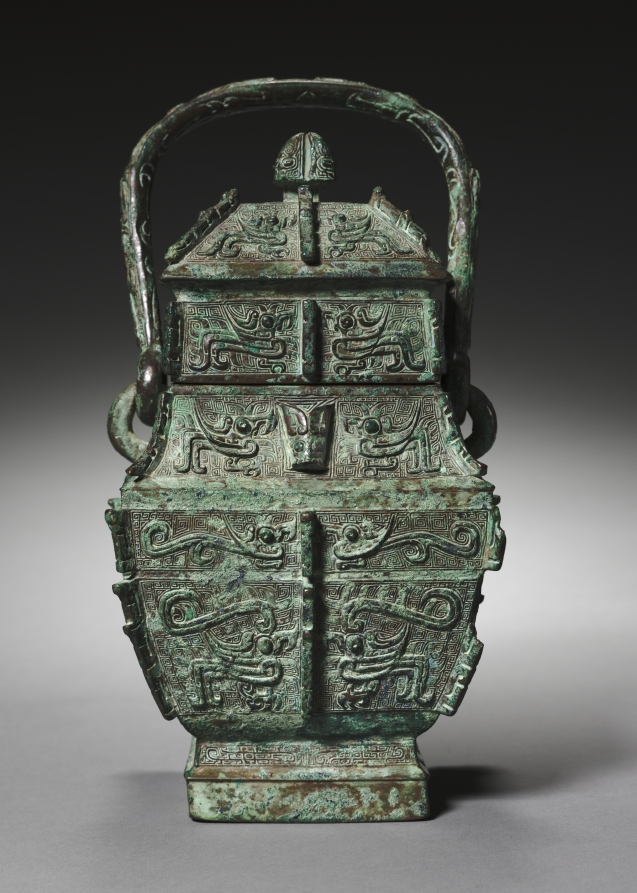
Late Shang dynasty, Anyang phase · Metalwork
Square Wine Container (Fangyou)
商方卣
A rare squared-section ritual wine container from the late Shang capital at Anyang. The body is wrapped in bands of crested birds (kuifeng) silhouetted against a dense ground of spiral leiwen — and the perfectly squared profile is itself a technical brag, far harder to cast than the standard rounded shape.
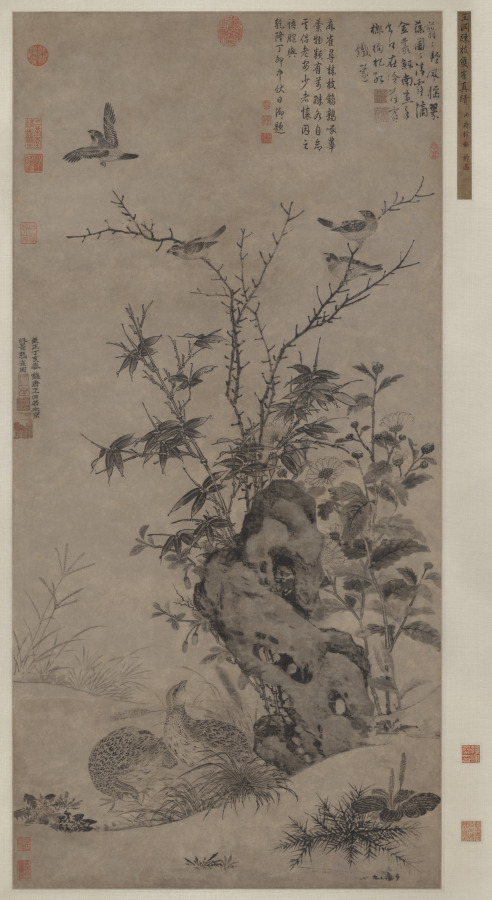
Yuan dynasty · Paintings
Quails and Sparrows in an Autumn Scene
秋景禽雀图
A flower-and-bird painting executed entirely in ink — no color — by Wang Yuan, who studied as a child under the great Yuan scholar-official Zhao Mengfu. Quails crouch beneath autumn millet while sparrows perch on the dry stalks above; every leaf, feather, and seed is rendered with academic precision.

Late Ming dynasty · Paintings
The Five Hundred Arhats
五百罗汉图
A handscroll over 26 metres long depicting 447 luohans (arhats), 72 attendants, and the bodhisattva of compassion at the very end. The luohans are climbing trees, riding tigers, walking on water, conjuring dragons — every supernatural ability the texts ascribe to them, all on one continuous strip of paper.
The British Museum
London, United Kingdom · 6 pieces

Original: Eastern Jin · Paintings
Admonitions of the Court Instructress
女史箴图
The earliest surviving Chinese narrative figure painting on silk — illustrations to a 3rd-century Confucian text instructing palace women on proper conduct. The Eastern Jin master Gu Kaizhi is the painter of record; the surviving handscroll is a faithful Tang-dynasty copy.
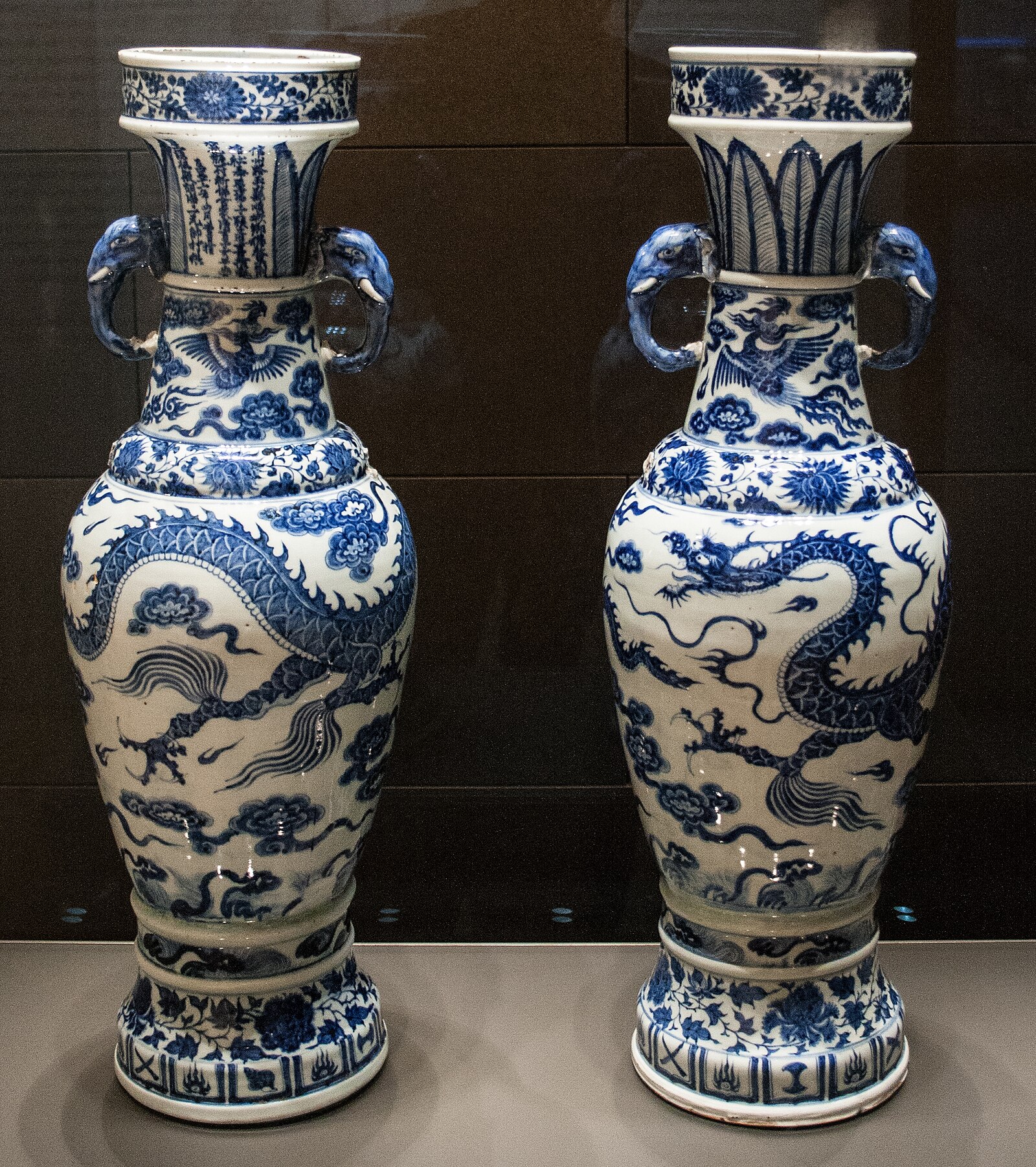
Yuan dynasty, Zhizheng era · Ceramics
The David Vases
至正型青花云龙象耳瓶
A pair of cobalt-blue temple vases dated by inscription to 1351 — the rosetta stone of blue-and-white porcelain. Until Sir Percival David identified these in 1929, scholars wrongly assumed blue-and-white only began in the Ming dynasty.
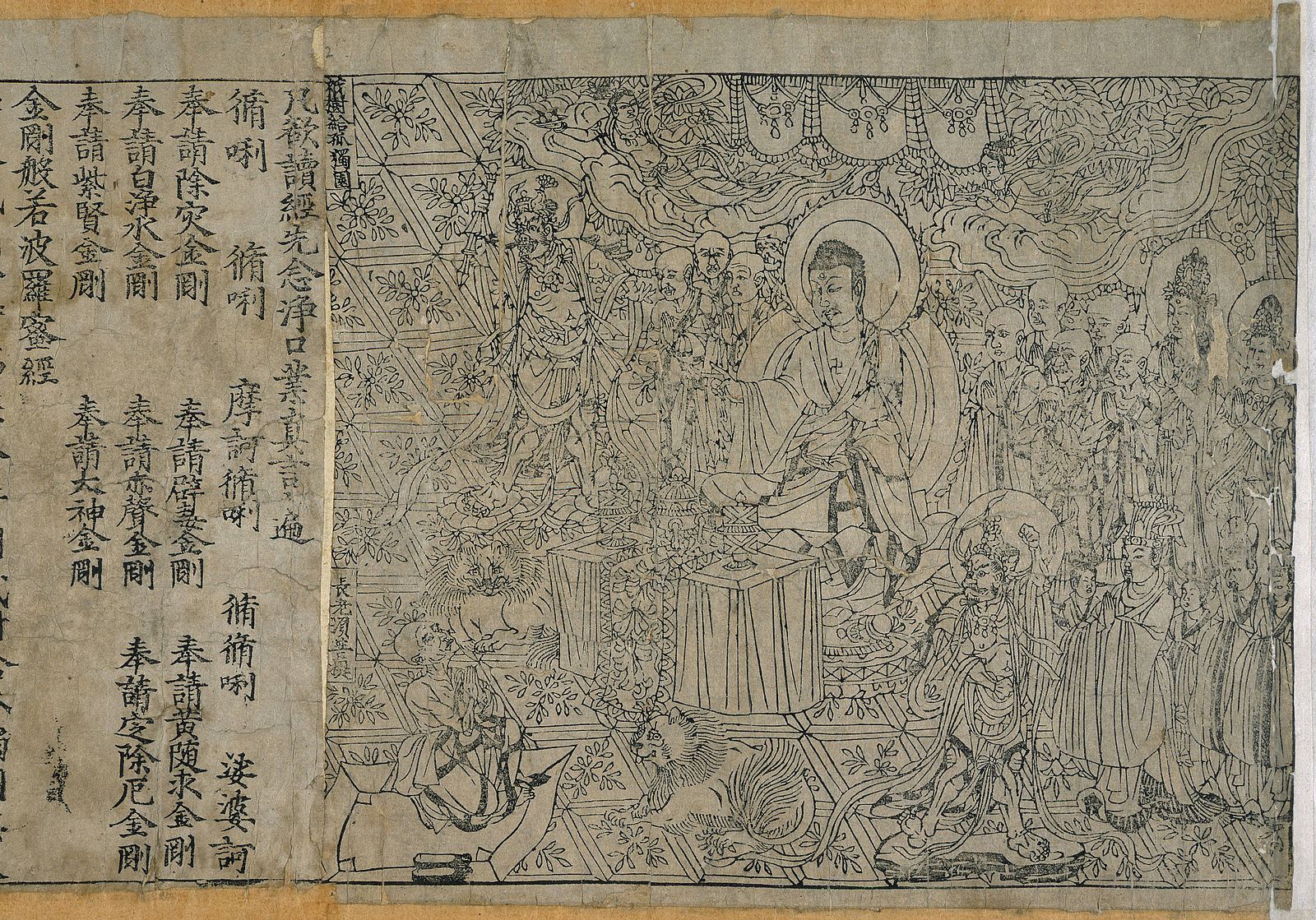
Tang dynasty · Books / Prints
Diamond Sutra (868 CE)
金刚经
The world's earliest complete dated printed book. The colophon names the donor, Wang Jie, and dates the printing to the 13th day of the 4th month, 9th year of the Xiantong reign — 11 May 868 — almost 600 years before Gutenberg.
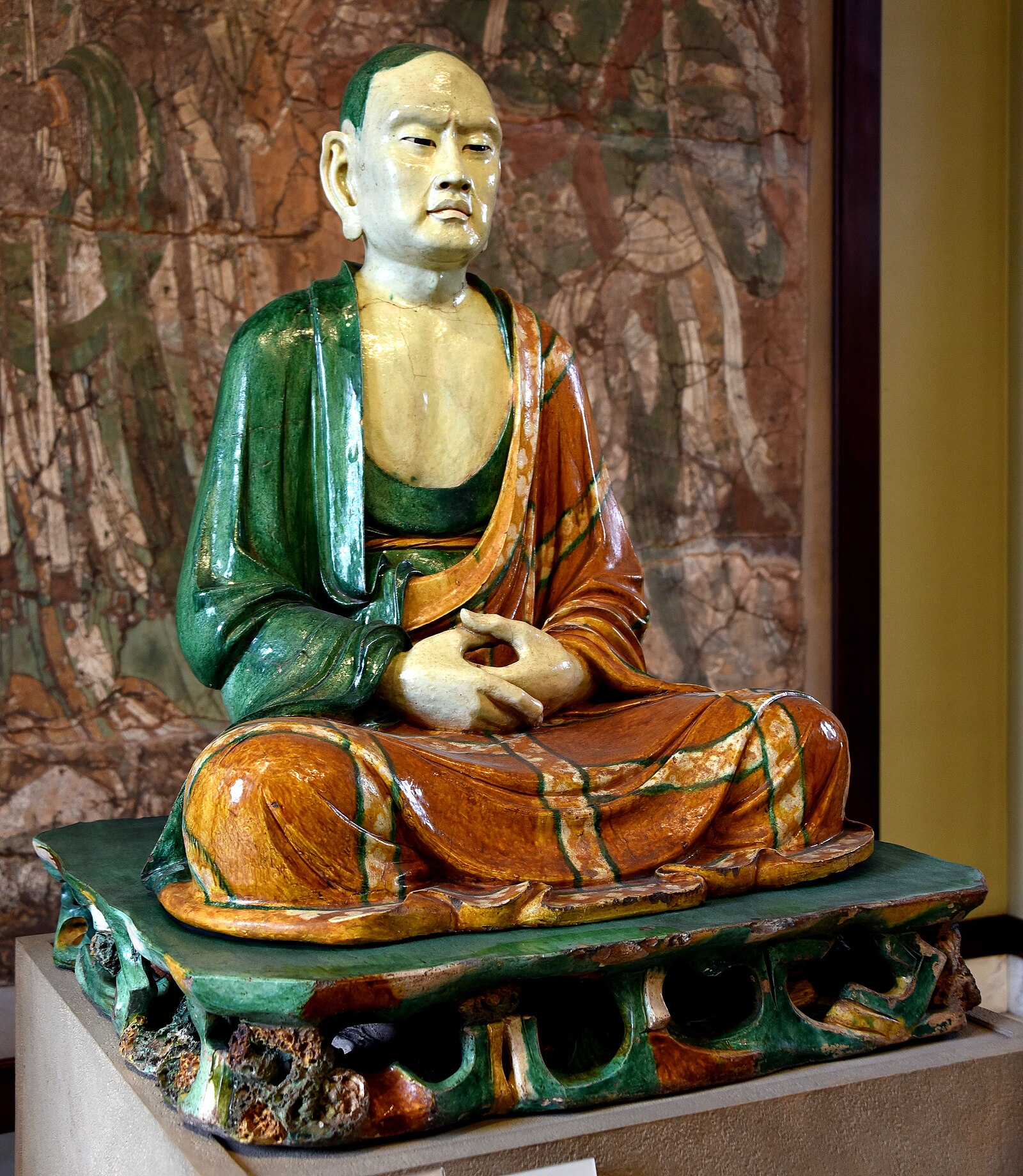
Liao dynasty · Sculpture
Yixian Luohan
易县三彩罗汉
A life-size glazed-ceramic luohan from a set of about sixteen discovered in 1912 in caves near Yixian, Hebei. He sits cross-legged in meditation, his hands holding a sutra, his face modelled with the unsparing realism of an actual portrait — likely of a senior Liao monk.
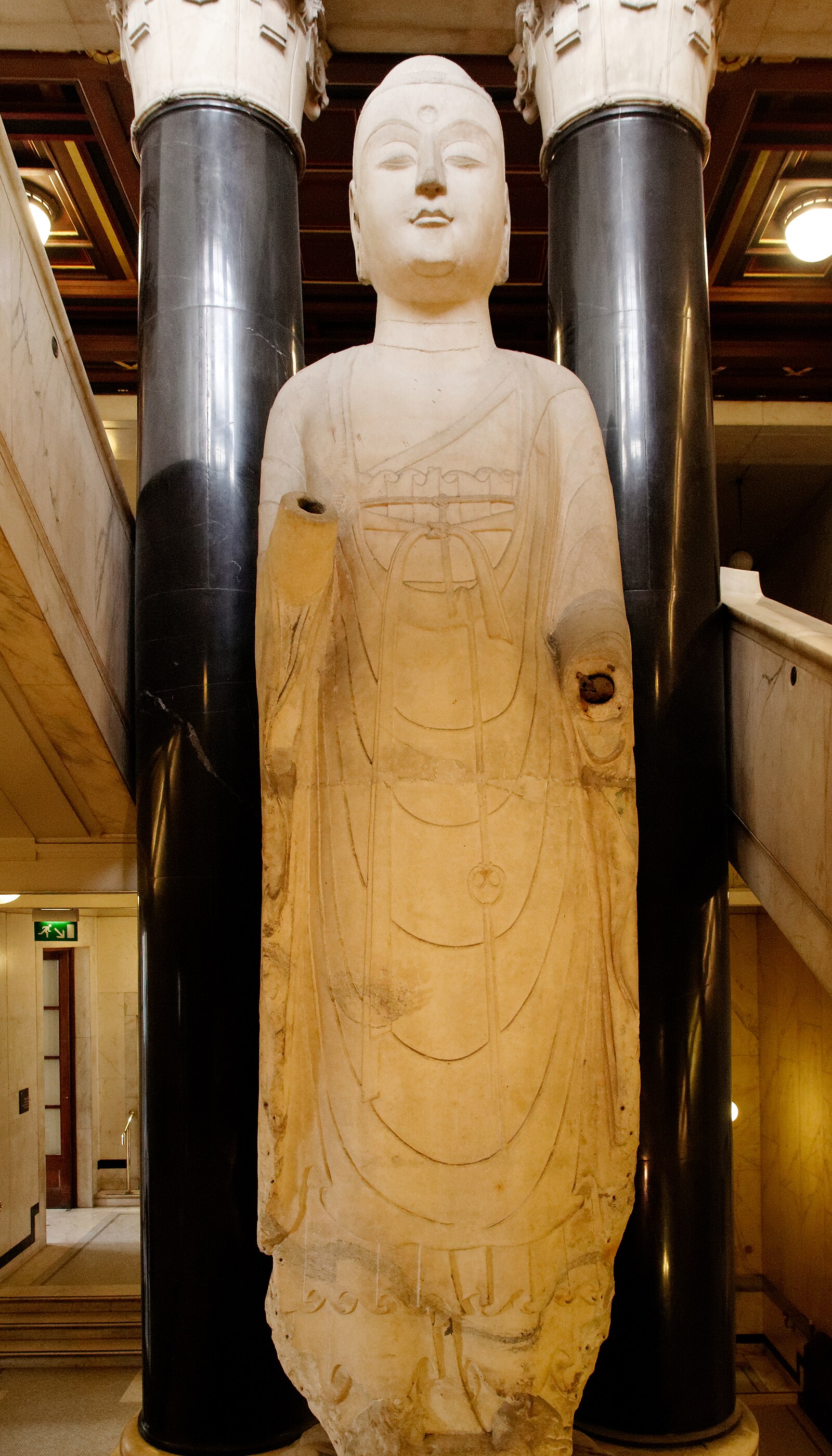
Sui dynasty · Sculpture
Marble Amitabha Buddha (585 CE)
隋开皇五年汉白玉阿弥陀佛立像
A colossal marble Amitabha standing 5.78 m tall — among the largest free-standing early Buddhist sculptures anywhere. The dedicatory inscription on the pedestal precisely dates the consecration to 585 CE, the 5th year of the first Sui emperor's Kaihuang reign.
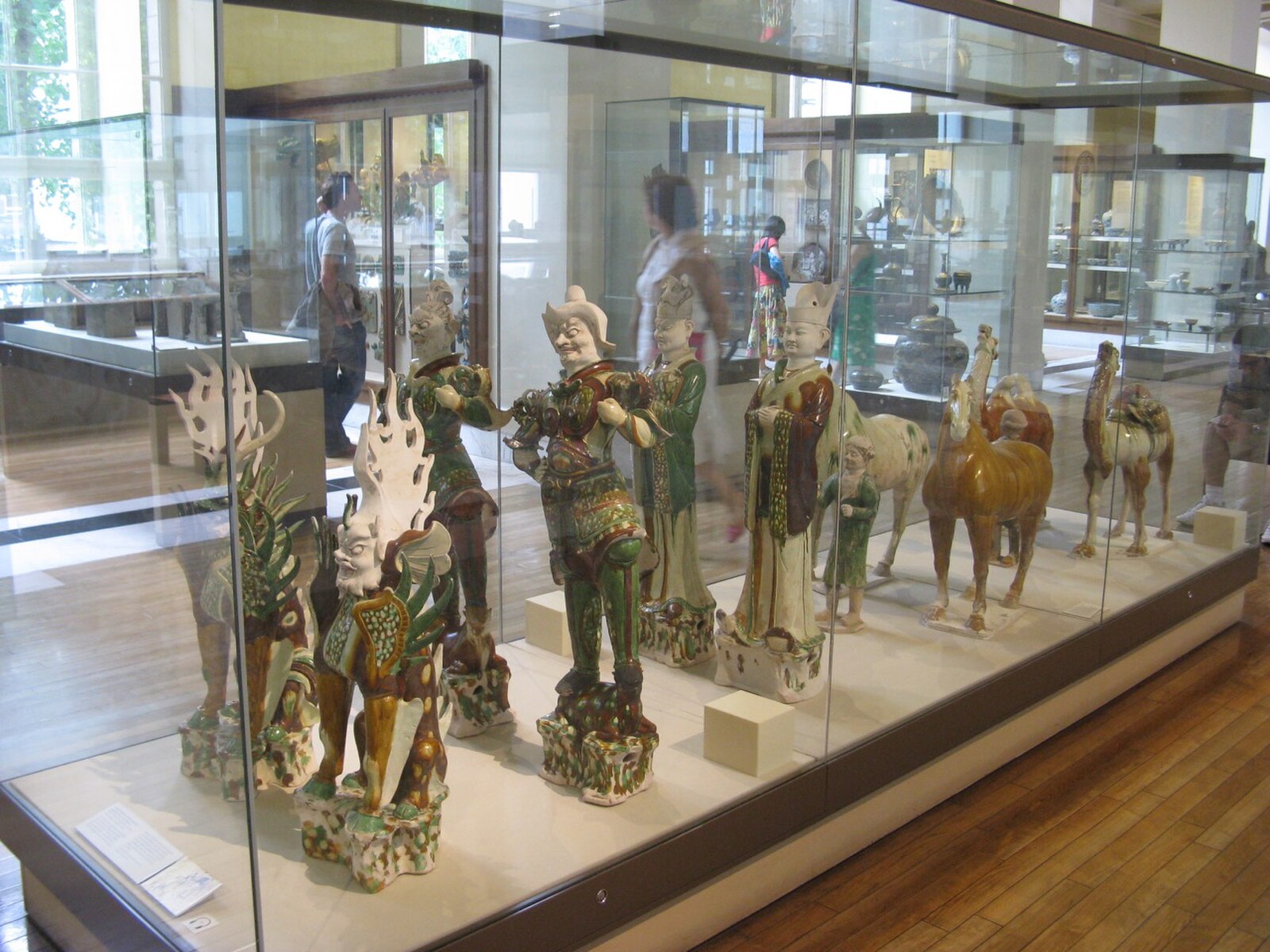
Tang dynasty · Tomb Pottery
Tomb Figures of General Liu Tingxun
唐刘廷洵墓三彩俑组
A complete tomb assemblage of 13 sancai-glazed figures buried with the Tang general Liu Tingxun in 728 CE: two horses, two camels, two civil officials, two military officials, two earth spirits, two guardian kings, and a single tomb attendant. Together they form the choreography of an idealised afterlife court.