Admonitions of the Court Instructress
女史箴图
The earliest surviving Chinese narrative figure painting on silk — illustrations to a 3rd-century Confucian text instructing palace women on proper conduct. The Eastern Jin master Gu Kaizhi is the painter of record; the surviving handscroll is a faithful Tang-dynasty copy.
Object Facts
- Period
- Original: Eastern Jin (265–420); copy: early Tang (618–907)
- Date
- Tang-period copy (6th–8th c) of a 4th c original
- Artist
- Attributed to Gu Kaizhi (顾恺之)
- Medium
- Handscroll; ink and color on silk
- Dimensions
- 25 × 348.5 cm
- Held by
- The British Museum
London, United Kingdom - Accession
- 1903,0408,0.1
The British Museum — purchased 1903

Why it matters
Often called the 'Mona Lisa of Chinese painting'. The scroll bears collector seals from every imperial Chinese collection from the Tang to the Qianlong emperor and is the foundational document of the entire Chinese figure-painting tradition.
How it travelled
Last documented in the Qianlong imperial collection. Looted from the Summer Palace (Yuanmingyuan) by a British officer during the second Opium War sack of 1860; sold to the British Museum in 1903 for £25 — the most consequential single Chinese-art transaction in BM history.
Frequently asked questions
Where can I see Admonitions of the Court Instructress?+
Admonitions of the Court Instructress is held by the The British Museum in London, United Kingdom. Accession number 1903,0408,0.1. Online catalogue record: https://www.britishmuseum.org/collection/object/A_1903-0408-0-1.
When was Admonitions of the Court Instructress created?+
Admonitions of the Court Instructress dates to Tang-period copy (6th–8th c) of a 4th c original, during the Original: Eastern Jin (265–420); copy: early Tang (618–907).
Who made Admonitions of the Court Instructress?+
Admonitions of the Court Instructress is attributed to Attributed to Gu Kaizhi (顾恺之). The work is a handscroll executed in handscroll; ink and color on silk.
How did Admonitions of the Court Instructress end up at the British Museum?+
Last documented in the Qianlong imperial collection. Looted from the Summer Palace (Yuanmingyuan) by a British officer during the second Opium War sack of 1860; sold to the British Museum in 1903 for £25 — the most consequential single Chinese-art transaction in BM history.
Can I reuse the photograph of Admonitions of the Court Instructress?+
The image is in the public domain and free for any use. Crediting the British Museum is encouraged but not required.
More Chinese pieces at British Museum
Other Chinese works in the The British Museum collection.
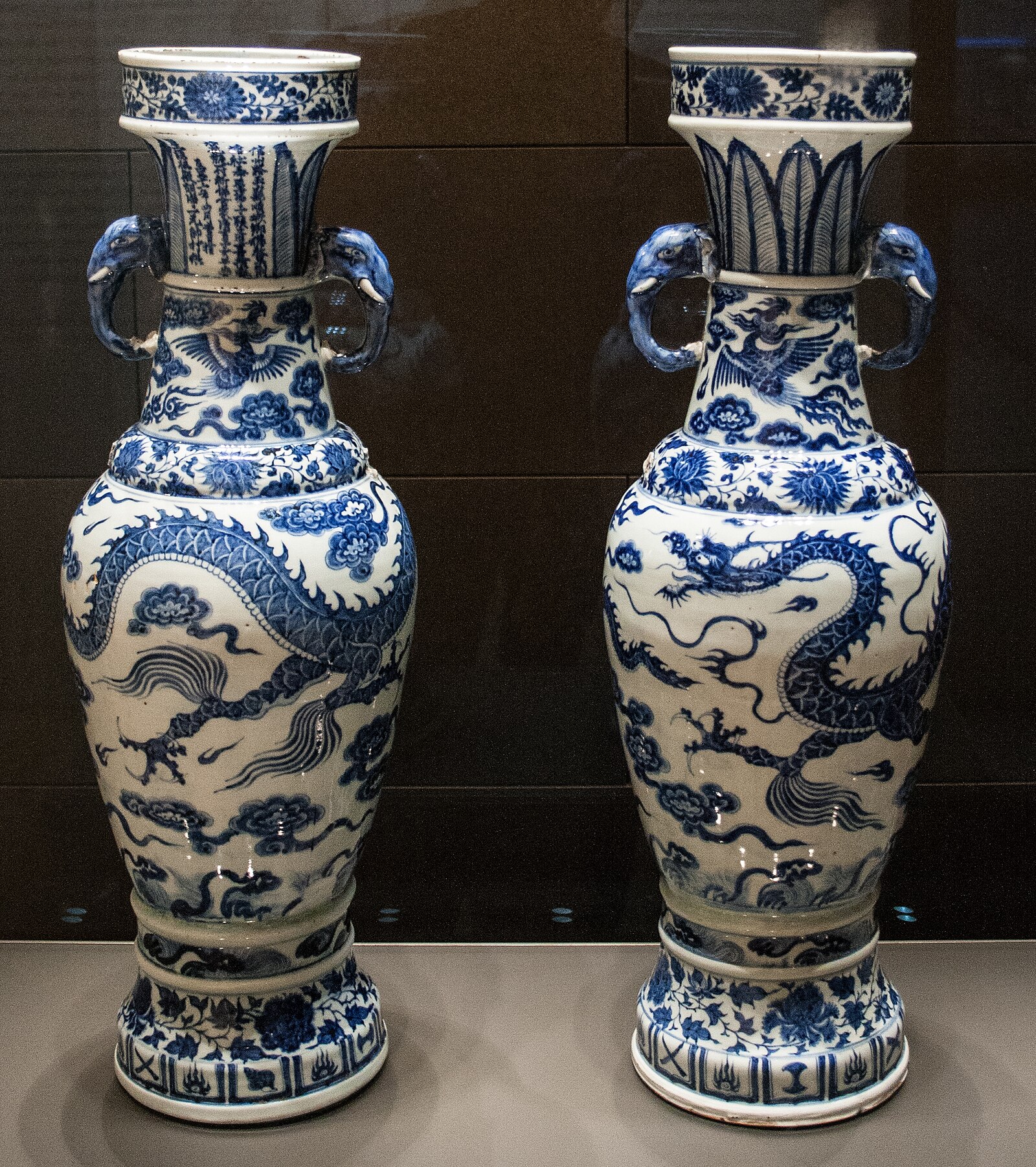
Yuan dynasty, Zhizheng era · Ceramics
The David Vases
至正型青花云龙象耳瓶
A pair of cobalt-blue temple vases dated by inscription to 1351 — the rosetta stone of blue-and-white porcelain. Until Sir Percival David identified these in 1929, scholars wrongly assumed blue-and-white only began in the Ming dynasty.
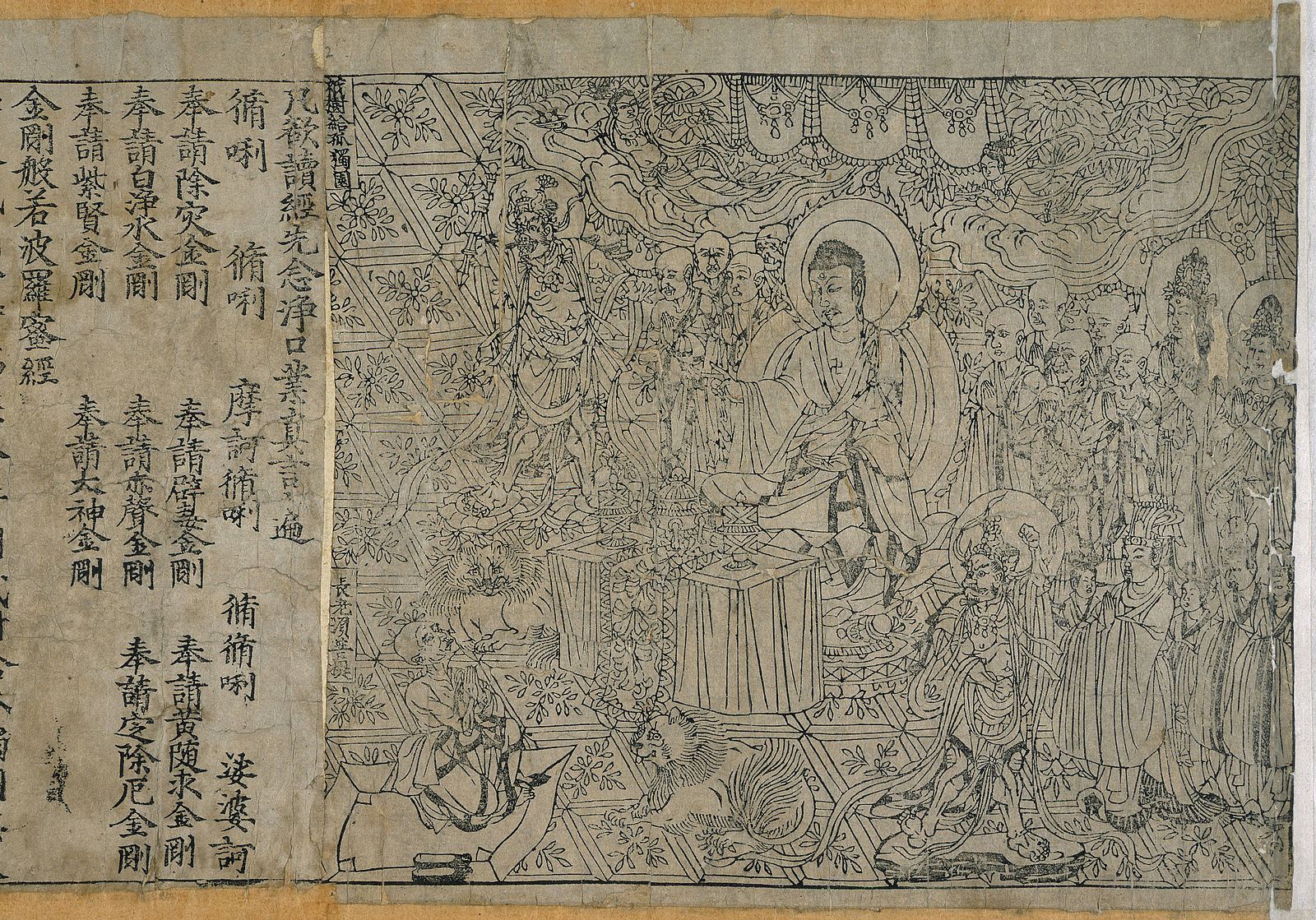
Tang dynasty · Books / Prints
Diamond Sutra (868 CE)
金刚经
The world's earliest complete dated printed book. The colophon names the donor, Wang Jie, and dates the printing to the 13th day of the 4th month, 9th year of the Xiantong reign — 11 May 868 — almost 600 years before Gutenberg.
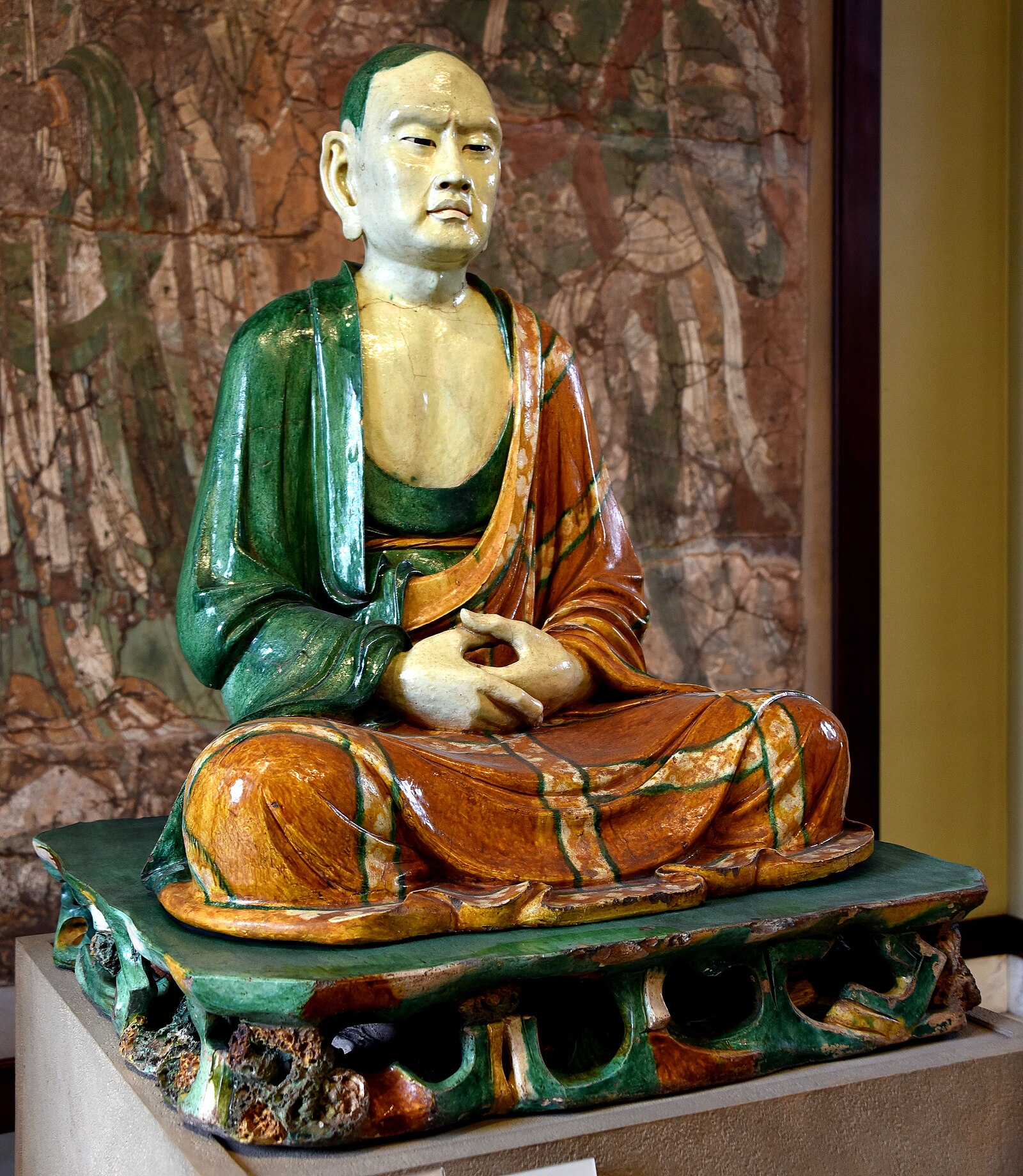
Liao dynasty · Sculpture
Yixian Luohan
易县三彩罗汉
A life-size glazed-ceramic luohan from a set of about sixteen discovered in 1912 in caves near Yixian, Hebei. He sits cross-legged in meditation, his hands holding a sutra, his face modelled with the unsparing realism of an actual portrait — likely of a senior Liao monk.
From the same era
Other treasures abroad sharing themes or period with this work.
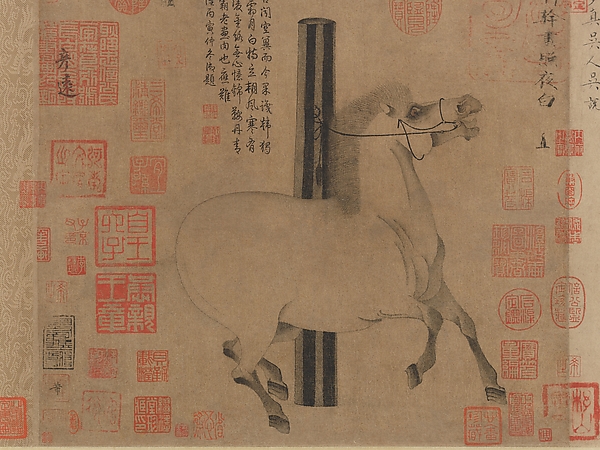
Tang dynasty · Paintings
Night-Shining White
照夜白图
The single most celebrated painting of a horse in Chinese art. Han Gan's ink drawing of Emperor Xuanzong's favourite charger, 'Night-Shining White', has been treasured by collectors for over 1,270 years — its scroll is covered end to end in colophons and seals of the emperors, scholars, and dealers through whose hands it passed.
Tang dynasty · Tomb Pottery
Sancai-Glazed Horse
唐三彩马
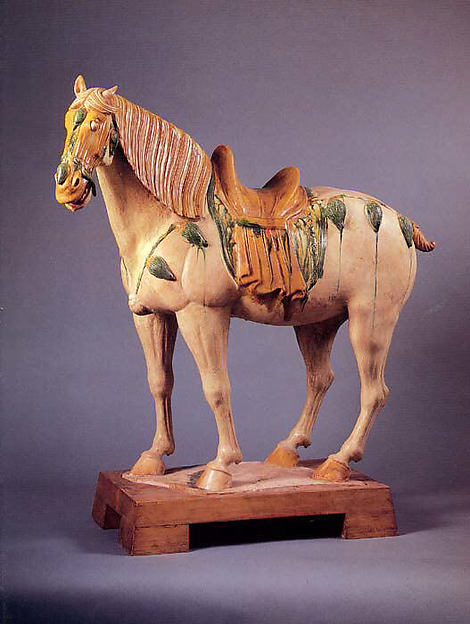
A nearly life-size ceramic horse glazed in the signature amber, green, and cream of Tang sancai ware. Its powerful stance and flared nostrils capture the Ferghana chargers that Tang emperors imported at ruinous expense along the Silk Road.
Tang dynasty · Sculpture
Head of a Bodhisattva
菩萨石刻头像
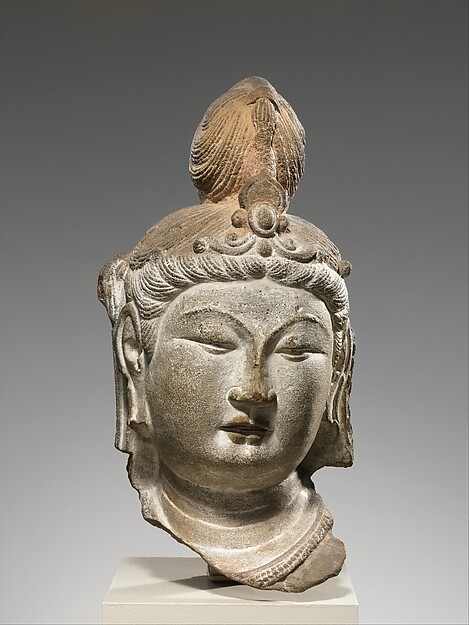
A serene Tang-dynasty bodhisattva head, sliced clean from a once-colossal cave-temple statue. Its softly downcast eyes and jewelled crown represent the mature classical style that spread from Longmen across East Asia.