Why this collection pulls search traffic
The Met is a search magnet because it combines authority, open images, and strong object metadata. A single collection page can satisfy visitors looking for Chinese artifacts at The Met, Chinese ceramics in New York, or Chinese Buddhist sculpture in an American museum.
Search intent this page covers
Objects in this guide
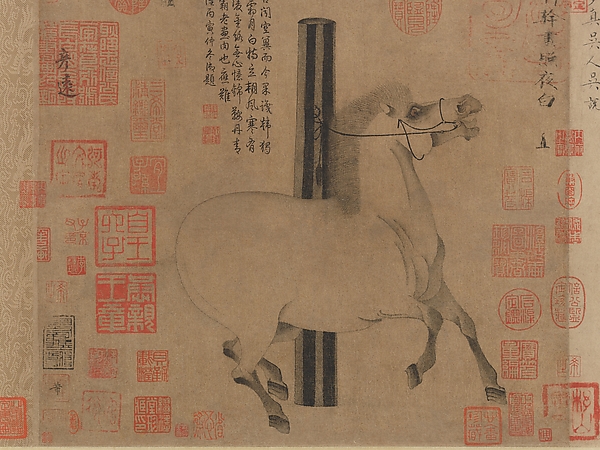
Tang dynasty · Paintings
Night-Shining White
照夜白图
The single most celebrated painting of a horse in Chinese art. Han Gan's ink drawing of Emperor Xuanzong's favourite charger, 'Night-Shining White', has been treasured by collectors for over 1,270 years — its scroll is covered end to end in colophons and seals of the emperors, scholars, and dealers through whose hands it passed.
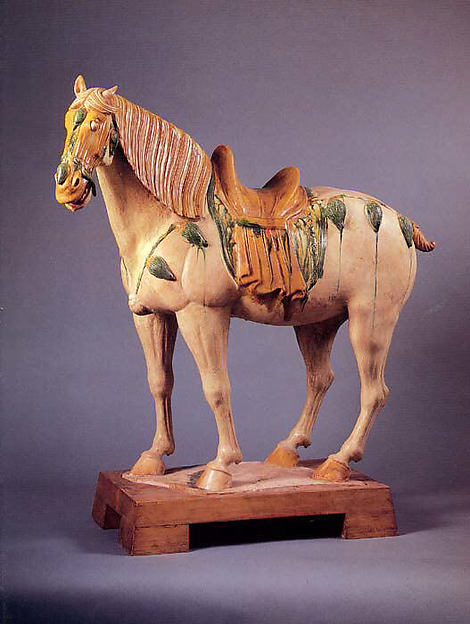
Tang dynasty · Tomb Pottery
Sancai-Glazed Horse
唐三彩马
A nearly life-size ceramic horse glazed in the signature amber, green, and cream of Tang sancai ware. Its powerful stance and flared nostrils capture the Ferghana chargers that Tang emperors imported at ruinous expense along the Silk Road.
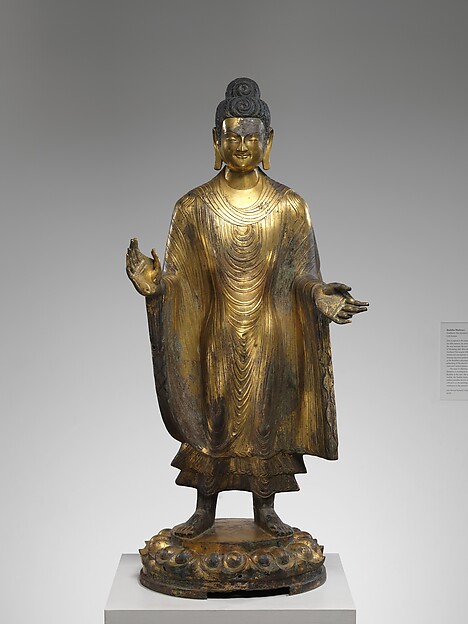
Northern Wei dynasty · Sculpture
Buddha Maitreya (Mile)
弥勒佛立像
The earliest precisely-dated monumental Chinese Buddhist bronze known to survive anywhere. An inscription on the base tells us it was cast in 486 CE by a nun named Fayi and 66 of her fellow devotees.
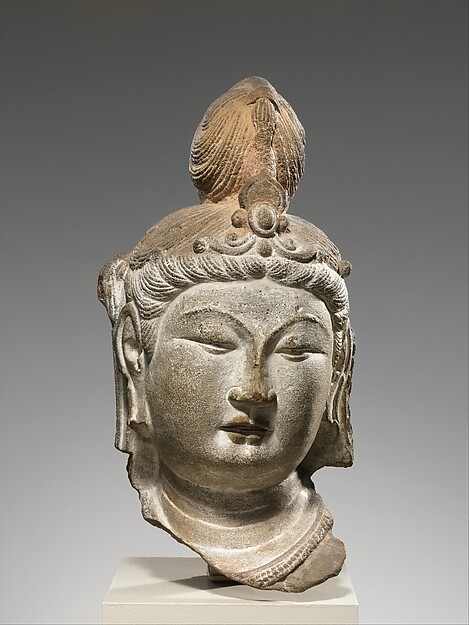
Tang dynasty · Sculpture
Head of a Bodhisattva
菩萨石刻头像
A serene Tang-dynasty bodhisattva head, sliced clean from a once-colossal cave-temple statue. Its softly downcast eyes and jewelled crown represent the mature classical style that spread from Longmen across East Asia.
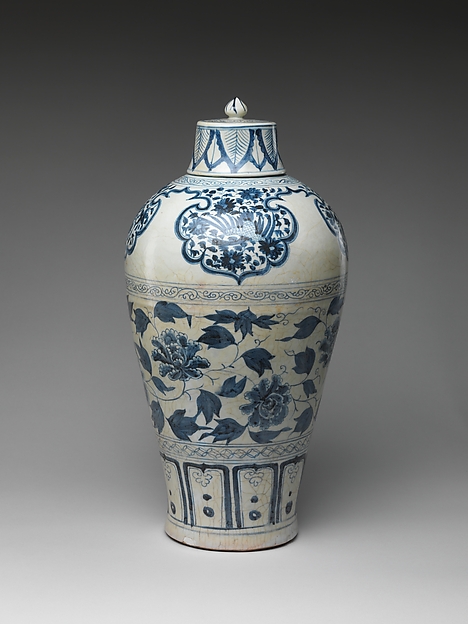
Yuan dynasty · Ceramics
Bottle with Peony Scroll
青花缠枝牡丹纹梅瓶
A quintessential Yuan blue-and-white meiping, its shoulders wrapped in a dense peony scroll painted in cobalt imported from Persia via the Silk Road. Early blue-and-whites were made first for export to the Islamic world — only later did Chinese collectors embrace the palette.
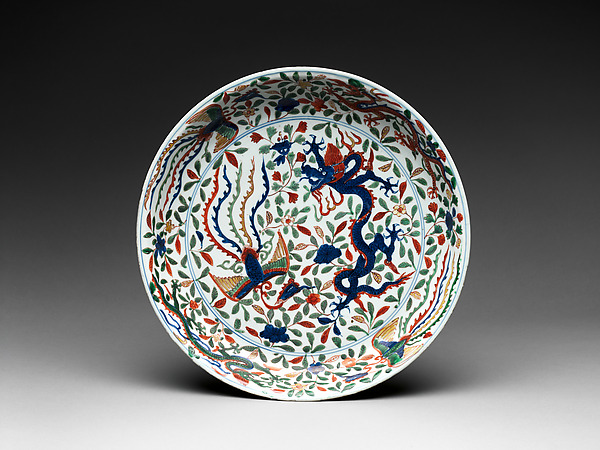
Ming dynasty, Wanli mark and period · Ceramics
Dish with Dragon and Phoenix
明万历五彩龙凤纹大盘
An imperial Wanli wucai ('five-colour') dish, bearing the reign mark of one of the Ming dynasty's most profligate emperors. A five-clawed dragon (the emperor) and a phoenix (the empress) circle one another in a conventional symbol of imperial harmony.
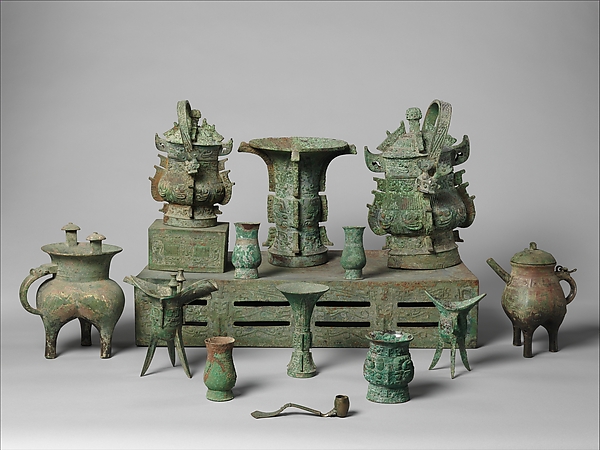
Shang–Western Zhou transition · Metalwork
Ritual Altar Set
商周青铜礼器祭祀组
The only complete Western Zhou ritual altar set known outside China: a bronze table plus thirteen wine and food vessels used together in ancestor worship. Together they tell us exactly how a Zhou aristocratic family communicated with their dead.
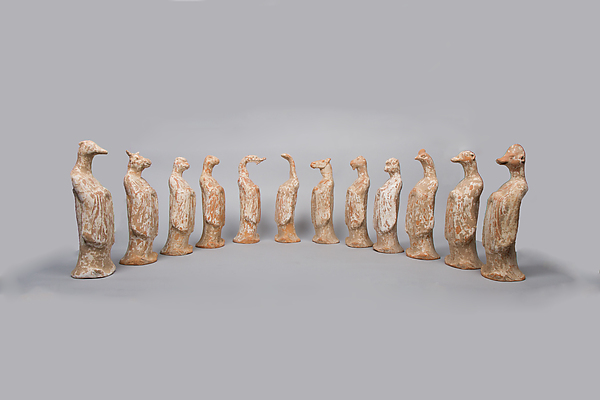
Tang dynasty · Ceramics
Set of Twelve Zodiac Animals
唐十二生肖俑
A complete set of the twelve Chinese zodiac animals, each modelled on a human body — rat, ox, tiger, rabbit, dragon, snake, horse, goat, monkey, rooster, dog, pig. They stood guard in the four directions around a Tang tomb.
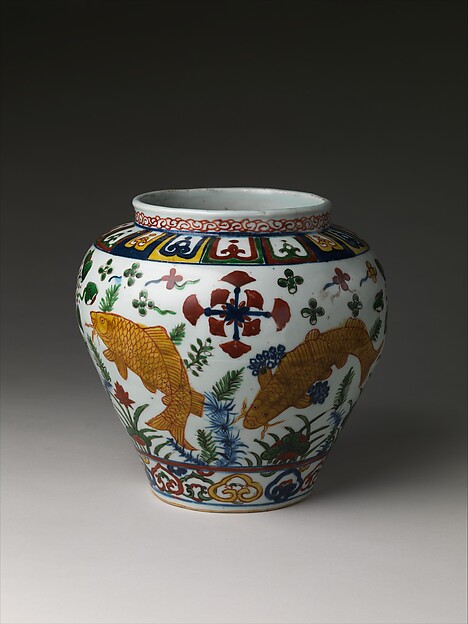
Ming dynasty, Jiajing mark and period · Ceramics
Jar with Carp in a Lotus Pond
明嘉靖五彩鱼藻纹罐
A masterpiece of Jiajing wucai porcelain: carp gliding through tangled lotus stems, painted in five overglaze enamels above an underglaze cobalt outline. The carp (鲤, lǐ) puns on profit (利) and is one of the densest auspicious symbols in Chinese decorative art.
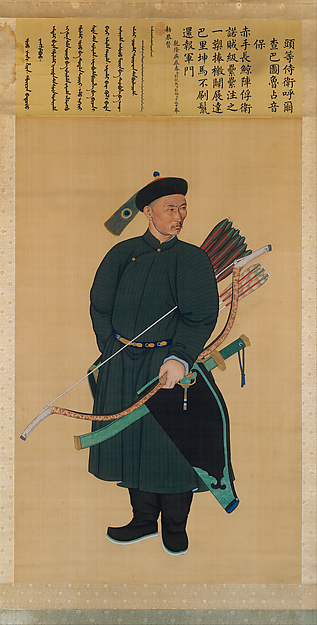
Qing dynasty, Qianlong reign · Paintings
Portrait of the Imperial Guard Zhanyinbao
占音保画像
A life-size formal portrait of Zhanyinbao, an imperial bodyguard rewarded for distinguished service in the Qianlong emperor's western campaigns. He stands in full-length court armor, sabre drawn, with a Manchu-language inscription enumerating his exploits.
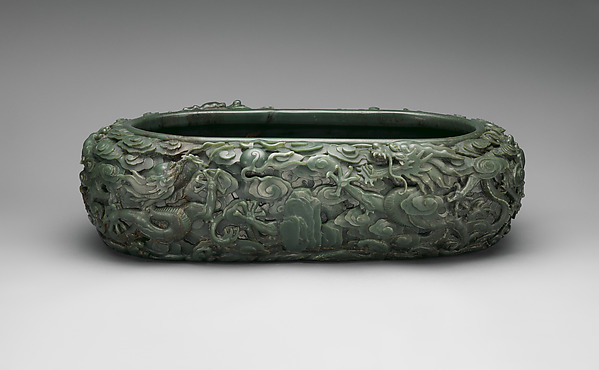
Qing dynasty, Qianlong reign · Jade
Imperial Jade Basin
清乾隆御制玉海
A monumental jade basin carved from a single Khotan nephrite boulder for the Qianlong emperor in 1774. The exterior bears a long imperial poem in the emperor's own hand, recording his pride in the artisans who could turn a stone into a vessel.
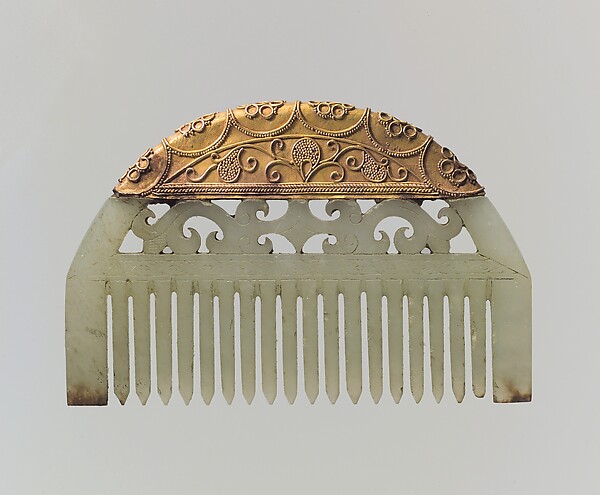
Eastern Han dynasty · Jade
Jade-and-Gold Comb
东汉嵌玉金梳
A miniature Eastern Han hair comb: a slab of pale nephrite jade clipped into a tracery of granulated gold work depicting two confronted dragons among clouds. A jewel built for an aristocratic woman's coiffure.
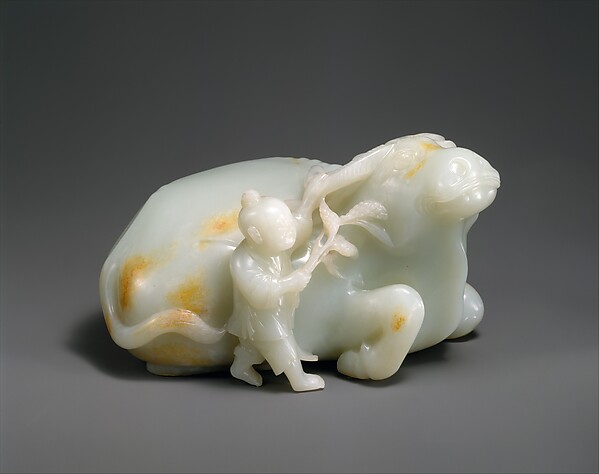
Qing dynasty · Jade
Boy with Water Buffalo
清玉雕牧童与水牛
A pale-celadon nephrite carving of a small boy reclining on the back of a docile water buffalo. The motif draws on the Chan Buddhist parable of the herder taming the bull, and on the broader Confucian ideal of pastoral simplicity.
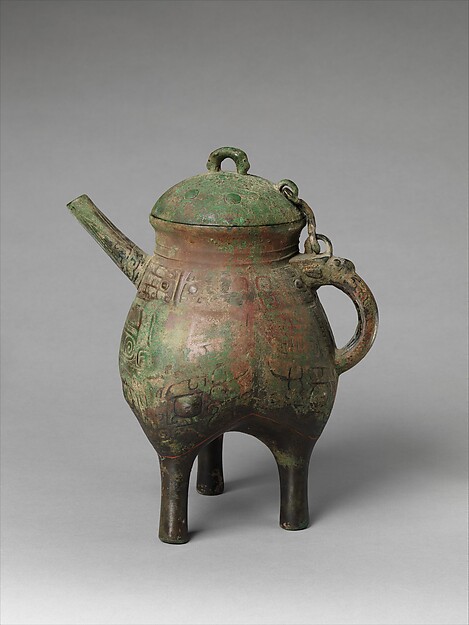
Western Zhou dynasty · Metalwork
Bronze Spouted Ritual Water Vessel (He)
西周青铜盉
A spouted ritual He vessel for pouring water in the ceremonies of ancestor worship. The body wears the classic Western Zhou taotie mask, the handle is a coiled dragon, and the lid is finialed with a small bird.
Frequently Asked Questions
What is the The Met Chinese collection best known for?
The Met is a search magnet because it combines authority, open images, and strong object metadata. A single collection page can satisfy visitors looking for Chinese artifacts at The Met, Chinese ceramics in New York, or Chinese Buddhist sculpture in an American museum. The strongest themes here are Night-Shining White and Tang horse culture, Yuan and Ming porcelain chronology, Qing jade and court portraiture.
Which objects should I start with?
Start with Night-Shining White, Sancai-Glazed Horse, Buddha Maitreya (Mile), Head of a Bodhisattva. These pieces give you the fastest read on the collection's core strengths.
Can I use this page to plan a visit?
Yes. It is designed as a quick orientation page before you check the museum's current hours, gallery numbers, and ticket rules.
Why does this page focus on search intent?
Museum-name searches are some of the highest-intent queries in heritage SEO. This page gives those searches a direct answer and then sends readers into object-level detail.
Are the object records connected to source catalogs?
Yes. Every object card links to the underlying record or collection page, and the surrounding context is written to help you read those records faster.