The Story
Carved into desert cliffs beginning in 366 AD, the 735 Mogao Caves document the entire arc of Chinese Buddhist art — from austere Northern Wei figures to the opulent flying apsaras of the High Tang to the eclectic styles of Yuan-Ming patronage. The caves sat at the western end of the Hexi Corridor, where caravans rested before crossing the Taklamakan Desert, making Dunhuang a crossroads of Indian, Central Asian, Tibetan, and Chinese artistic traditions. In 1900, a Taoist monk stumbled upon the sealed 'Library Cave' (Cave 17), revealing 50,000 manuscripts, silk paintings, and printed texts — including the world's oldest dated printed book (the Diamond Sutra, 868 AD). Today, the Dunhuang Research Academy leads digital preservation efforts, creating millimeter-accurate 3D scans to protect murals from tourism damage and sandstorm erosion.
Artifacts in This Theme
Painting
Dunhuang Flying Apsara Mural (Cave 320)
The iconic flying apsara (feitian 飞天) murals of the Mogao Caves — bodiless celestial figures trailing ribbons through clouds — represent the pinnacle of Buddhist cave art and China's most recognized mural tradition.
Jade & Gemstone
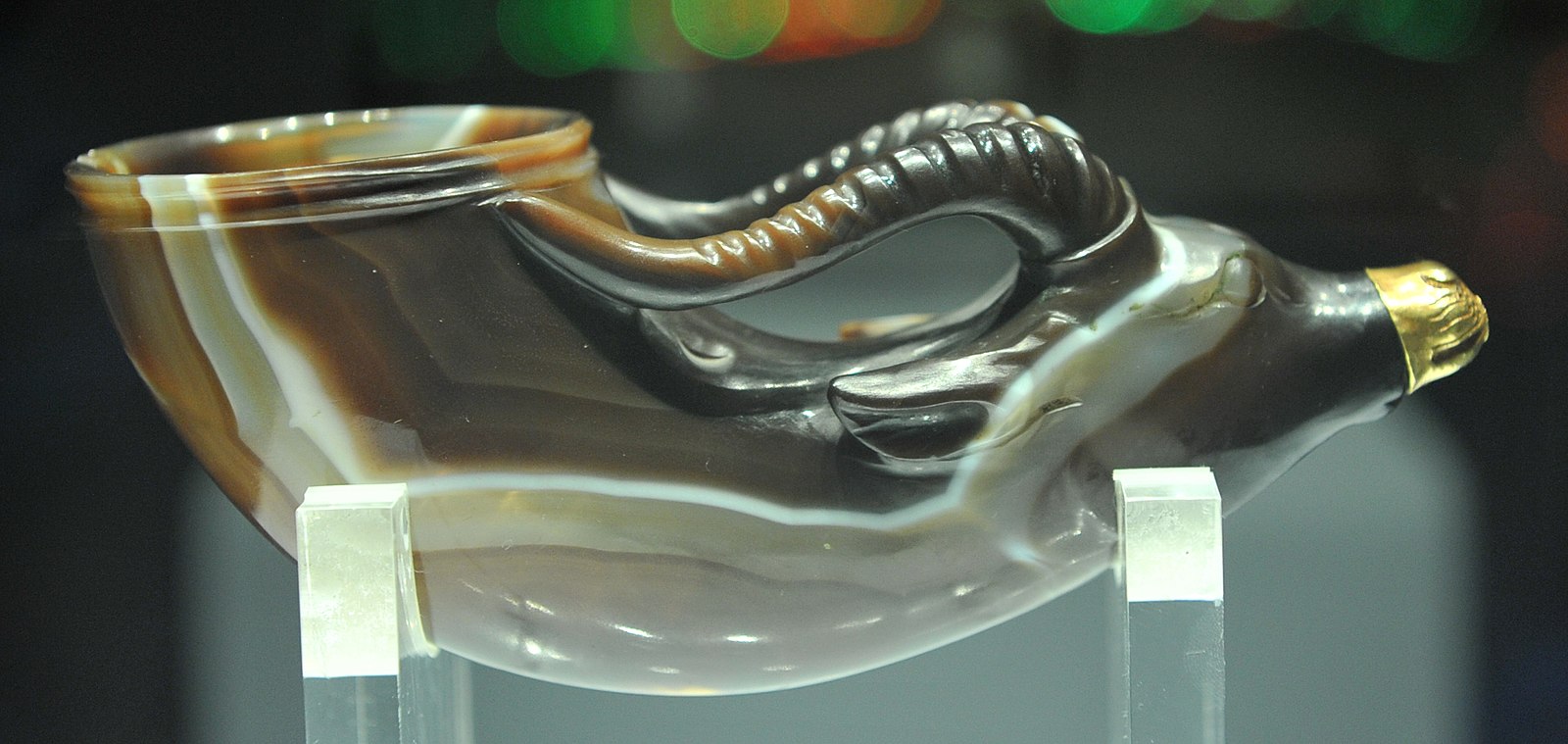
Beast-Head Agate Cup
An exquisite agate rhyton carved into a bull's head — a masterpiece reflecting the cultural fusion of the Silk Road's golden age.
Ceramics
Tang Sancai Three-Color Glazed Camel with Musicians
A tomb figurine depicting a Bactrian camel carrying a musical troupe — a masterpiece of Tang funerary art that captures the cosmopolitan energy of Silk Road trade in a single object.
Where to See Them
Dunhuang Research Academy (Mogao Caves)
Shaanxi History Museum
National Museum of China
In Popular Culture

2024 · Game Science
Black Myth: Wukong
The first AAA action RPG from a Chinese studio, Black Myth: Wukong became the fastest-selling single-player game of 2024 with over 25 million units sold in its first month.
3 artifacts →

2020 · miHoYo / HoYoverse
Genshin Impact — Liyue
Liyue is the Chinese-inspired region of Genshin Impact, a free-to-play open-world RPG with over 60 million monthly active players worldwide.
3 artifacts →
Frequently Asked
What is the "Dunhuang Cave Art & the Silk Road" theme about?
The Mogao Caves at Dunhuang contain over 45,000 square meters of murals spanning 1,000 years — the world's greatest single collection of Buddhist art and a visual record of Silk Road cultural exchange.
Which artifacts are part of "Dunhuang Cave Art & the Silk Road"?
This theme groups 3 artifacts, including Dunhuang Flying Apsara Mural (Cave 320), Beast-Head Agate Cup, Tang Sancai Three-Color Glazed Camel with Musicians. Each entry on this page links to the artifact's full record with provenance, dating, and museum source.
Where can I see the artifacts in this theme in person?
The pieces in this theme are currently held by Dunhuang Research Academy (Mogao Caves), Shaanxi History Museum, and National Museum of China. Some institutions rotate their displays, so we recommend checking the museum's website before visiting.
Is this theme based on academic sources?
Yes — every claim links to a primary or scholarly source, including Wikipedia — Mogao Caves, UNESCO — Mogao Caves. The full list of references is shown in the sidebar of this page.
Why is "Dunhuang Flying Apsara Mural (Cave 320)" considered iconic for this theme?
The iconic flying apsara (feitian 飞天) murals of the Mogao Caves — bodiless celestial figures trailing ribbons through clouds — represent the pinnacle of Buddhist cave art and China's most recognized mural tradition.