Dunhuang Flying Apsara Mural (Cave 320)
The iconic flying apsara (feitian 飞天) murals of the Mogao Caves — bodiless celestial figures trailing ribbons through clouds — represent the pinnacle of Buddhist cave art and China's most recognized mural tradition.
The Story
The Mogao Caves (Dunhuang) contain over 4,500 square meters of mural paintings spanning a millennium (4th–14th century). Among them, the 'flying apsara' figures — celestial musicians and dancers who scatter flowers and play instruments while soaring without wings — became Dunhuang's visual signature. Cave 320's High Tang apsaras are widely considered the finest: weightless bodies curve in S-shaped arabesques, trailing scarves draw flowing lines across the plaster sky, and faces carry the full-fleshed Tang ideal of beauty. These figures synthesize Indian Buddhist iconography, Central Asian decorative arts, and Chinese line-drawing (baimiao) technique into something entirely new. The apsaras became so iconic that the Chinese space program named its first commercial rocket 'Feitian' (Flying Apsara) after them.
Why It Matters
The most globally recognized symbol of the Dunhuang Mogao Caves, designated a UNESCO World Heritage Site in 1987 — and one of the most searched terms in Chinese art globally.
Frequently Asked Questions
1. What is Dunhuang Flying Apsara Mural (Cave 320)?
The iconic flying apsara (feitian 飞天) murals of the Mogao Caves — bodiless celestial figures trailing ribbons through clouds — represent the pinnacle of Buddhist cave art and China's most recognized mural tradition.
2. When was Dunhuang Flying Apsara Mural (Cave 320) made?
Dunhuang Flying Apsara Mural (Cave 320) dates to c. 705–781 AD (High Tang), during the Tang Dynasty.
3. Where can I see Dunhuang Flying Apsara Mural (Cave 320)?
Dunhuang Flying Apsara Mural (Cave 320) is held by Dunhuang Research Academy (Mogao Caves) in China. Check the linked collection record or museum website before visiting because display rotations can change.
4. Why is Dunhuang Flying Apsara Mural (Cave 320) important?
The most globally recognized symbol of the Dunhuang Mogao Caves, designated a UNESCO World Heritage Site in 1987 — and one of the most searched terms in Chinese art globally.
5. What is Dunhuang Flying Apsara Mural (Cave 320) made of?
Dunhuang Flying Apsara Mural (Cave 320) is classified as painting and made of Mineral pigment on plaster wall.
Fun Facts
There are 4,500+ flying apsara figures across 270 caves at Dunhuang
The Chinese space program's first crewed mission patch featured the flying apsara motif
Dunhuang apsaras are wingless — they fly by spiritual force alone, unlike Western angels
The caves were sealed and lost for nearly 900 years before rediscovery in 1900
Where to See It
Public collections holding this artifact or closely related pieces.
Part of These Themes
Related Artifacts

Painting
Along the River During the Qingming Festival
One of the most celebrated paintings in the entire history of Chinese art — a panoramic masterpiece capturing daily life along the Bian River during the Qingming Festival in the Song Dynasty capital of Kaifeng.
Jade & Gemstone
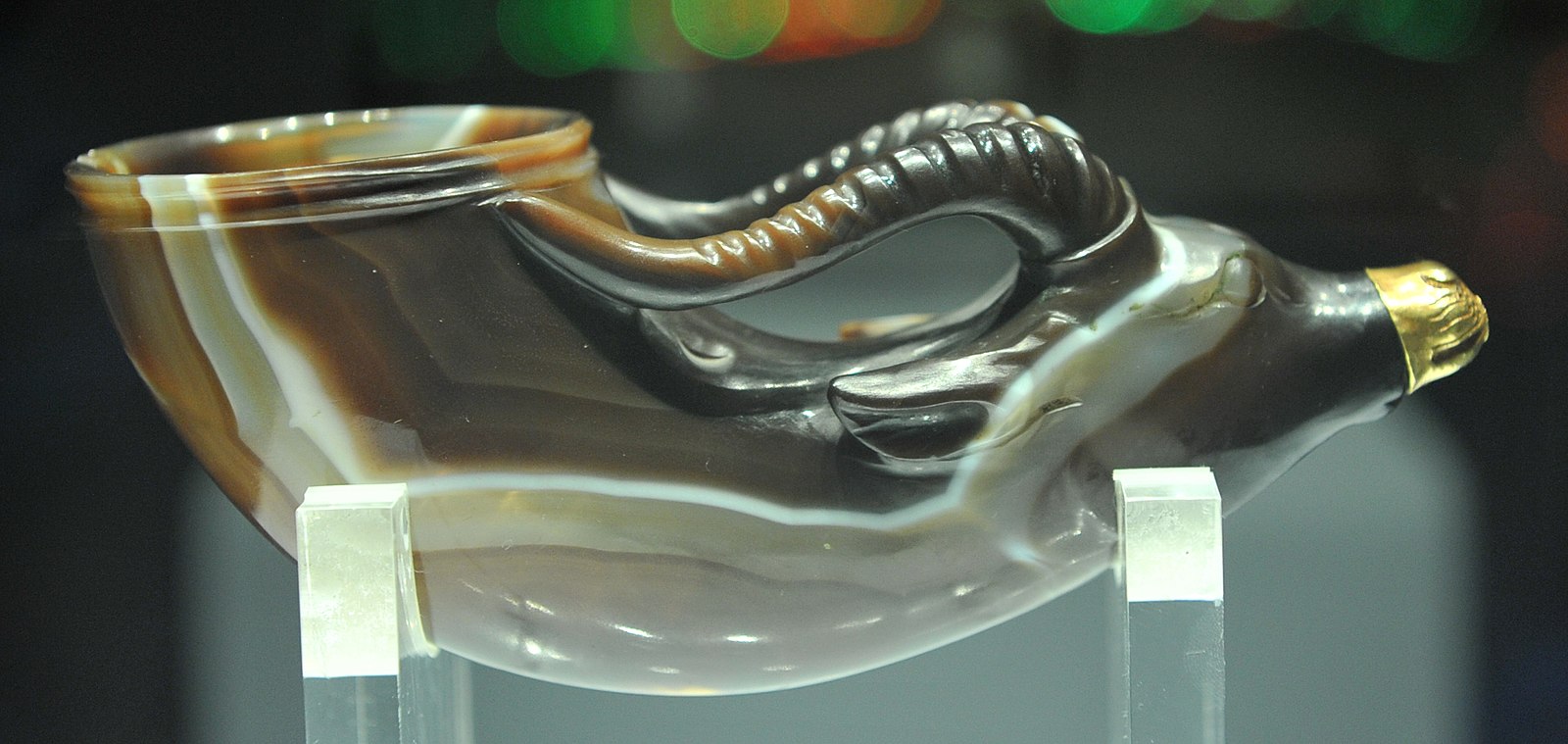
Beast-Head Agate Cup
An exquisite agate rhyton carved into a bull's head — a masterpiece reflecting the cultural fusion of the Silk Road's golden age.
Sources & References
- ·Wikipedia — Mogao Caves(CC-BY-SA 3.0)
Content informed by the sources above. Where Wikipedia text is used, it is licensed under CC-BY-SA 3.0.