The Story
Chinese imperial power was never abstract. It had weight, color, material, and placement. A ding on an ancestral altar declared the ruler's legitimacy; a jade burial suit promised that elite bodies could be preserved beyond death; a blue-and-white porcelain vase signaled access to imperial kilns; a monumental handscroll turned the capital itself into a possession of the throne. Court life was governed by this material grammar. Who could use yellow, who could own a dragon motif, who could present jade, who could stand near the ancestral vessels — every rule transformed an object into politics. This theme gathers objects that made power visible, showing how China's courts used art not as decoration but as a working technology of government.
Artifacts in This Theme
Bronze
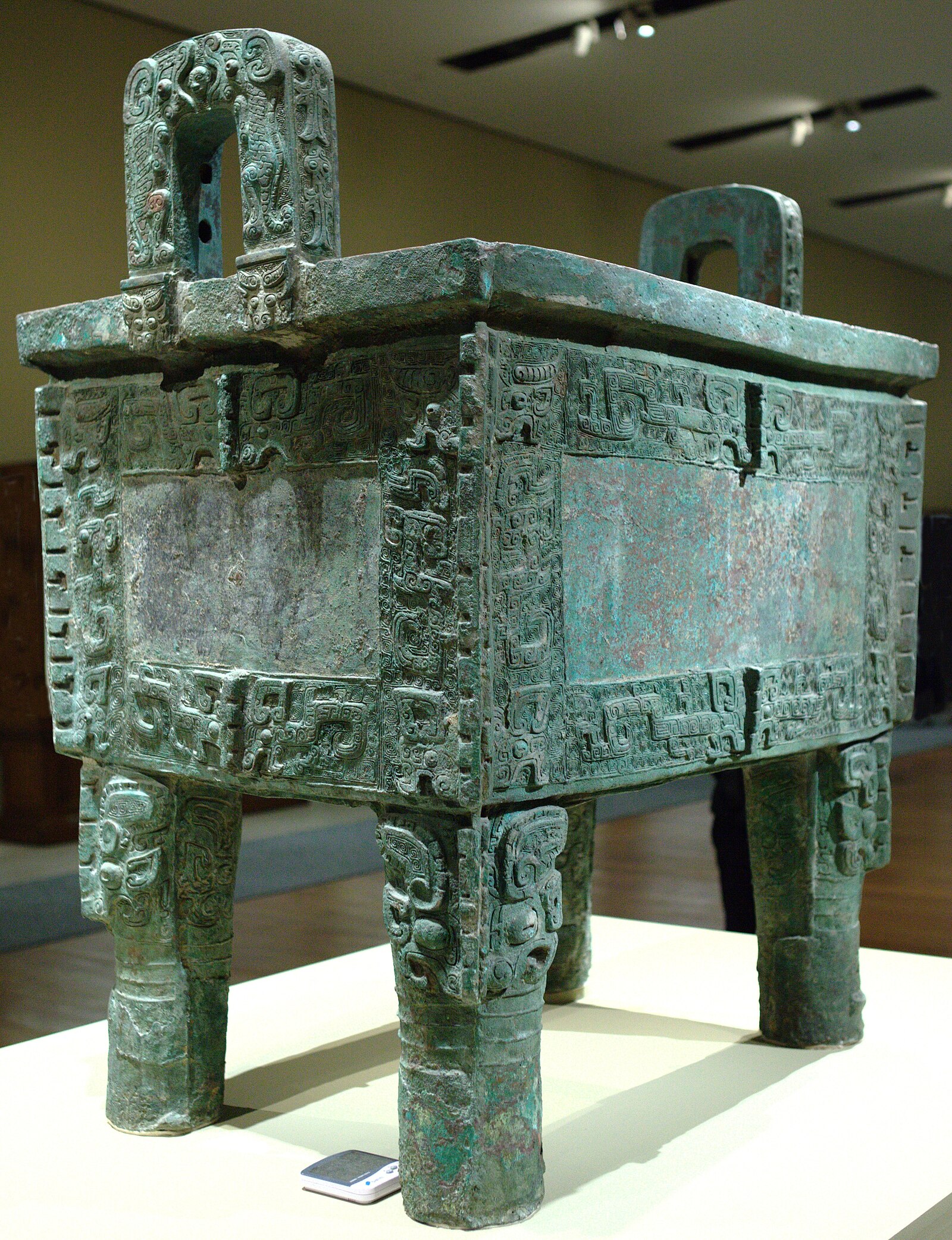
Simuwu Ding (Houmuwu Ding)
The heaviest piece of bronze work ever found in the ancient world — a monumental ritual vessel weighing 832.84 kg that required the coordinated effort of hundreds of craftsmen.
Bronze
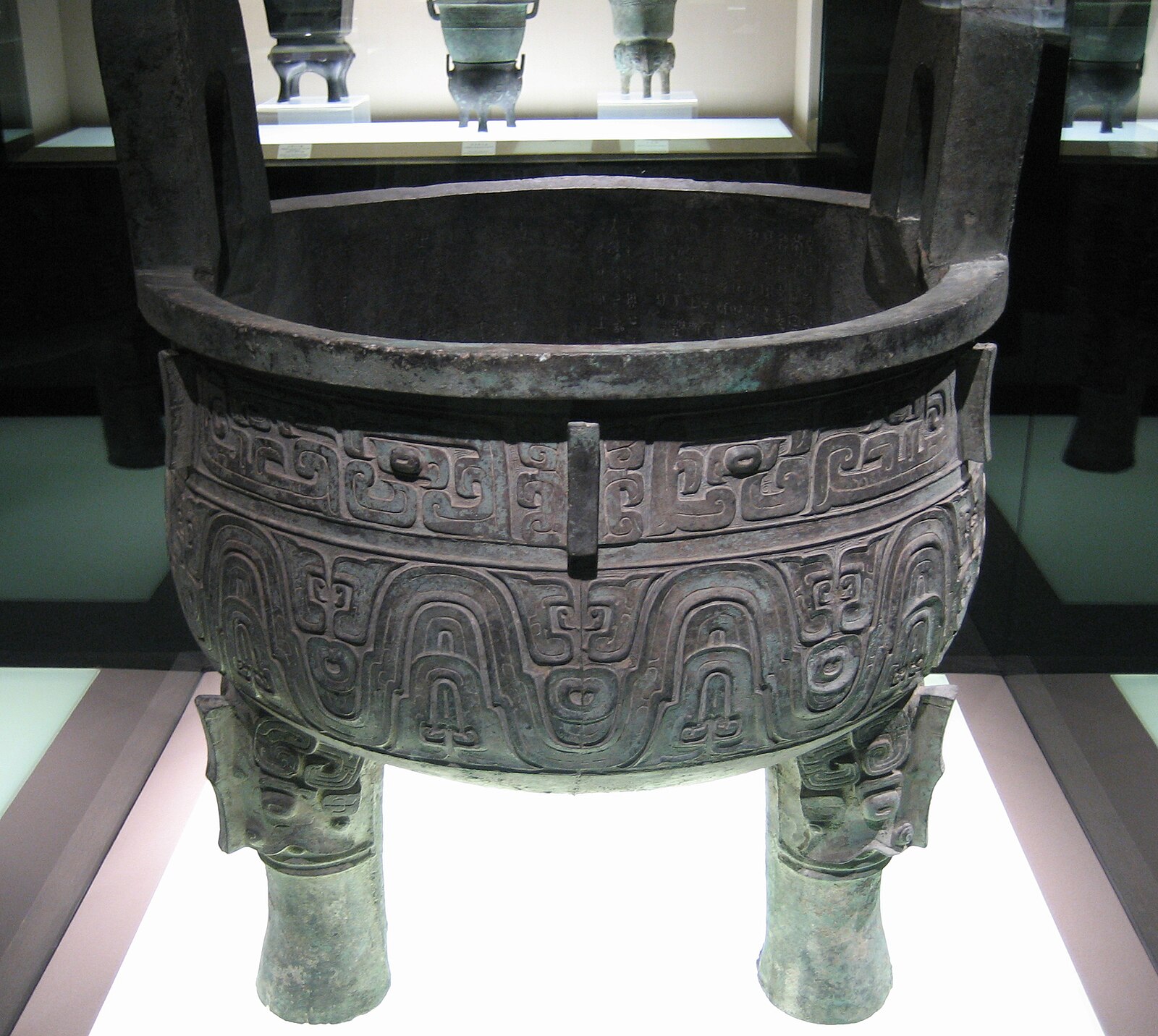
Da Ke Ding (Large Ke Tripod)
One of the most important inscribed bronze vessels of the Western Zhou Dynasty, bearing 290 characters that document a key moment in Chinese feudal history.
Jade
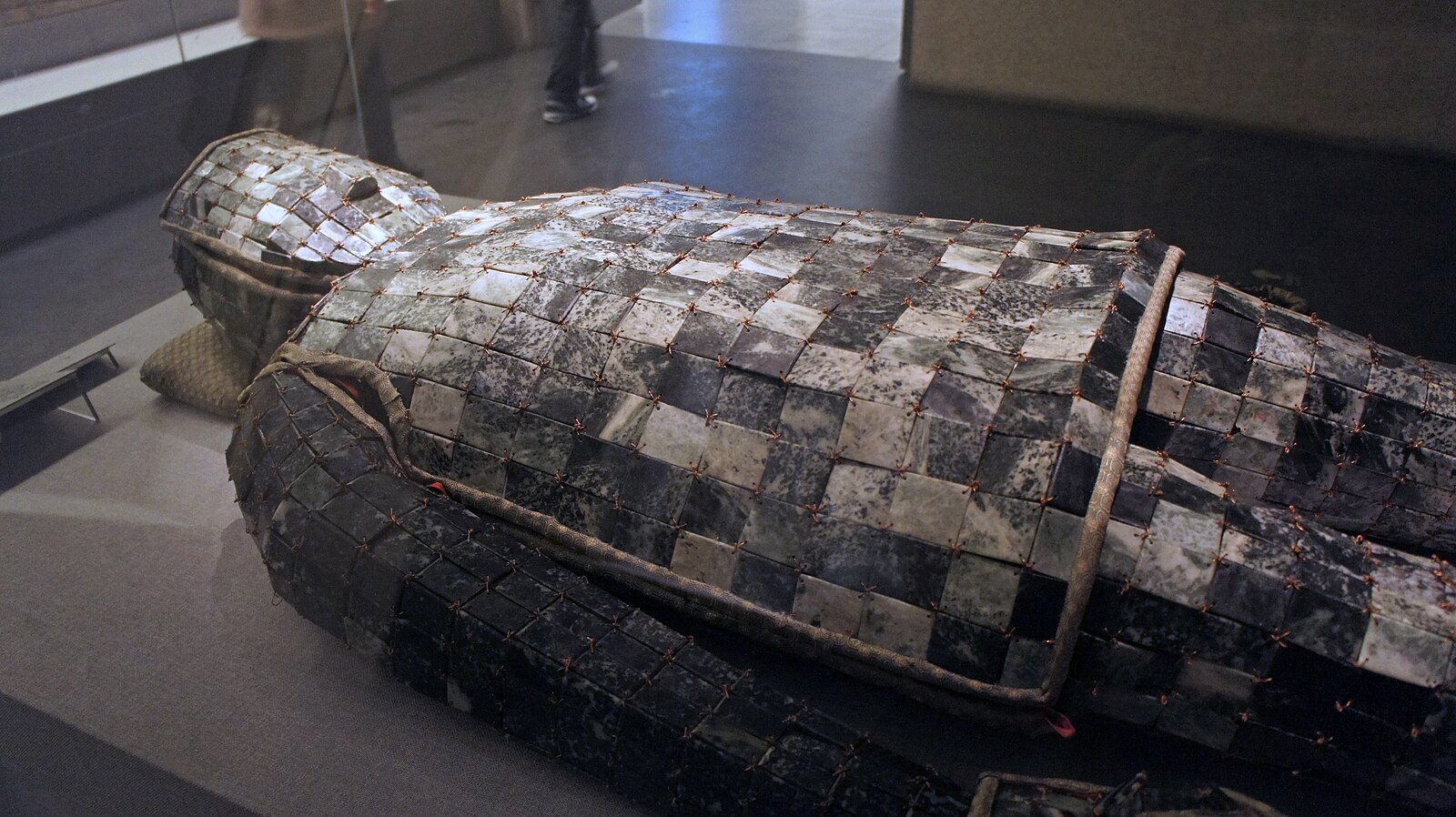
Jade Burial Suit of Prince Liu Sheng
An entire suit made of 2,498 jade tiles sewn together with 1,100 grams of gold wire — built to grant immortality to a Han prince.

Ceramics
Blue-and-White Porcelain Plum Vase (Xiao He Chases Han Xin)
The crown jewel of Yuan Dynasty porcelain — a meiping vase depicting the dramatic story of Xiao He's midnight chase to retrieve the brilliant general Han Xin.

Painting
Along the River During the Qingming Festival
One of the most celebrated paintings in the entire history of Chinese art — a panoramic masterpiece capturing daily life along the Bian River during the Qingming Festival in the Song Dynasty capital of Kaifeng.
Where to See Them
National Museum of China
Shanghai Museum
The Palace Museum
In Popular Culture
2011 · Ruyi Xinxin / Dragon TV
Empresses in the Palace
A 76-episode Qing Dynasty palace drama that became one of the most-watched Chinese television shows of all time and a global cultural phenomenon on Netflix.
3 artifacts →

2023 · Beijing Culture
Creation of the Gods I: Kingdom of Storms
An epic adaptation of the Ming Dynasty mythological novel Fengshen Yanyi, set during the fall of the Shang Dynasty — the same historical moment as the Simuwu Ding and Sanxingdui civilization.
5 artifacts →

2025 · Coco Cartoon / Beijing Enlight
Ne Zha 2
The highest-grossing animated film in world history, Ne Zha 2 reached over USD 2 billion at the global box office by mixing classic Chinese mythology with cutting-edge animation.
2 artifacts →
Frequently Asked
What is the "Imperial Power and Court Life" theme about?
From bronze cauldrons and jade suits to porcelain vases and court paintings, imperial China turned objects into a language of rank, legitimacy, and ritual performance.
Which artifacts are part of "Imperial Power and Court Life"?
This theme groups 5 artifacts, including Simuwu Ding (Houmuwu Ding), Da Ke Ding (Large Ke Tripod), Jade Burial Suit of Prince Liu Sheng, Blue-and-White Porcelain Plum Vase (Xiao He Chases Han Xin), and 1 more. Each entry on this page links to the artifact's full record with provenance, dating, and museum source.
Where can I see the artifacts in this theme in person?
The pieces in this theme are currently held by National Museum of China, Shanghai Museum, Nanjing Museum, and The Palace Museum. Some institutions rotate their displays, so we recommend checking the museum's website before visiting.
Is this theme based on academic sources?
Yes — every claim links to a primary or scholarly source, including Wikipedia — Chinese ritual bronzes, Wikipedia — Chinese imperial art. The full list of references is shown in the sidebar of this page.
Why is "Simuwu Ding (Houmuwu Ding)" considered iconic for this theme?
The heaviest piece of bronze work ever found in the ancient world — a monumental ritual vessel weighing 832.84 kg that required the coordinated effort of hundreds of craftsmen.