
Cultural Context
The film adapts the legend of Ne Zha from the Ming Dynasty novel Fengshen Yanyi (Investiture of the Gods). Its visual design pulls from traditional Chinese temple sculpture, Shang-Zhou bronze ritual vessels, and folk art iconography. Sea palaces are modeled on Qing-era porcelain and imperial architecture; demonic characters echo the taotie masks of ancient bronzes. The film's unprecedented global reach means that hundreds of millions of viewers encountered Ming-era mythology and Shang-Zhou ritual aesthetics for the first time — often with no prior Chinese cultural context.
Real Artifacts Behind the Work
2 direct connections to Chinese cultural heritage.
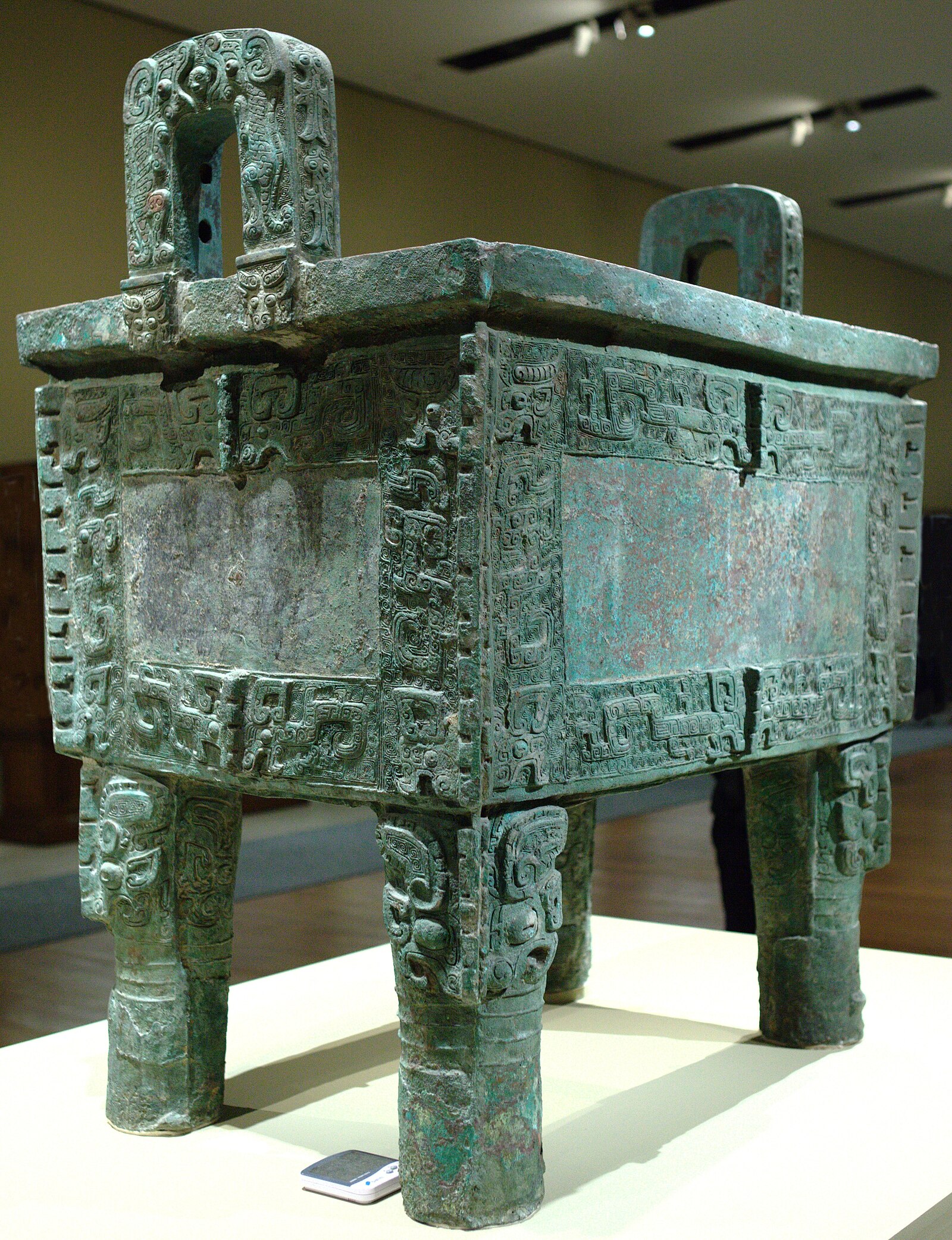
The Connection
The film's depiction of ancestral and ritual spaces features massive bronze cauldrons with taotie motifs, evoking Shang-Zhou ritual dings like the Simuwu Ding.
Read the full story →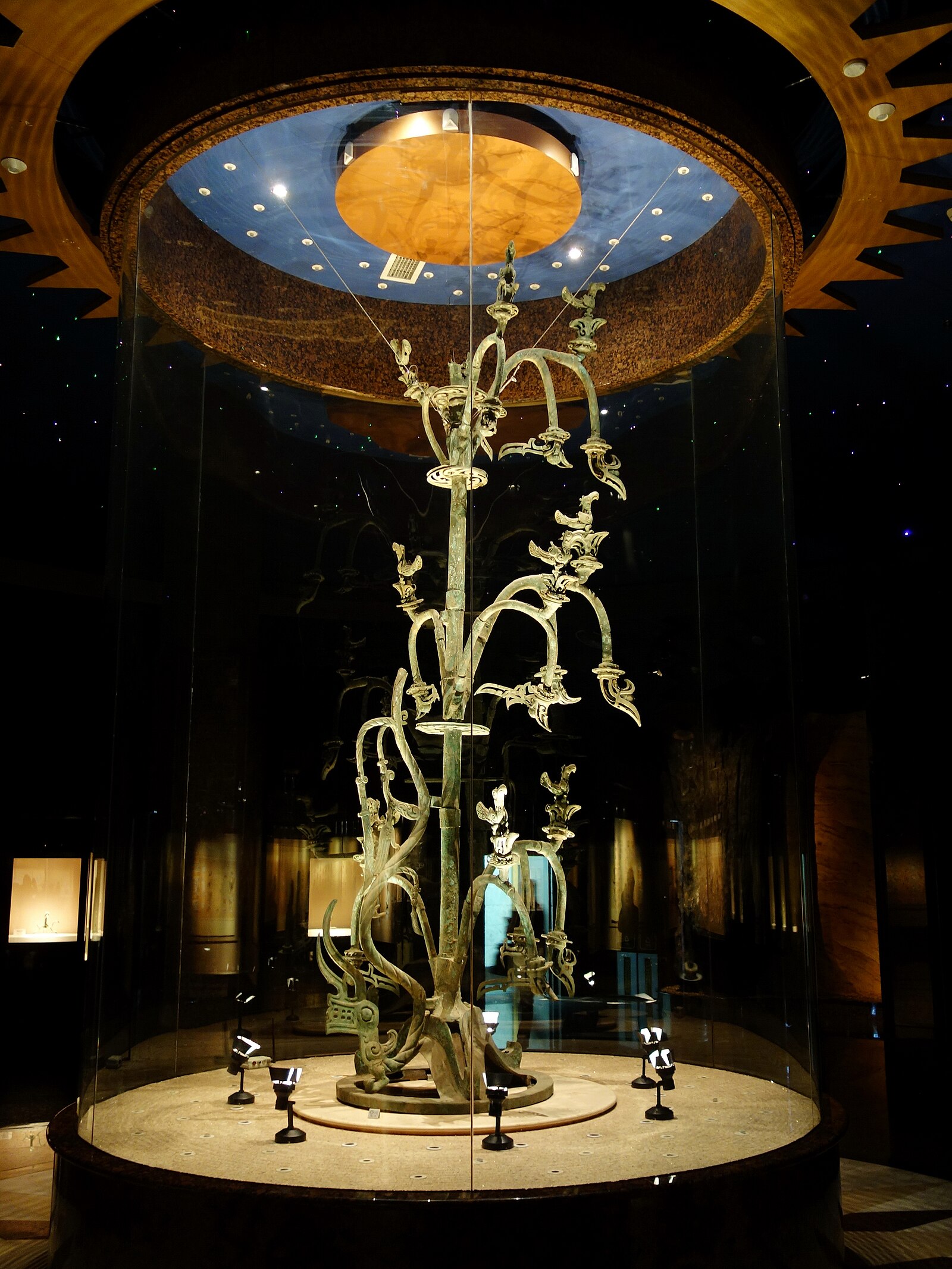
The Connection
The mythological 'world tree' imagery in the film's cosmic scenes resonates with the Sanxingdui Sacred Bronze Tree — both drawing from an ancient pan-Chinese cosmology of a tree connecting heaven and earth.
Read the full story →Related Themes

Sanxingdui Mysteries
A 3,000-year-old civilization that rewrote Chinese history
The bronze masks, gold foil, and towering figures of Sanxingdui belong to a civilization the world did not know existed until 1986 — and many of their secrets remain unsolved.
4 artifacts →

Bronze Dings Through the Ages
The ritual cauldrons that embodied Chinese state power
The ding (鼎) — a three- or four-legged bronze cauldron — was not just a cooking vessel. For 2,000 years, it was the political and spiritual symbol of Chinese civilization itself.
3 artifacts →
Mythic Animals and Cosmic Order
Dragons, beasts, trees, masks, and the invisible structure of the universe
Chinese art repeatedly turns animals and hybrid beings into maps of the cosmos — from Sanxingdui birds and bronze masks to Shang taotie, jade beasts, and porcelain dragons.
6 artifacts →
Warriors, Weapons, and Empire
The material culture of conquest, defense, and military memory
Chinese military heritage is not only swords and soldiers. It includes bronze technology, mass production, tomb armies, court ritual, and the stories later dynasties told about heroic violence.
5 artifacts →
Frequently asked questions
What real Chinese artifacts inspired Ne Zha 2?+
Ne Zha 2 draws on multiple real Chinese artifacts and traditions, most notably: Simuwu Ding (Houmuwu Ding), Sacred Bronze Tree. Each is documented in a Chinese museum and many are visible to the public today. See the connections section above for specific scene-by-scene references.
Where can I see the artifacts that inspired Ne Zha 2?+
The artifacts referenced by Ne Zha 2 are held by: National Museum of China, Sanxingdui Museum. Most have public galleries with regular visitor hours; a few have travelled to international exhibitions.
Who created Ne Zha 2?+
Ne Zha 2 was developed by Coco Cartoon / Beijing Enlight and released in 2025. It is a film produced in China.
Is Ne Zha 2 historically accurate?+
Ne Zha 2 is a creative work, not a documentary. It draws inspiration from real Chinese material culture but adapts and dramatises freely. Our role at China Heritage is to identify which historical references the work is drawing on, with citations to museum primary sources, so curious viewers can separate the historical core from the creative invention.
Where can I learn more about Chinese material culture beyond Ne Zha 2?+
Browse our Topics index for cross-museum themes (bronze ritual, jade and immortality, blue-and-white porcelain) and our Treasures Abroad index for the 28 great Chinese masterpieces in Western museum collections. Each theme links back to specific artifacts you can read about in detail.