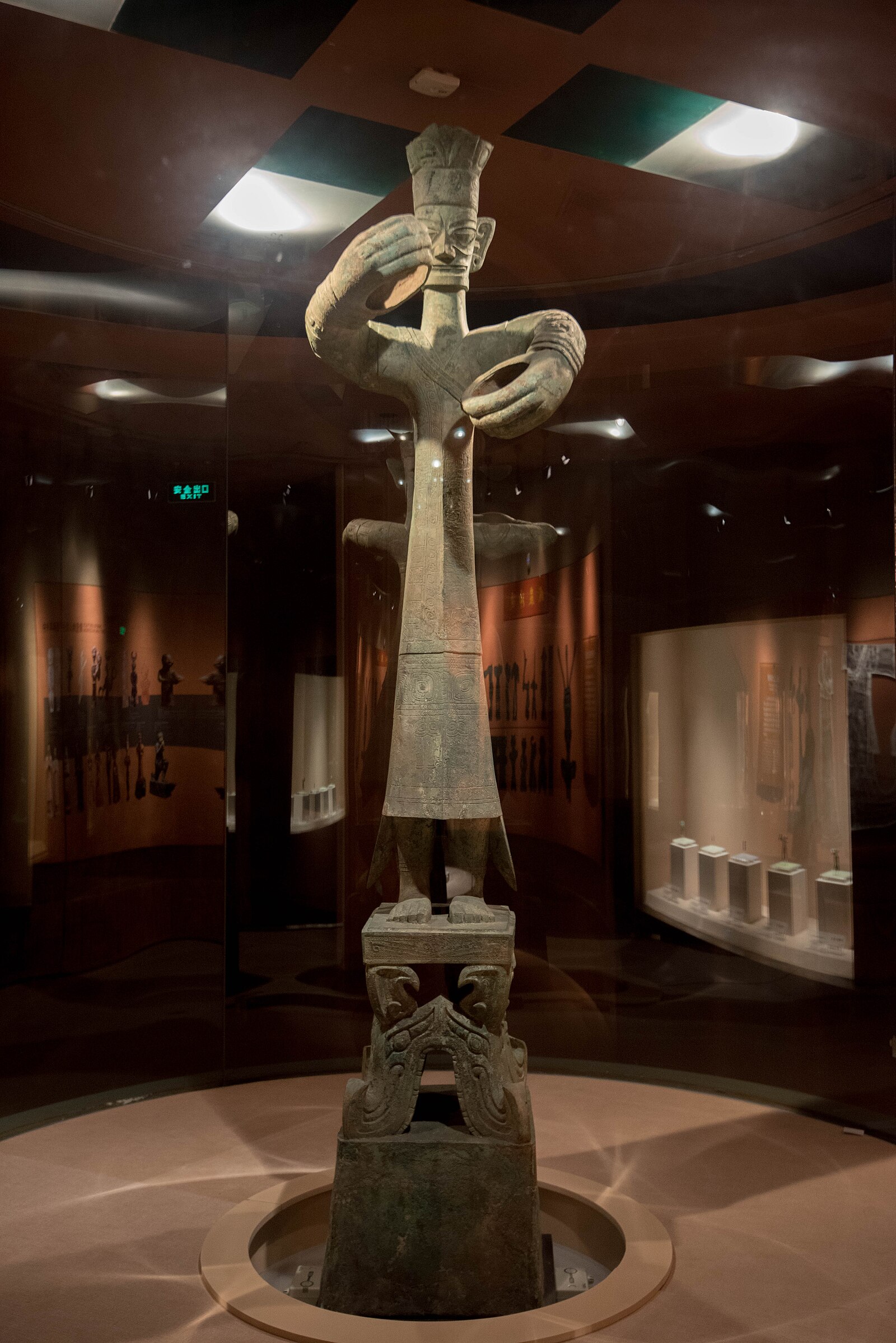
Bronze Standing Figure
Late Shang Dynasty
The tallest and oldest known bronze statue in the world — a 2.62-meter enigmatic figure with enormous hands, seemingly grasping something now lost to time.
This is the object that opens the comparison.
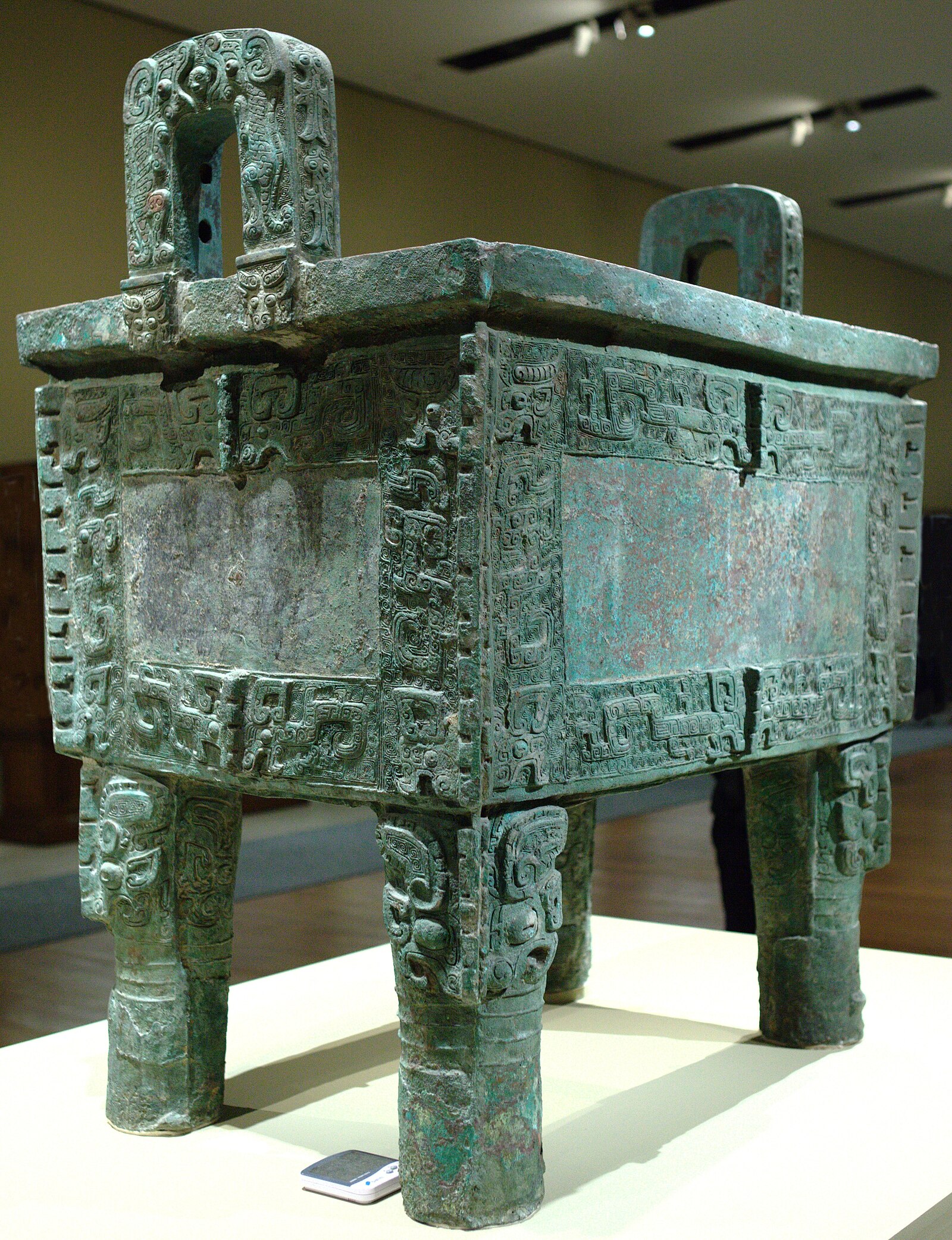
Simuwu Ding (Houmuwu Ding)
Late Shang Dynasty
The heaviest piece of bronze work ever found in the ancient world — a monumental ritual vessel weighing 832.84 kg that required the coordinated effort of hundreds of craftsmen.
This is the object that sharpens the contrast.
Why this comparison matters
If you know only one Chinese bronze tradition, it is probably Shang. But Sanxingdui shows that the Bronze Age of China was never a single story. The Shang world at Anyang gave us huge ritual vessels, ancestor worship, and inscriptions that record royal authority. Sanxingdui, by contrast, produced gold masks, towering figures, and cosmic trees with a visual language that still resists simple explanation. That contrast is the point. One culture is heavily documented in text and inscription. The other is vivid, spectacular, and partly mute. Put them side by side and you get a better map of Bronze Age China: not one civilization radiating from one center, but several powerful regional traditions using bronze to speak to the dead, the divine, and the state.
Side-by-side
What to remember
Supporting objects
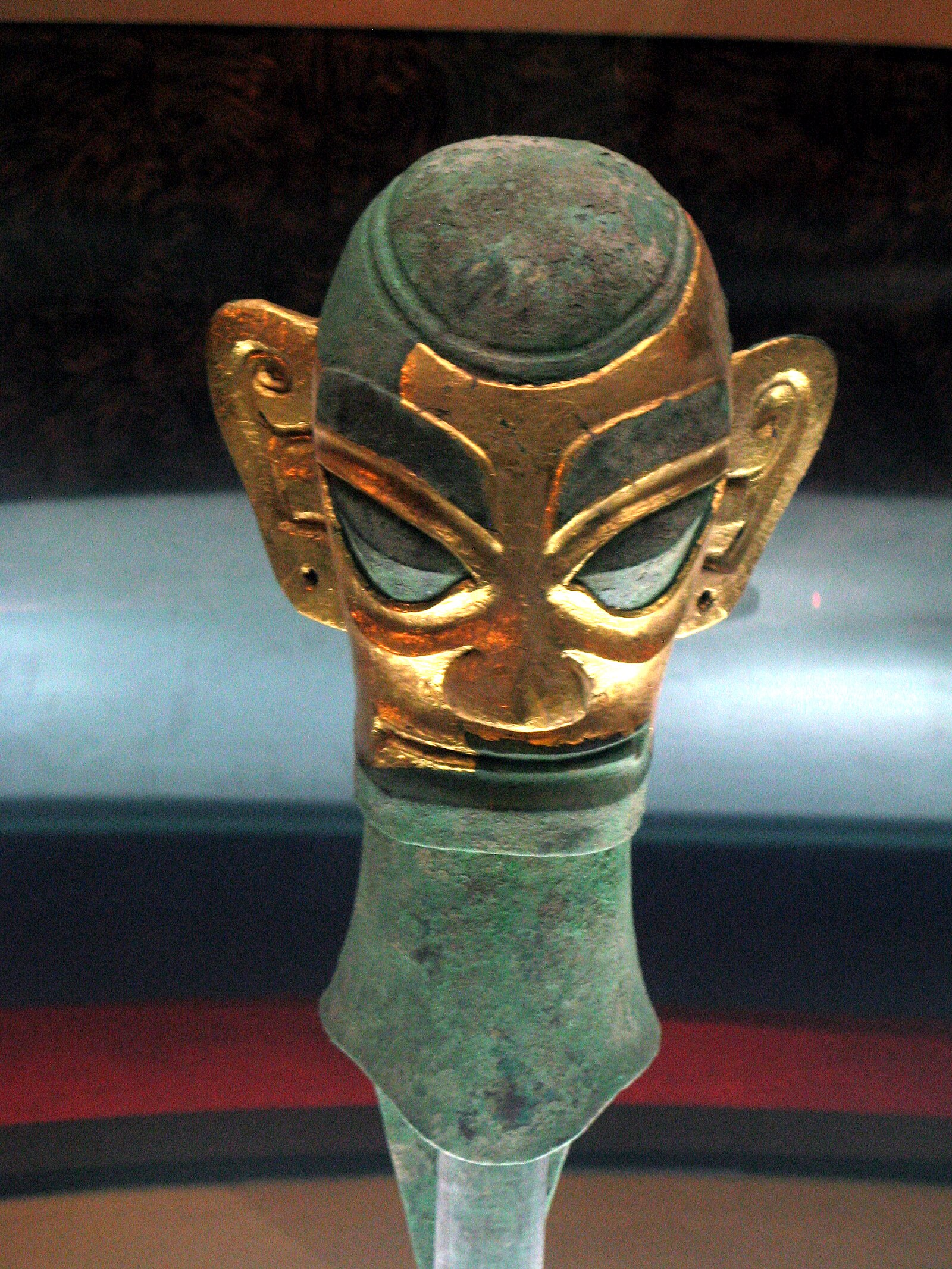
Gold
Gold Mask of Sanxingdui
A hauntingly beautiful gold mask weighing about 280 grams, with protruding eyes and an enigmatic smile that has captivated the modern world.
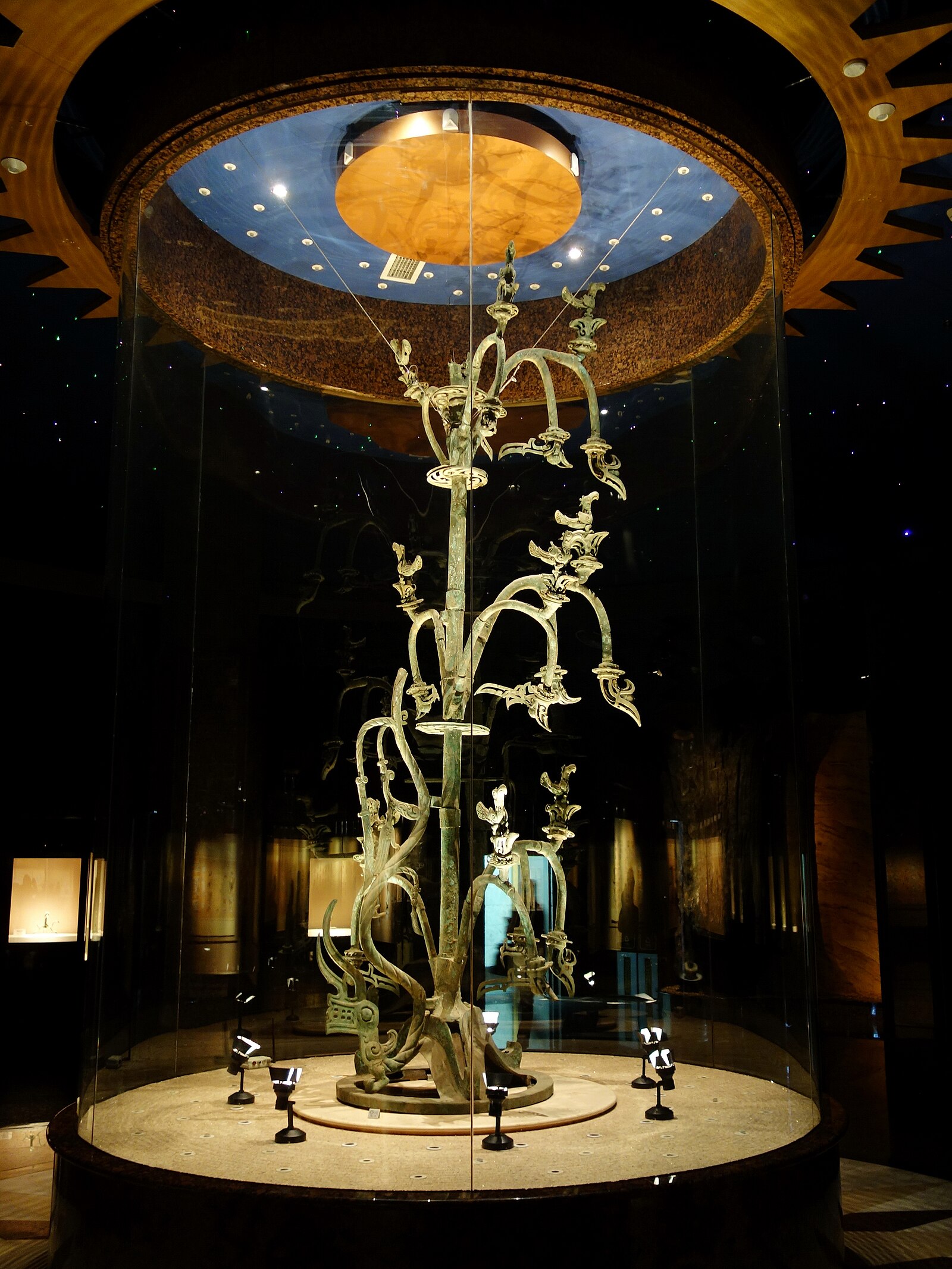
Bronze
Sacred Bronze Tree
A nearly 4-meter tall bronze tree with birds, flowers, and a dragon — possibly representing the mythical Fusang Tree connecting heaven and earth.
Bronze
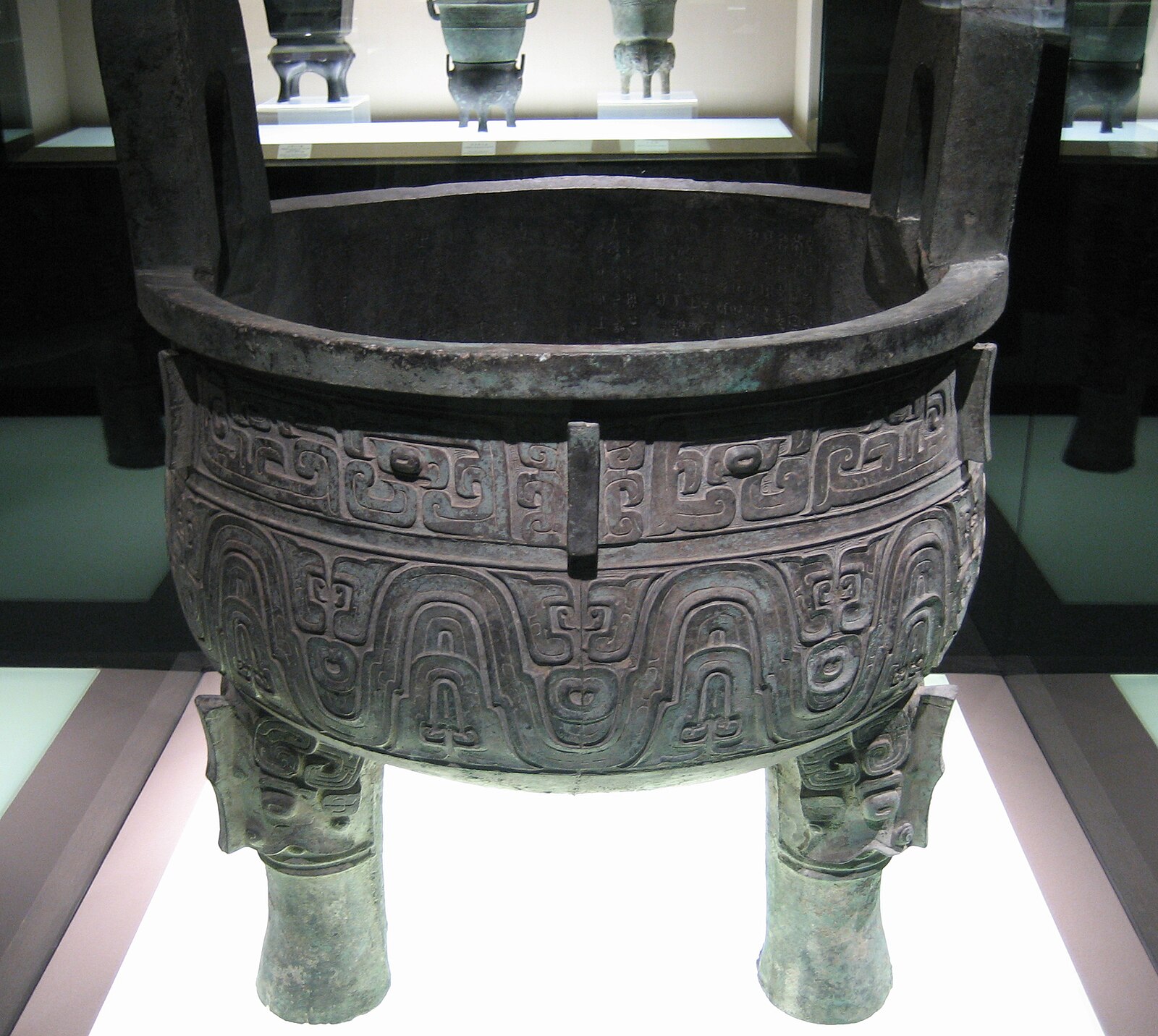
Da Ke Ding (Large Ke Tripod)
One of the most important inscribed bronze vessels of the Western Zhou Dynasty, bearing 290 characters that document a key moment in Chinese feudal history.
Bronze / Musical Instrument
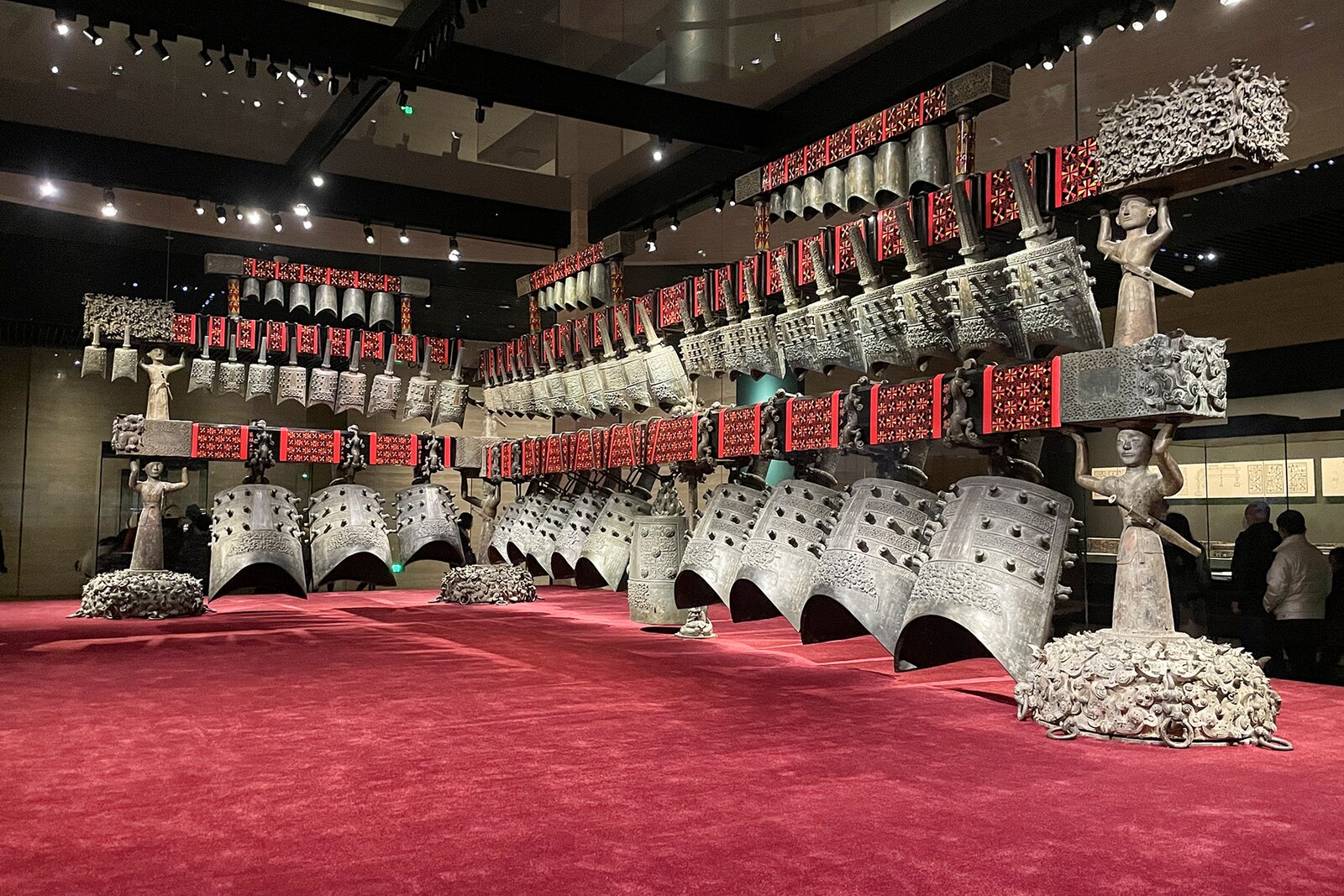
Bianzhong of Marquis Yi of Zeng
A set of 65 bronze bells that, after 2,400 years underground, can still produce music spanning five octaves with perfect tonal accuracy.
Related themes

Sanxingdui Mysteries
A 3,000-year-old civilization that rewrote Chinese history
The bronze masks, gold foil, and towering figures of Sanxingdui belong to a civilization the world did not know existed until 1986 — and many of their secrets remain unsolved.
4 artifacts →
Bronze Dings Through the Ages
The ritual cauldrons that embodied Chinese state power
The ding (鼎) — a three- or four-legged bronze cauldron — was not just a cooking vessel. For 2,000 years, it was the political and spiritual symbol of Chinese civilization itself.
3 artifacts →
Mythic Animals and Cosmic Order
Dragons, beasts, trees, masks, and the invisible structure of the universe
Chinese art repeatedly turns animals and hybrid beings into maps of the cosmos — from Sanxingdui birds and bronze masks to Shang taotie, jade beasts, and porcelain dragons.
6 artifacts →
Frequently asked questions
Which is older, Sanxingdui or Shang bronzes?
The major Sanxingdui pits and the late Shang bronze world are close in date. What matters more than strict age is that they belong to different cultural systems.
Why does Sanxingdui look so strange?
Because it is not a Shang copy. The masks, trees, and figures come from a regional visual language that developed on its own.
What should I notice first on the Simuwu Ding?
Its sheer mass, its rectangular form, and its ritual authority. It is bronze as state power.