Bianzhong of Marquis Yi of Zeng
A set of 65 bronze bells that, after 2,400 years underground, can still produce music spanning five octaves with perfect tonal accuracy.
The Story
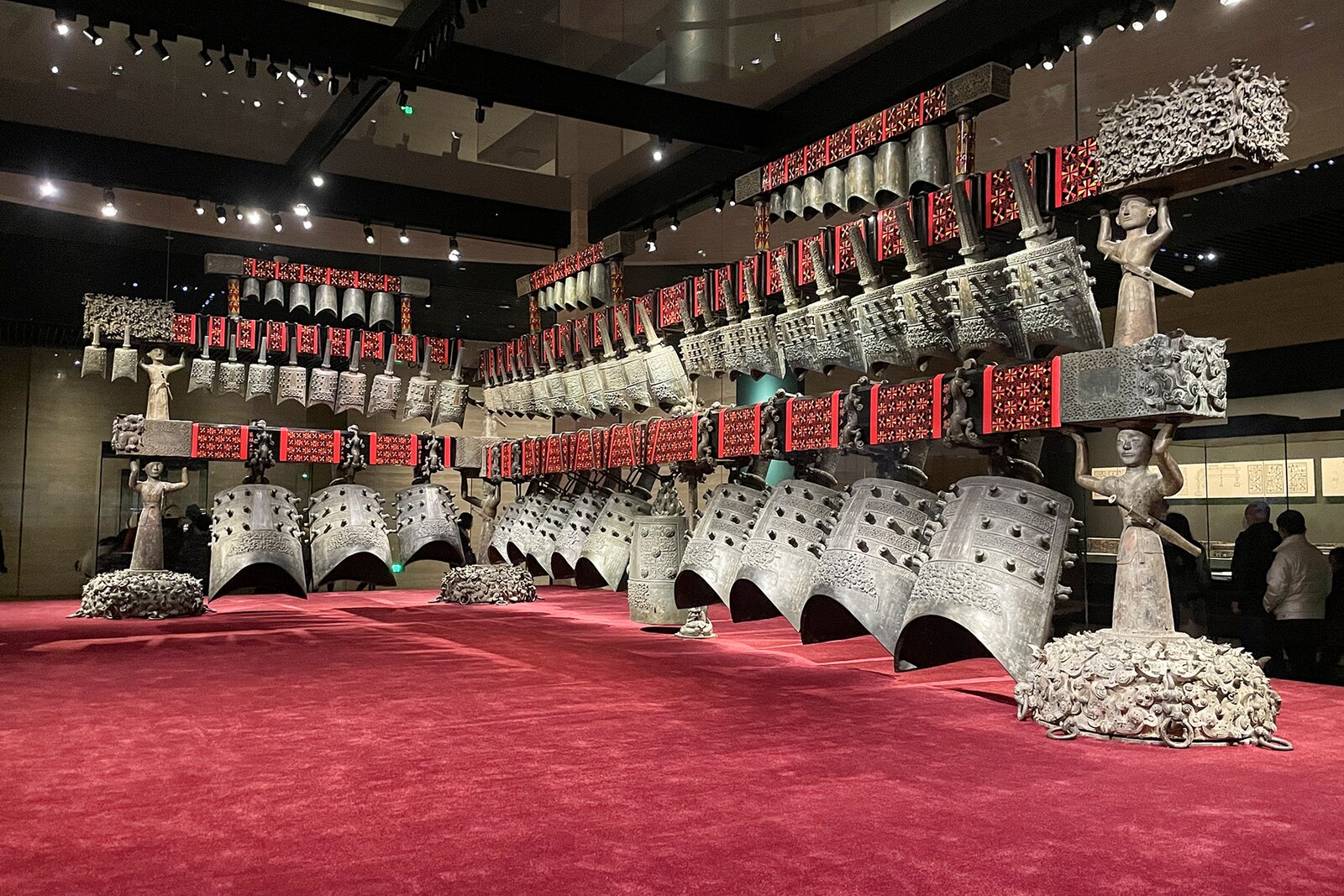
Discovered in 1978 in the tomb of Marquis Yi of Zeng in Suizhou, Hubei Province, this set of 65 bronze bells is arguably the most important musical artifact in world history. Arranged on an L-shaped wooden frame spanning 7.48 meters, each bell can produce two distinct musical notes depending on where it is struck — a feature unique to Chinese bells. Together, they cover a range of five octaves. When researchers played them for the first time in 2,400 years, the bells produced hauntingly beautiful music with tonal accuracy that stunned musicologists worldwide. The smallest bell weighs 2.4 kg; the largest weighs 203.6 kg. Inscriptions totaling 3,755 characters record musical theory, proving that ancient Chinese understanding of acoustics was far more advanced than previously believed.
Why It Matters
Revolutionized our understanding of ancient Chinese music, metallurgy, and acoustic science, proving the existence of a 12-tone musical system 2,000 years before Europe.
Frequently Asked Questions
1. What is Bianzhong of Marquis Yi of Zeng?
A set of 65 bronze bells that, after 2,400 years underground, can still produce music spanning five octaves with perfect tonal accuracy.
2. When was Bianzhong of Marquis Yi of Zeng made?
Bianzhong of Marquis Yi of Zeng dates to 433 BC, during the Warring States Period.
3. Where can I see Bianzhong of Marquis Yi of Zeng?
Bianzhong of Marquis Yi of Zeng is held by Hubei Provincial Museum in China. Check the linked collection record or museum website before visiting because display rotations can change.
4. Why is Bianzhong of Marquis Yi of Zeng important?
Revolutionized our understanding of ancient Chinese music, metallurgy, and acoustic science, proving the existence of a 12-tone musical system 2,000 years before Europe.
5. What is Bianzhong of Marquis Yi of Zeng made of?
Bianzhong of Marquis Yi of Zeng is classified as bronze / musical instrument and made of Bronze with gold inlay.
Fun Facts
Each bell produces TWO different notes depending on where you strike it
The complete set weighs over 4.4 tons
Contains 3,755 characters of inscribed musical theory
China demonstrated a 12-tone musical system 2,000 years before Europe
Where to See It
Public collections holding this artifact or closely related pieces.
In Popular Culture
Modern games, films, and TV shows that draw on this artifact.

The Connection
The Untamed's use of music as spiritual technology fits a much older Chinese belief that tuned bronze sound could order bodies, courts, and the cosmos.

The Connection
Court ceremony, music, and ritual display form the background of elite power; the Marquis Yi bells show the depth of that ceremonial technology.
The Connection
Court ceremony, music, and ritual hierarchy are central to the drama's political architecture — the same world of bronze-bell court music that the Marquis Yi set preserves.
Part of These Themes

Warriors, Weapons, and Empire
The material culture of conquest, defense, and military memory
Chinese military heritage is not only swords and soldiers. It includes bronze technology, mass production, tomb armies, court ritual, and the stories later dynasties told about heroic violence.
5 artifacts →
Music, Ritual, and Performance
Sound, ceremony, and spectacle from Bronze Age courts to Tang banquets
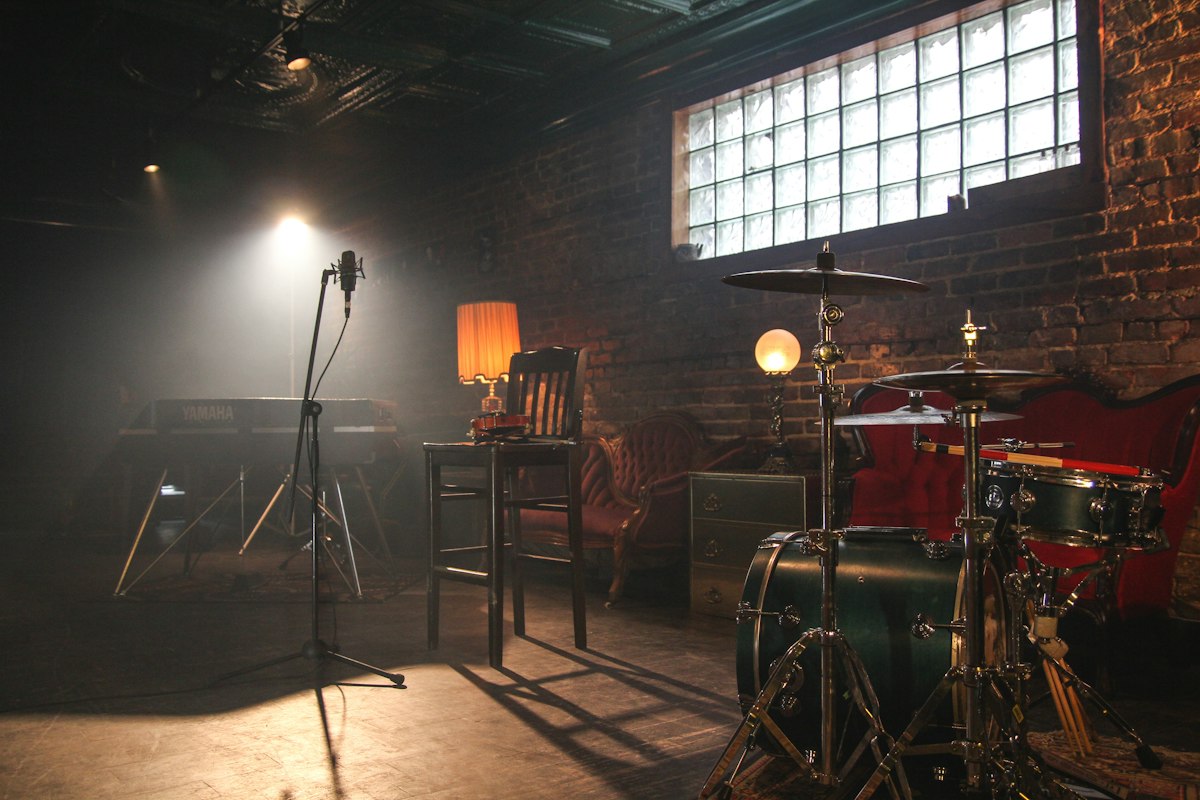
Ancient Chinese performance culture linked music, ritual, drinking, procession, and court display into a single sensory world preserved in bells, cups, paintings, and tomb goods.
4 artifacts →
Related Artifacts
Bronze
Simuwu Ding (Houmuwu Ding)
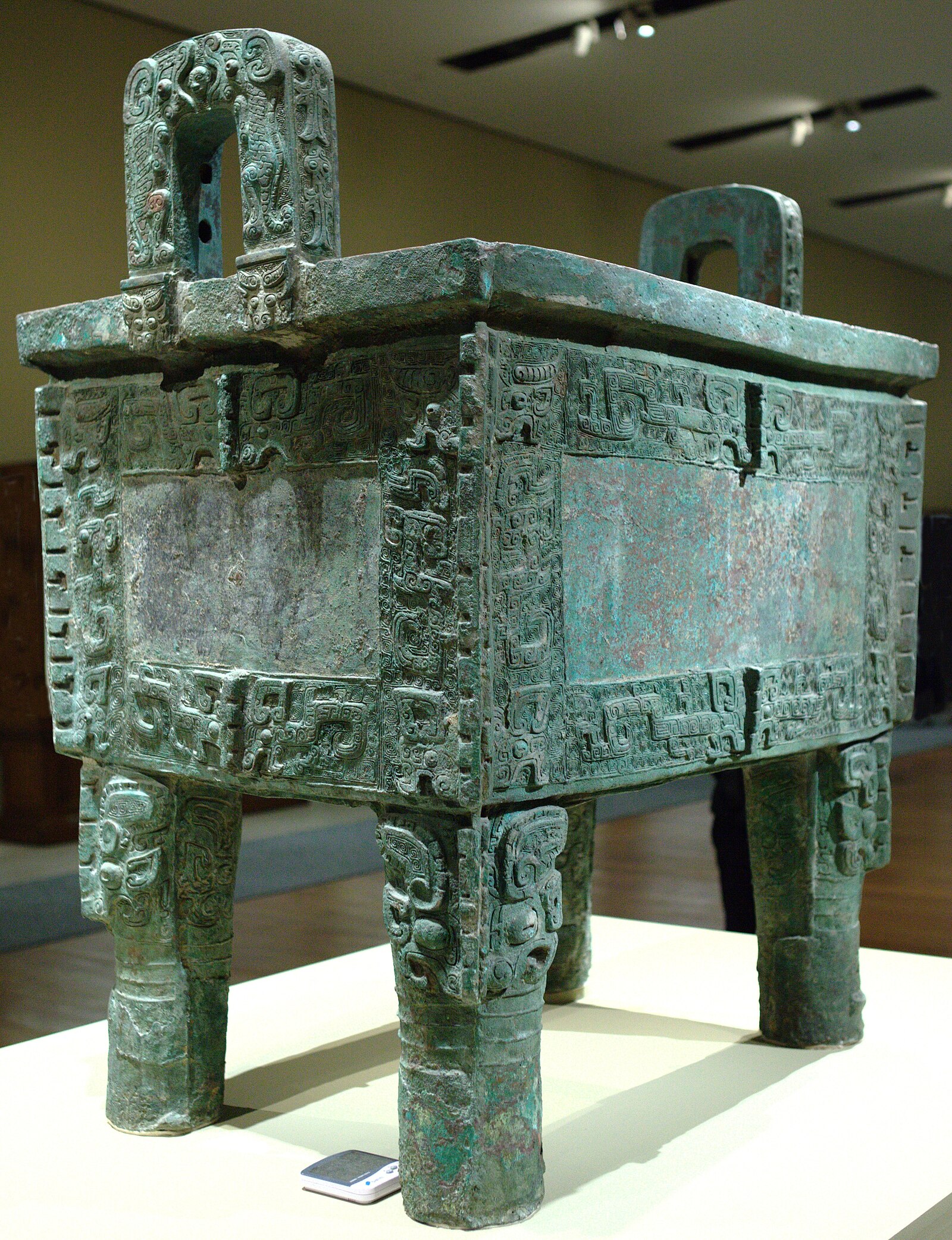
The heaviest piece of bronze work ever found in the ancient world — a monumental ritual vessel weighing 832.84 kg that required the coordinated effort of hundreds of craftsmen.
Weapons
Sword of Goujian
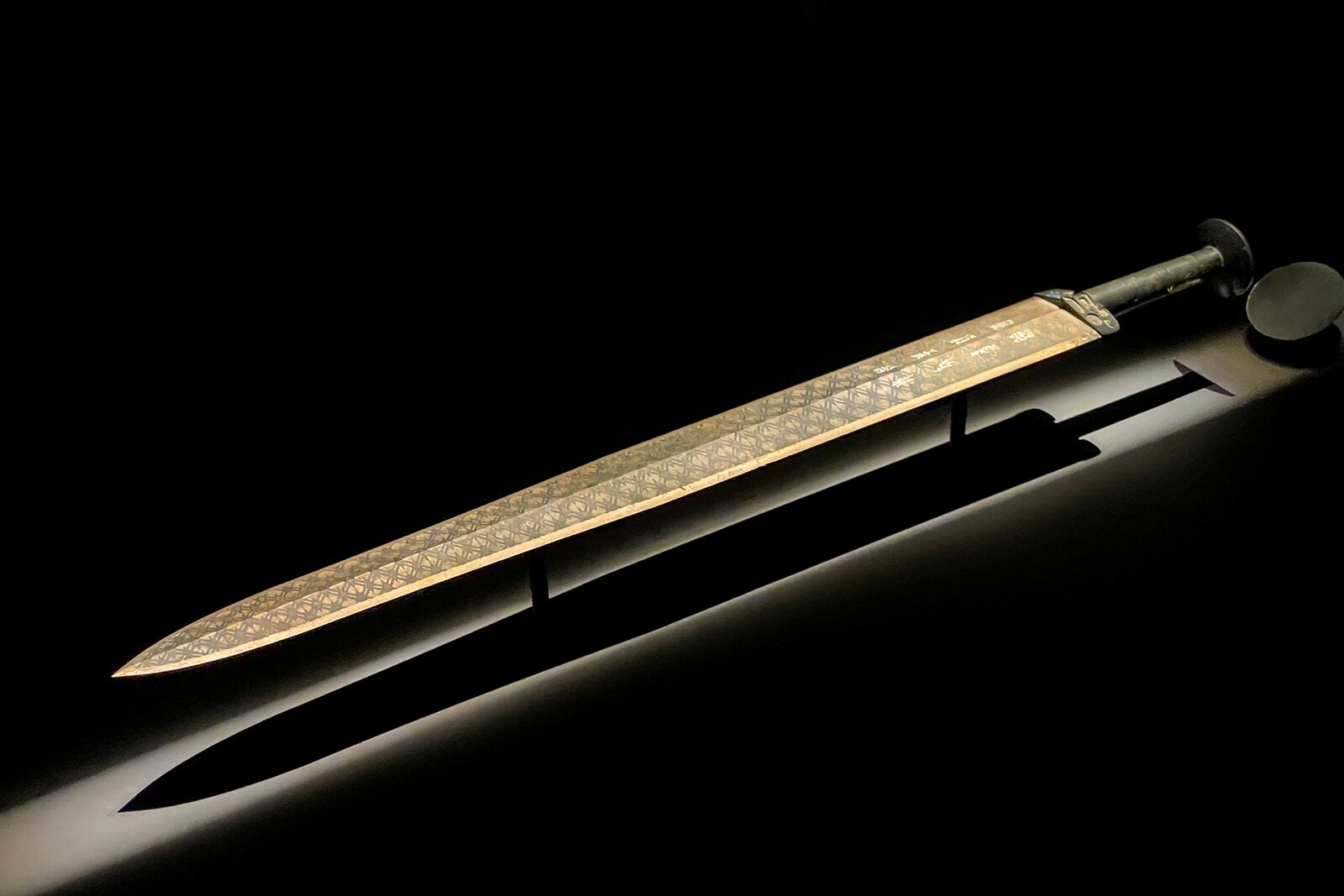
A 2,500-year-old sword found still razor-sharp and untarnished — a testament to ancient Chinese metallurgical genius.
Sources & References
- ·Wikipedia — Bianzhong of Marquis Yi of Zeng(CC-BY-SA 3.0)
Content informed by the sources above. Where Wikipedia text is used, it is licensed under CC-BY-SA 3.0.