Bronze Chariot and Horses of Qin Shi Huang
Two half-life-size bronze chariots excavated near Qin Shi Huang's mausoleum — the most complex bronze vehicles ever found in ancient China, assembled from thousands of individually cast parts.
The Story
In 1980, archaeologists working 20 meters west of Qin Shi Huang's tomb mound uncovered two collapsed bronze chariots buried in a wooden coffin-like pit. After eight years of restoration, the vehicles emerged as masterpieces of Qin engineering: chariots, horses, drivers, reins, umbrellas, crossbow fittings, and decorative harnesses all cast in bronze and detailed with gold and silver. Chariot No. 1 is an open inspection carriage; Chariot No. 2 is a covered imperial carriage, possibly representing the emperor's soul vehicle for the afterlife. The construction required extraordinary modular casting precision — one carriage contains more than 3,000 separate components, with moving parts such as hinges, axles, and umbrella mechanisms still intelligible after 2,200 years.
Why It Matters
The bronze chariots reveal the First Emperor's afterlife not as a static army but as a complete imperial procession, making them essential companions to the Terracotta Warriors and a high-search Xi'an tourism highlight.
Frequently Asked Questions
1. What is Bronze Chariot and Horses of Qin Shi Huang?
Two half-life-size bronze chariots excavated near Qin Shi Huang's mausoleum — the most complex bronze vehicles ever found in ancient China, assembled from thousands of individually cast parts.
2. When was Bronze Chariot and Horses of Qin Shi Huang made?
Bronze Chariot and Horses of Qin Shi Huang dates to c. 210 BC, during the Qin Dynasty.
3. Where can I see Bronze Chariot and Horses of Qin Shi Huang?
Bronze Chariot and Horses of Qin Shi Huang is held by Emperor Qinshihuang's Mausoleum Site Museum in China. Check the linked collection record or museum website before visiting because display rotations can change.
4. Why is Bronze Chariot and Horses of Qin Shi Huang important?
The bronze chariots reveal the First Emperor's afterlife not as a static army but as a complete imperial procession, making them essential companions to the Terracotta Warriors and a high-search Xi'an tourism highlight.
5. What is Bronze Chariot and Horses of Qin Shi Huang made of?
Bronze Chariot and Horses of Qin Shi Huang is classified as bronze and made of Cast bronze with gold and silver fittings.
Fun Facts
Each chariot is roughly half life-size but contains thousands of separate cast components
The reins are made from tiny bronze links that imitate leather straps
The covered carriage includes a working umbrella-like canopy structure
They were restored from more than 1,500 broken fragments
Where to See It
Public collections holding this artifact or closely related pieces.
Part of These Themes
Related Artifacts
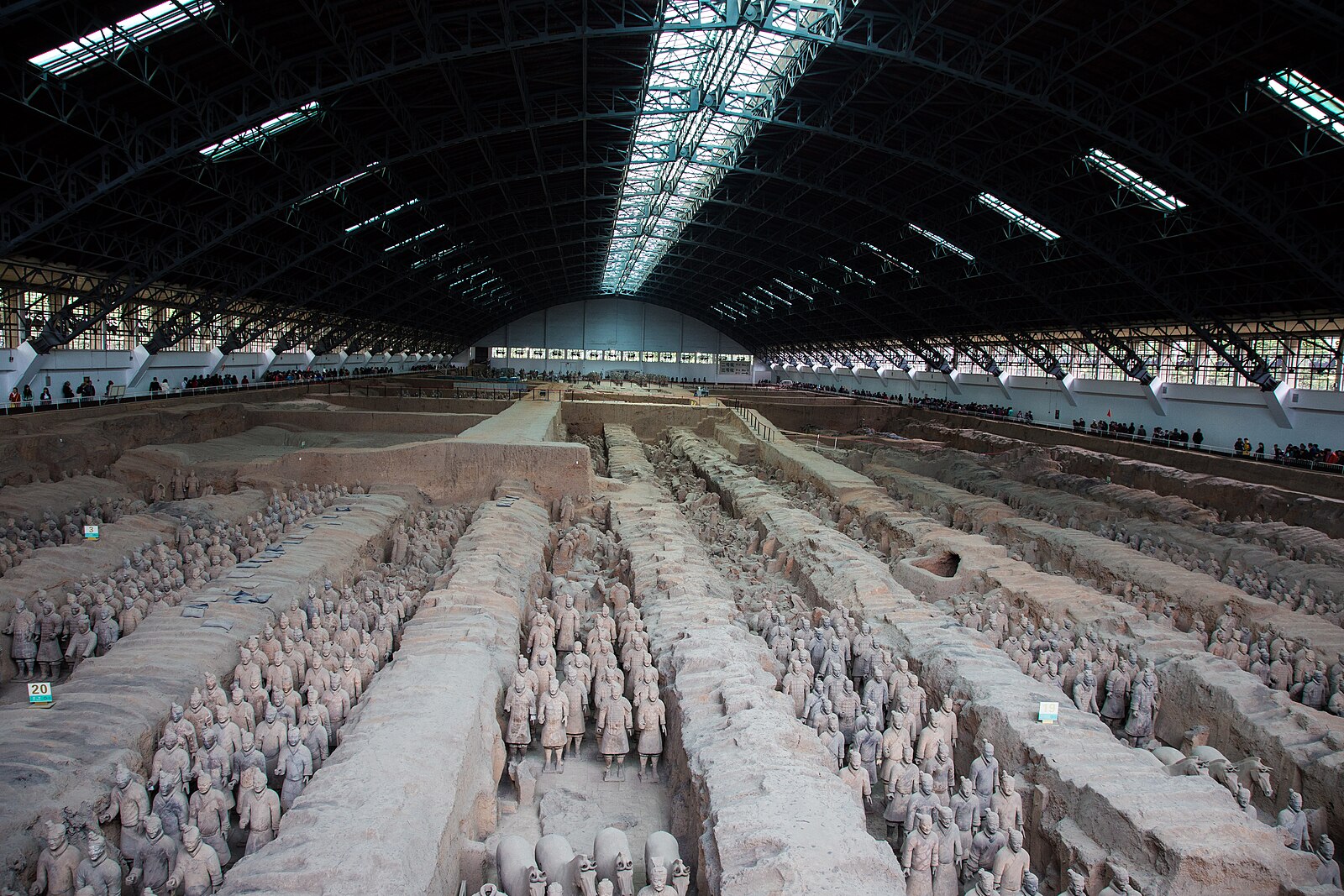
Sculpture
Terracotta Warriors
An army of over 8,000 life-sized clay soldiers, each with unique facial features, built to guard China's first emperor in the afterlife.

Bronze
Bronze Galloping Horse (Horse Treading on a Flying Swallow)
A galloping horse balanced on one hoof atop a flying swallow — China's official tourism logo since 1983 and one of the most dynamically engineered bronzes in world art history.
Sources & References
- ·Wikipedia — Terracotta Army: Bronze chariots(CC-BY-SA 3.0)
Content informed by the sources above. Where Wikipedia text is used, it is licensed under CC-BY-SA 3.0.