Bronze Galloping Horse (Horse Treading on a Flying Swallow)
A galloping horse balanced on one hoof atop a flying swallow — China's official tourism logo since 1983 and one of the most dynamically engineered bronzes in world art history.

The Story
Discovered in 1969 in a Eastern Han tomb at Wuwei, Gansu Province, this 34.5 cm bronze captures the impossible instant when a horse at full gallop overtakes a swallow in flight, pressing its rear hoof onto the bird's back. The entire sculpture balances on that single point of contact — a feat of bronze casting, weight distribution, and artistic imagination. The horse's three airborne legs, flying mane, open mouth, and tail streaming behind create a snapshot of pure velocity. The identity of the bird beneath is debated — swallow, hawk, or mythical creature — but the aerodynamic metaphor is clear: this horse is faster than flight itself. In 1983, the National Tourism Administration adopted the silhouette as China's official tourism symbol, making it one of the most reproduced artworks in the country.
Why It Matters
China's official tourism logo since 1983 — a 2,000-year-old sculpture that achieves through balance and illusion what photography would later capture through shutter speed.
Frequently Asked Questions
1. What is Bronze Galloping Horse (Horse Treading on a Flying Swallow)?
A galloping horse balanced on one hoof atop a flying swallow — China's official tourism logo since 1983 and one of the most dynamically engineered bronzes in world art history.
2. When was Bronze Galloping Horse (Horse Treading on a Flying Swallow) made?
Bronze Galloping Horse (Horse Treading on a Flying Swallow) dates to c. 25–220 AD, during the Eastern Han Dynasty.
3. Where can I see Bronze Galloping Horse (Horse Treading on a Flying Swallow)?
Bronze Galloping Horse (Horse Treading on a Flying Swallow) is held by Gansu Provincial Museum in China. Check the linked collection record or museum website before visiting because display rotations can change.
4. Why is Bronze Galloping Horse (Horse Treading on a Flying Swallow) important?
China's official tourism logo since 1983 — a 2,000-year-old sculpture that achieves through balance and illusion what photography would later capture through shutter speed.
5. What is Bronze Galloping Horse (Horse Treading on a Flying Swallow) made of?
Bronze Galloping Horse (Horse Treading on a Flying Swallow) is classified as bronze and made of Bronze.
Fun Facts
Has been China's official tourism symbol since 1983
The entire sculpture balances on one hoof touching a swallow — a single contact point
Nicknamed 'Bronze Running Horse' or 'Flying Horse of Gansu'
Found in the tomb of a Han Dynasty general at Leitai, Wuwei
Where to See It
Public collections holding this artifact or closely related pieces.
In Popular Culture
Modern games, films, and TV shows that draw on this artifact.

The Connection
The horse zodiac head connects to China's broader bronze horse tradition — the film references multiple Chinese bronze masterworks as endangered cultural heritage.
Related Artifacts
Jade & Gemstone
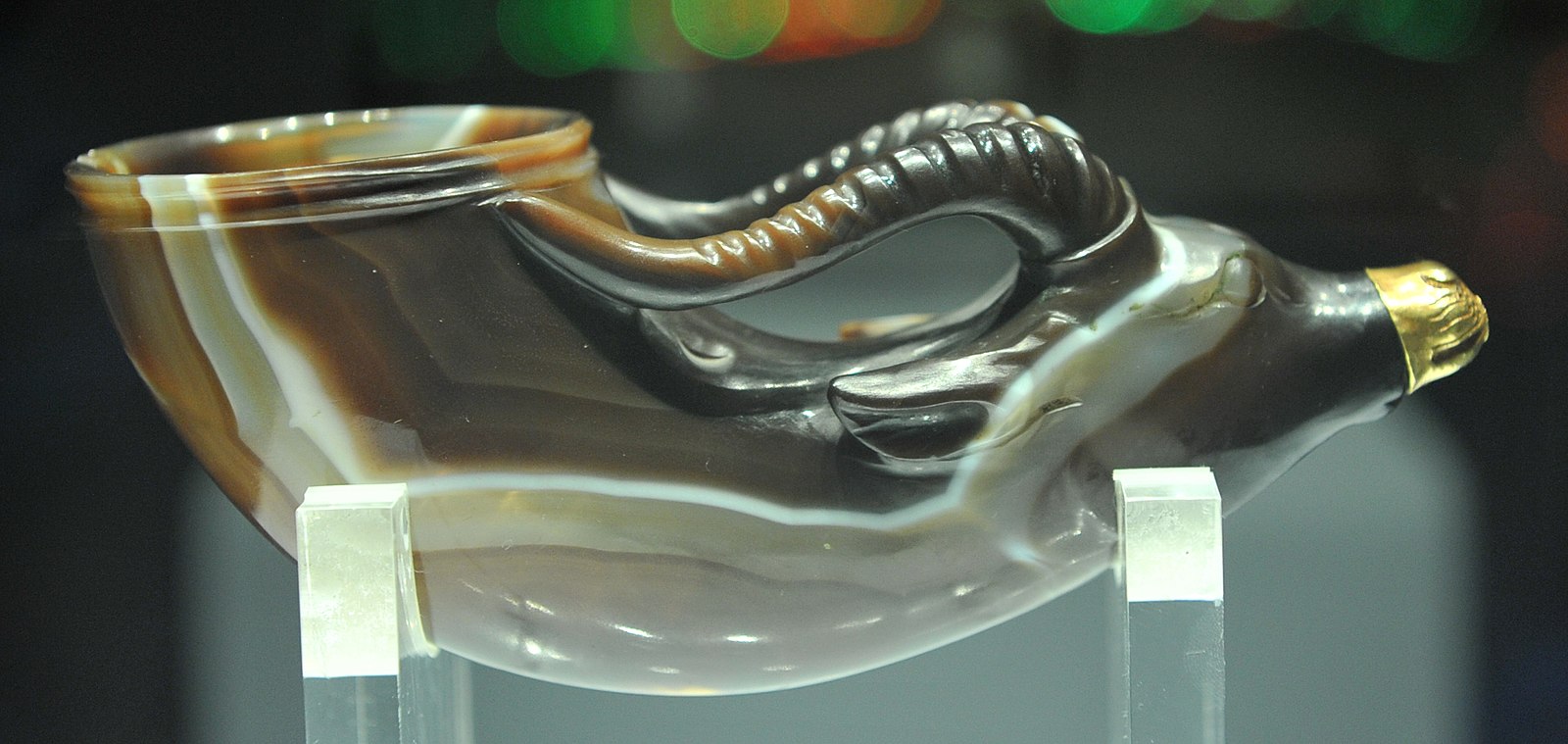
Beast-Head Agate Cup
An exquisite agate rhyton carved into a bull's head — a masterpiece reflecting the cultural fusion of the Silk Road's golden age.

Sculpture
Terracotta Warriors
An army of over 8,000 life-sized clay soldiers, each with unique facial features, built to guard China's first emperor in the afterlife.
Sources & References
- ·Wikipedia — Flying Horse of Gansu(CC-BY-SA 3.0)
Content informed by the sources above. Where Wikipedia text is used, it is licensed under CC-BY-SA 3.0.