The Story
China's jade tradition is the oldest continuous craft tradition in the world. The Hongshan culture of Inner Mongolia (c. 4700–2900 BC) produced C-shaped jade dragons, cloud-form pendants, and ritual bi discs thousands of years before the Shang Dynasty invented writing. Simultaneously, the Liangzhu culture of the Yangtze Delta (c. 3300–2300 BC) created monumental jade cong tubes and bi discs deposited in elite tombs — objects so laboriously made (up to years of grinding with sand abrasives) that they implied a stratified society with dedicated specialist workshops. These two Neolithic jade cultures — one northern, one southern — established jade as China's supreme ritual material. When the Bronze Age arrived, jade did not disappear: it was incorporated into every subsequent dynasty's court ritual, burial practice, and philosophical system. The Confucian equation of jade with virtue ('a gentleman's morality is like jade') merely codified what Neolithic shamans had practiced for millennia.
Artifacts in This Theme

Jade
Hongshan Culture C-Shaped Jade Dragon
Often called China's first dragon, this 26-cm C-shaped jade figure is the most iconic artifact of the Hongshan Culture and a symbol of the prehistoric origins of dragon worship.
Jade
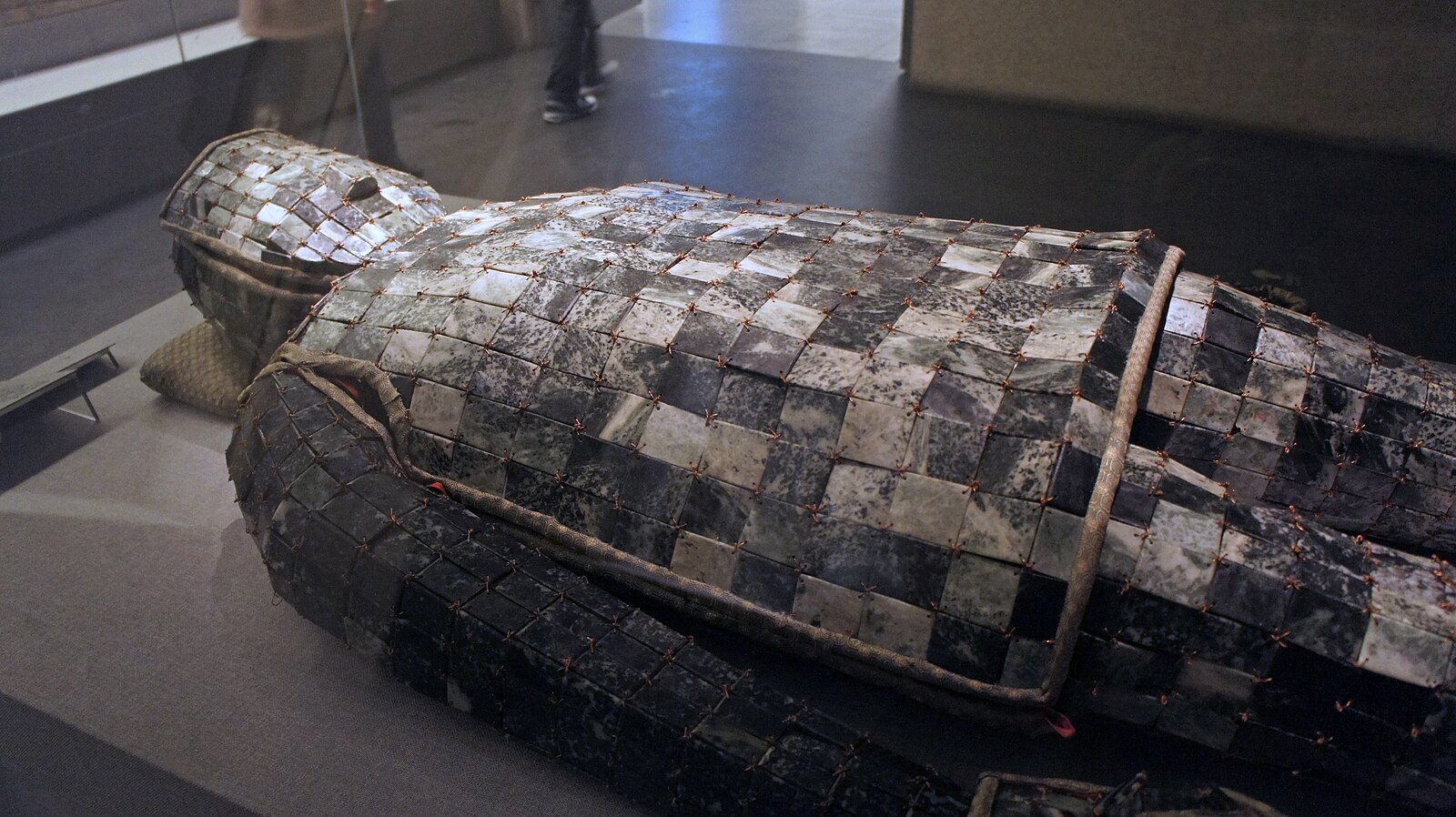
Jade Burial Suit of Prince Liu Sheng
An entire suit made of 2,498 jade tiles sewn together with 1,100 grams of gold wire — built to grant immortality to a Han prince.
In Popular Culture

2024 · Game Science
Black Myth: Wukong
The first AAA action RPG from a Chinese studio, Black Myth: Wukong became the fastest-selling single-player game of 2024 with over 25 million units sold in its first month.
3 artifacts →

2023 · Beijing Culture
Creation of the Gods I: Kingdom of Storms
An epic adaptation of the Ming Dynasty mythological novel Fengshen Yanyi, set during the fall of the Shang Dynasty — the same historical moment as the Simuwu Ding and Sanxingdui civilization.
5 artifacts →
Frequently Asked
What is the "Prehistoric Jade Cultures of China" theme about?
Long before bronze or writing, Neolithic communities across China carved jade into dragons, discs, and ritual objects — establishing the material's sacred status that would endure for 7,000 years.
Which artifacts are part of "Prehistoric Jade Cultures of China"?
This theme groups 2 artifacts, including Hongshan Culture C-Shaped Jade Dragon, Jade Burial Suit of Prince Liu Sheng. Each entry on this page links to the artifact's full record with provenance, dating, and museum source.
Where can I see the artifacts in this theme in person?
The pieces in this theme are currently held by National Museum of China. Some institutions rotate their displays, so we recommend checking the museum's website before visiting.
Is this theme based on academic sources?
Yes — every claim links to a primary or scholarly source, including Wikipedia — Chinese jade, Wikipedia — Hongshan culture. The full list of references is shown in the sidebar of this page.
Why is "Hongshan Culture C-Shaped Jade Dragon" considered iconic for this theme?
Often called China's first dragon, this 26-cm C-shaped jade figure is the most iconic artifact of the Hongshan Culture and a symbol of the prehistoric origins of dragon worship.