Hongshan Culture C-Shaped Jade Dragon
Often called China's first dragon, this 26-cm C-shaped jade figure is the most iconic artifact of the Hongshan Culture and a symbol of the prehistoric origins of dragon worship.

The Story
Discovered in 1971 in Ongniud Banner, Inner Mongolia, this jade carving predates Chinese civilization's written record by millennia. Its elegant C-curve, boar-like snout, flowing mane, and smooth polish demonstrate astonishing Neolithic lapidary skill. The figure's form — coiled, toothless, with an open mouth — became the template for every later Chinese dragon. For decades after discovery it was mistakenly called a 'pig dragon'; only in the 1980s did scholars recognize it as a dragon, pushing the origin of dragon symbolism back over 5,000 years. The Hongshan culture's jade ritual tradition shows that complex beliefs about heaven, authority, and the spirit world existed long before the Bronze Age dynasties.
Why It Matters
Proof that dragon worship — China's central mythological motif — is not a Bronze Age invention but a Neolithic one, with roots older than any written Chinese text.
Frequently Asked Questions
1. What is Hongshan Culture C-Shaped Jade Dragon?
Often called China's first dragon, this 26-cm C-shaped jade figure is the most iconic artifact of the Hongshan Culture and a symbol of the prehistoric origins of dragon worship.
2. When was Hongshan Culture C-Shaped Jade Dragon made?
Hongshan Culture C-Shaped Jade Dragon dates to c. 4700–2900 BC, during the Neolithic (Hongshan Culture).
3. Where can I see Hongshan Culture C-Shaped Jade Dragon?
Hongshan Culture C-Shaped Jade Dragon is held by National Museum of China in China. Check the linked collection record or museum website before visiting because display rotations can change.
4. Why is Hongshan Culture C-Shaped Jade Dragon important?
Proof that dragon worship — China's central mythological motif — is not a Bronze Age invention but a Neolithic one, with roots older than any written Chinese text.
5. What is Hongshan Culture C-Shaped Jade Dragon made of?
Hongshan Culture C-Shaped Jade Dragon is classified as jade and made of Nephrite jade (dark green).
Fun Facts
Predates written Chinese by at least 2,000 years
The drill hole at the curve shows it was worn suspended — likely a shaman's pendant
Hongshan jade-working technology required sand abrasives and bamboo drills — no metal tools existed
Featured on a Chinese postage stamp as a national treasure icon
Where to See It
Public collections holding this artifact or closely related pieces.
Part of These Themes
Related Artifacts
Gold
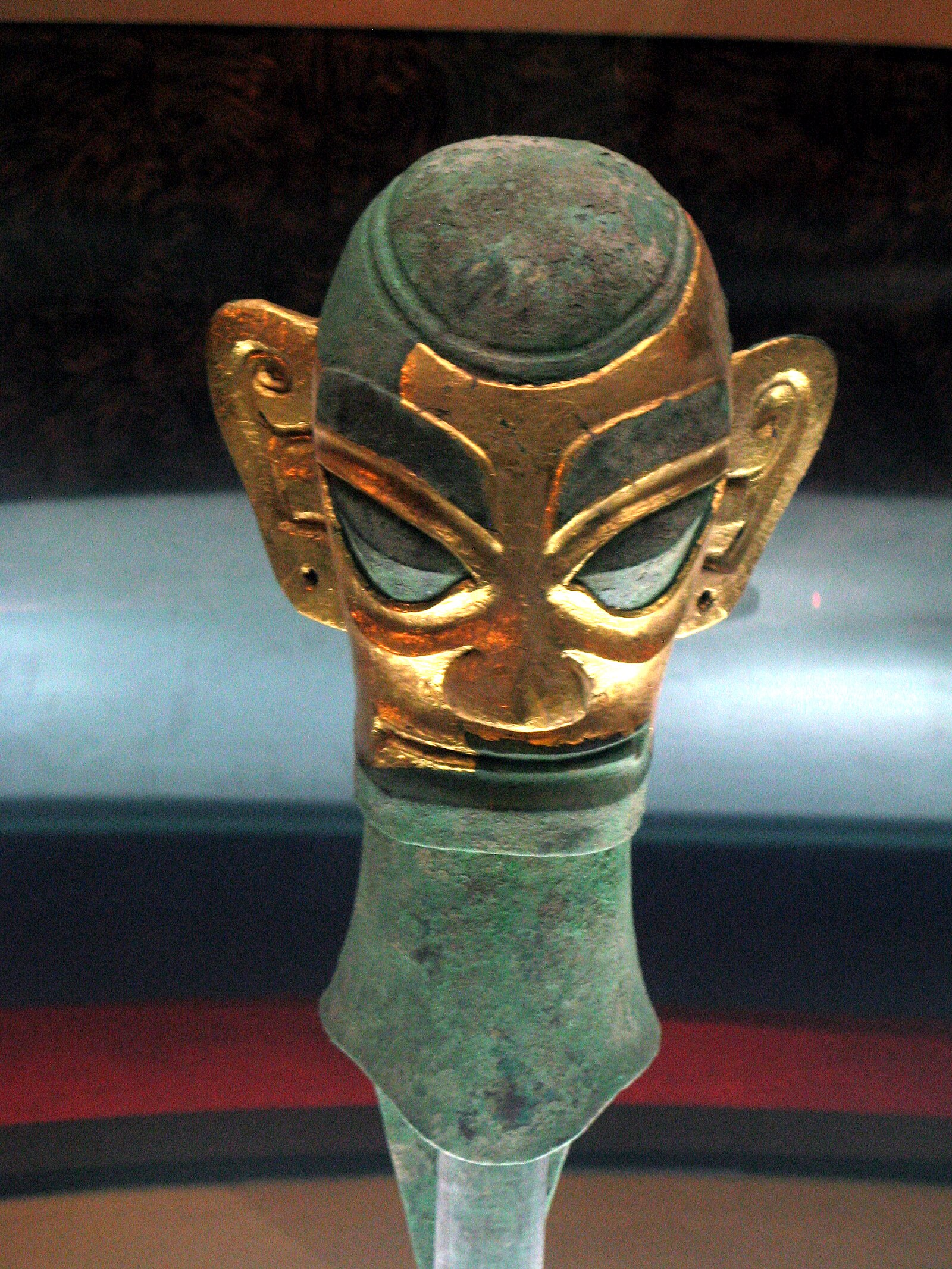
Gold Mask of Sanxingdui
A hauntingly beautiful gold mask weighing about 280 grams, with protruding eyes and an enigmatic smile that has captivated the modern world.
Jade
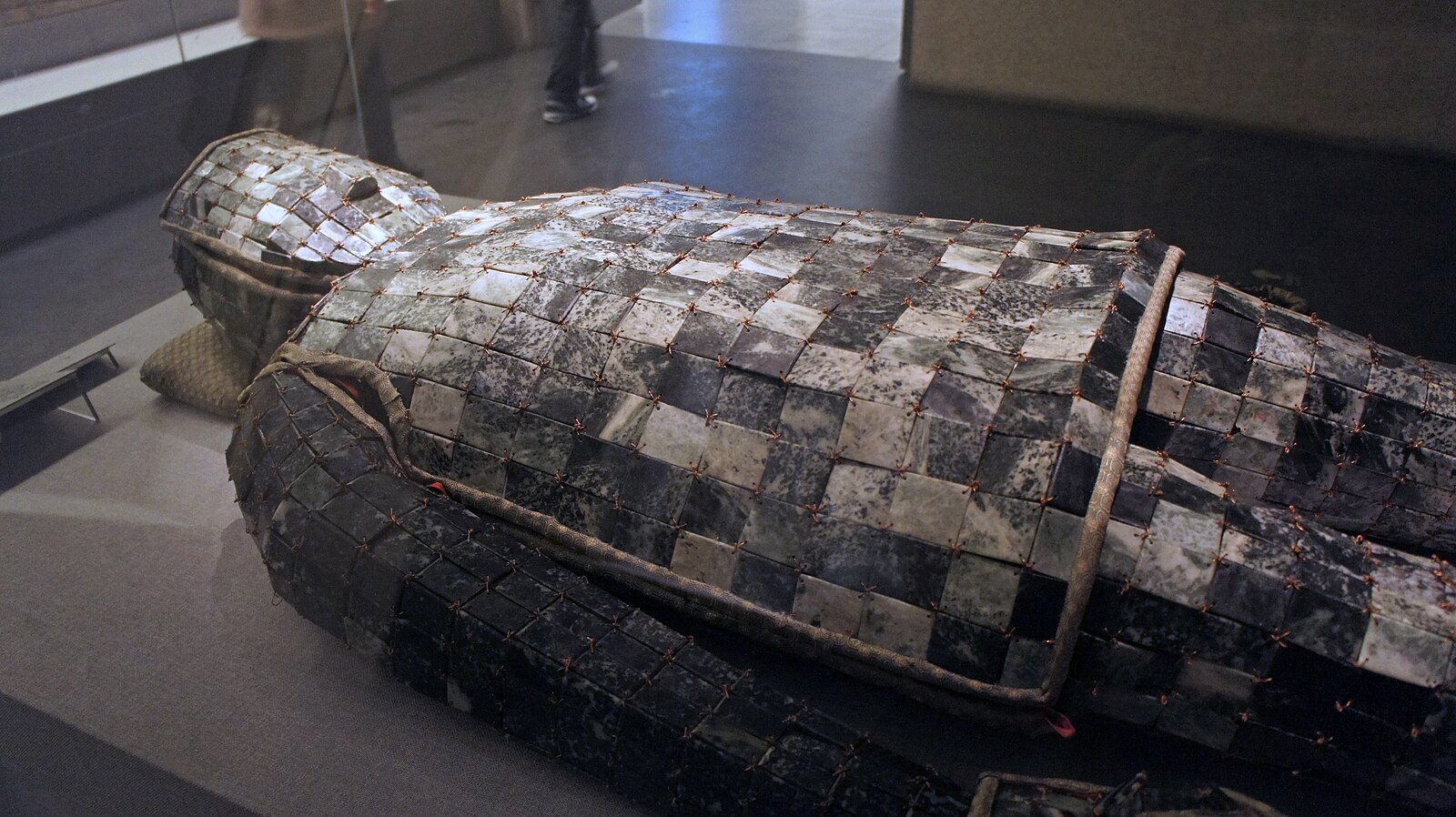
Jade Burial Suit of Prince Liu Sheng
An entire suit made of 2,498 jade tiles sewn together with 1,100 grams of gold wire — built to grant immortality to a Han prince.
Sources & References
- ·Wikipedia — Hongshan culture(CC-BY-SA 3.0)
Content informed by the sources above. Where Wikipedia text is used, it is licensed under CC-BY-SA 3.0.