
Cultural Context
The franchise is playful, but its visual language is built from real Chinese motifs: animal archetypes, sacred scrolls, mountain monasteries, bronze ritual weight, dragon symbolism, and the idea that objects can transmit lineage. That makes it a surprisingly effective bridge into museum material. The Dragon Warrior title is not just a joke about animals; it sits inside a long tradition where dragons, beasts, and hybrid forms encode authority. Bronze masks, sacred trees, ritual cauldrons, and animal-shaped luxury objects all explain why the film's animals feel mythic rather than merely cute.
Real Artifacts Behind the Work
4 direct connections to Chinese cultural heritage.
The Connection
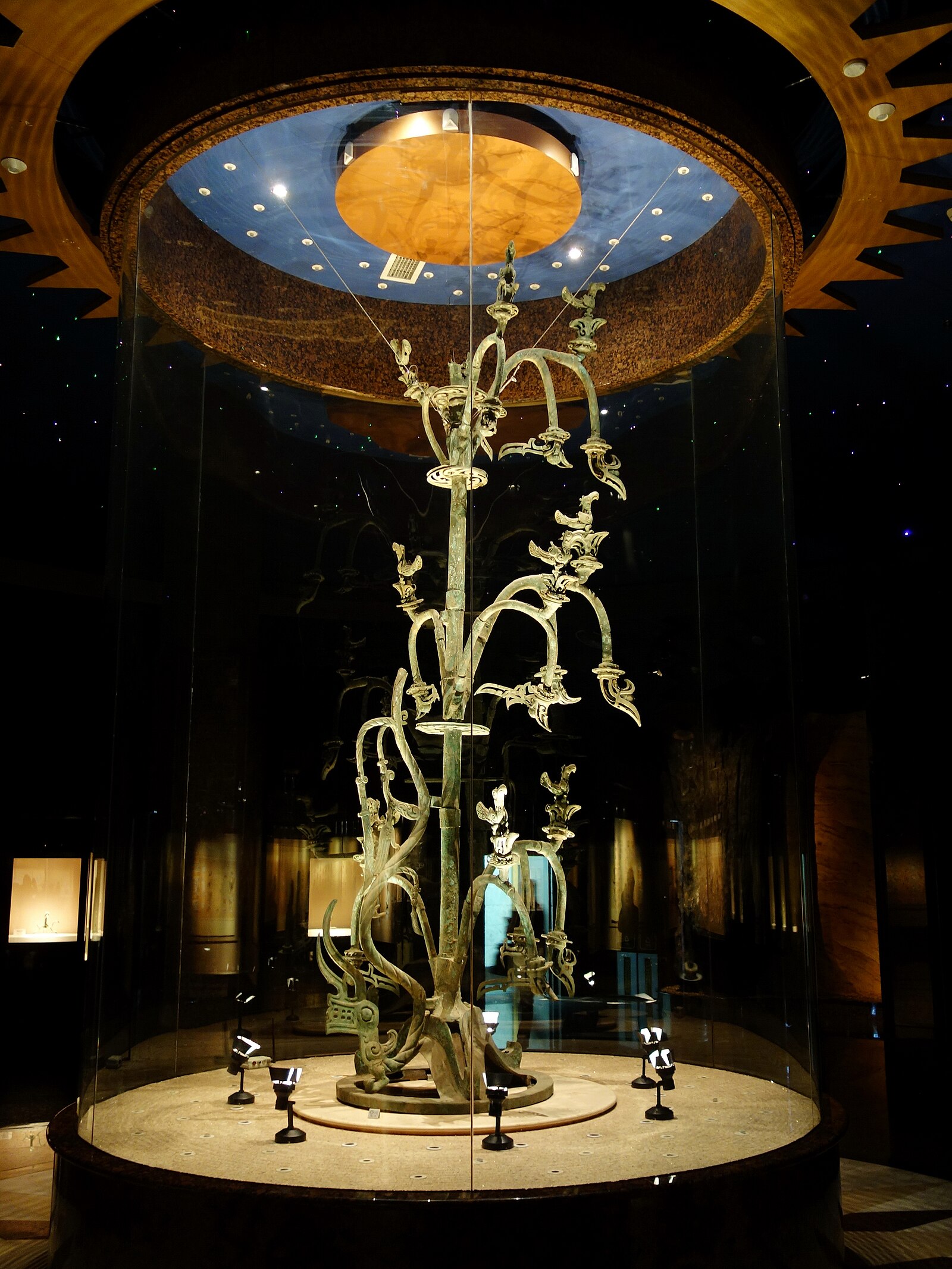
The franchise's sacred mountain and cosmic lineage imagery resonates with the Sanxingdui Bronze Tree, one of China's most powerful surviving images of a world axis.
Read the full story →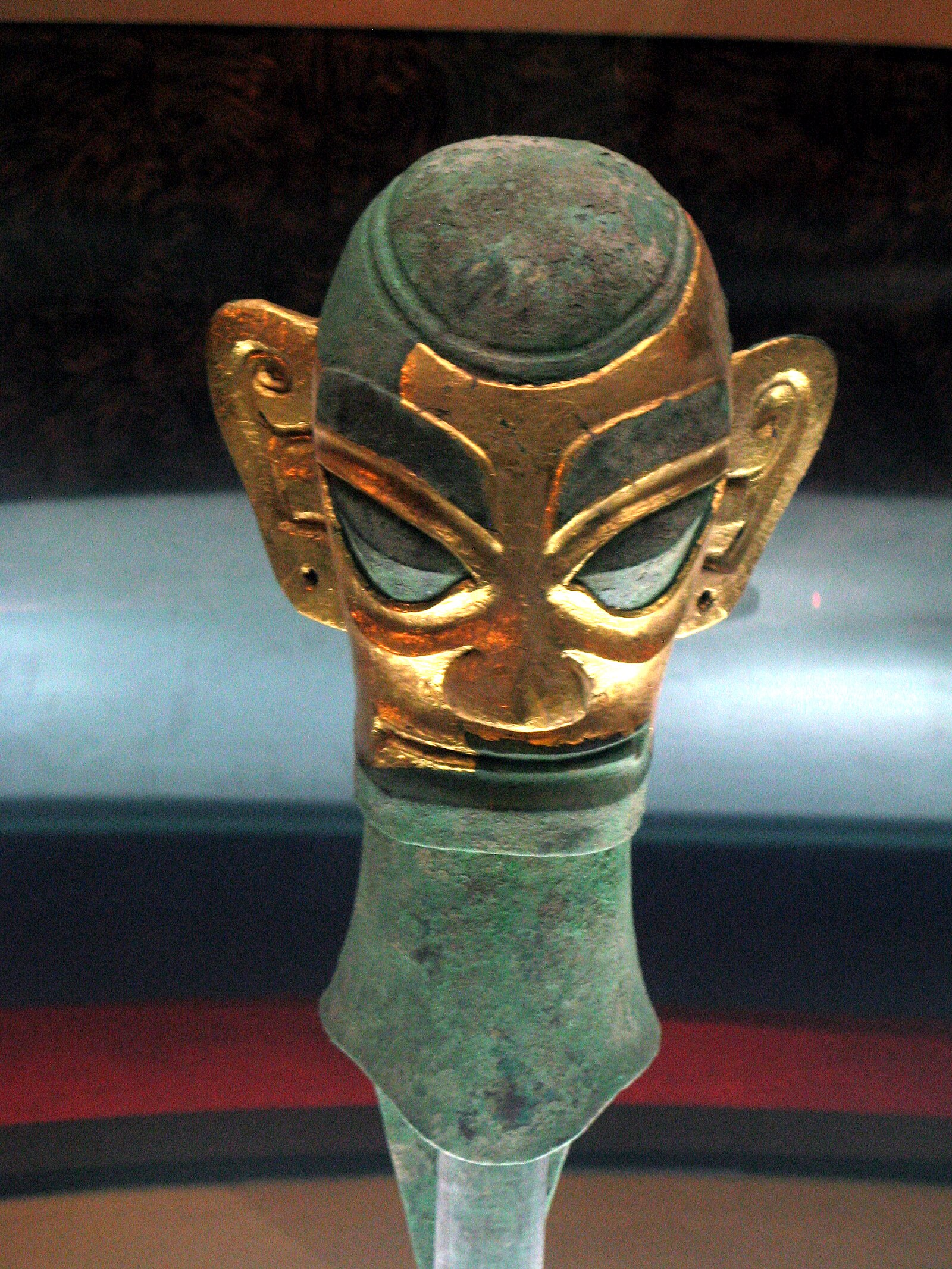
The Connection
The stylized faces and supernatural animal energy of the films fit the same deep tradition of mask, spirit, and ritual presence visible at Sanxingdui.
Read the full story →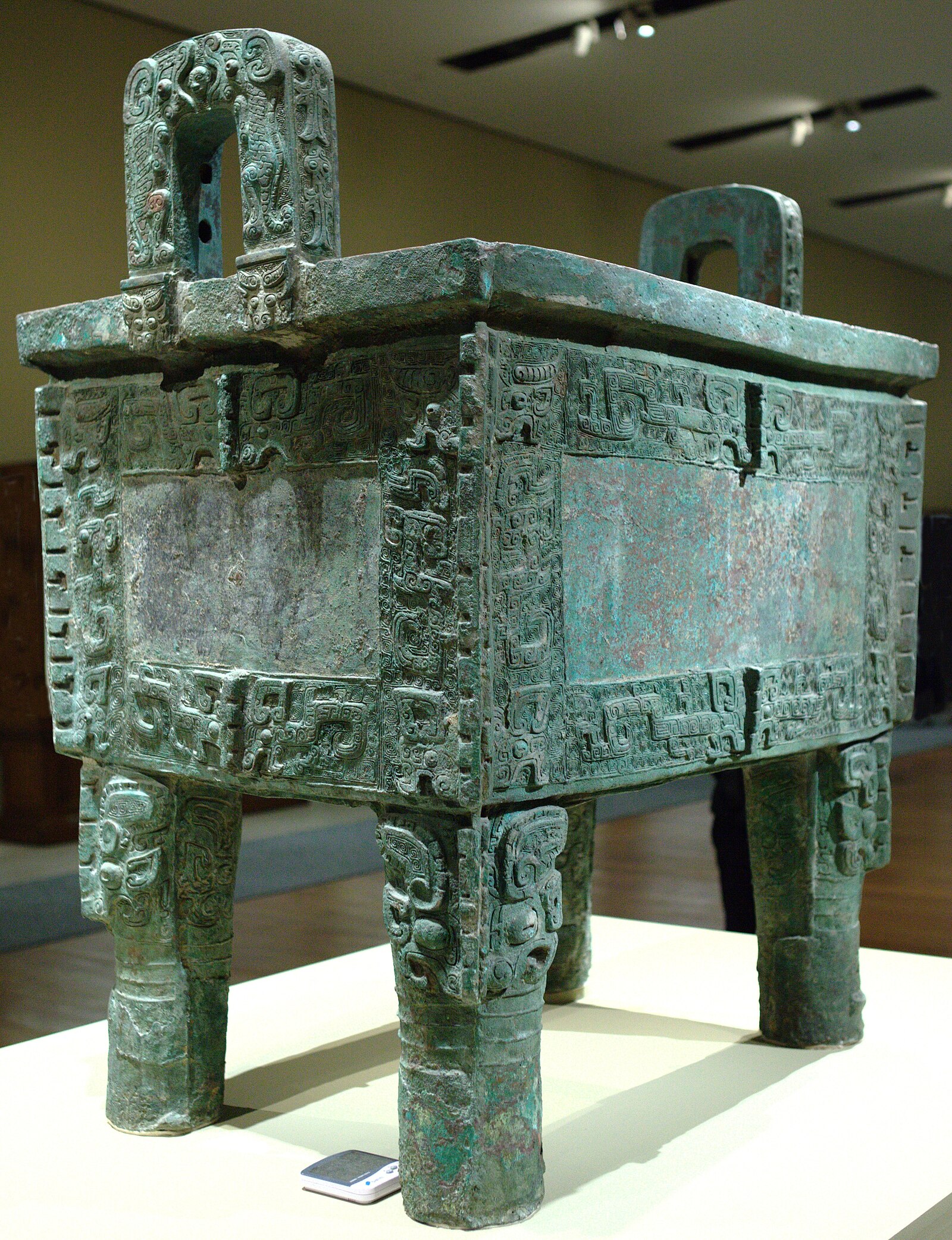
The Connection
The heavy bronze vessels and temple interiors in the franchise draw from the visual vocabulary of Shang-Zhou ritual bronzes like the Simuwu Ding.
Read the full story →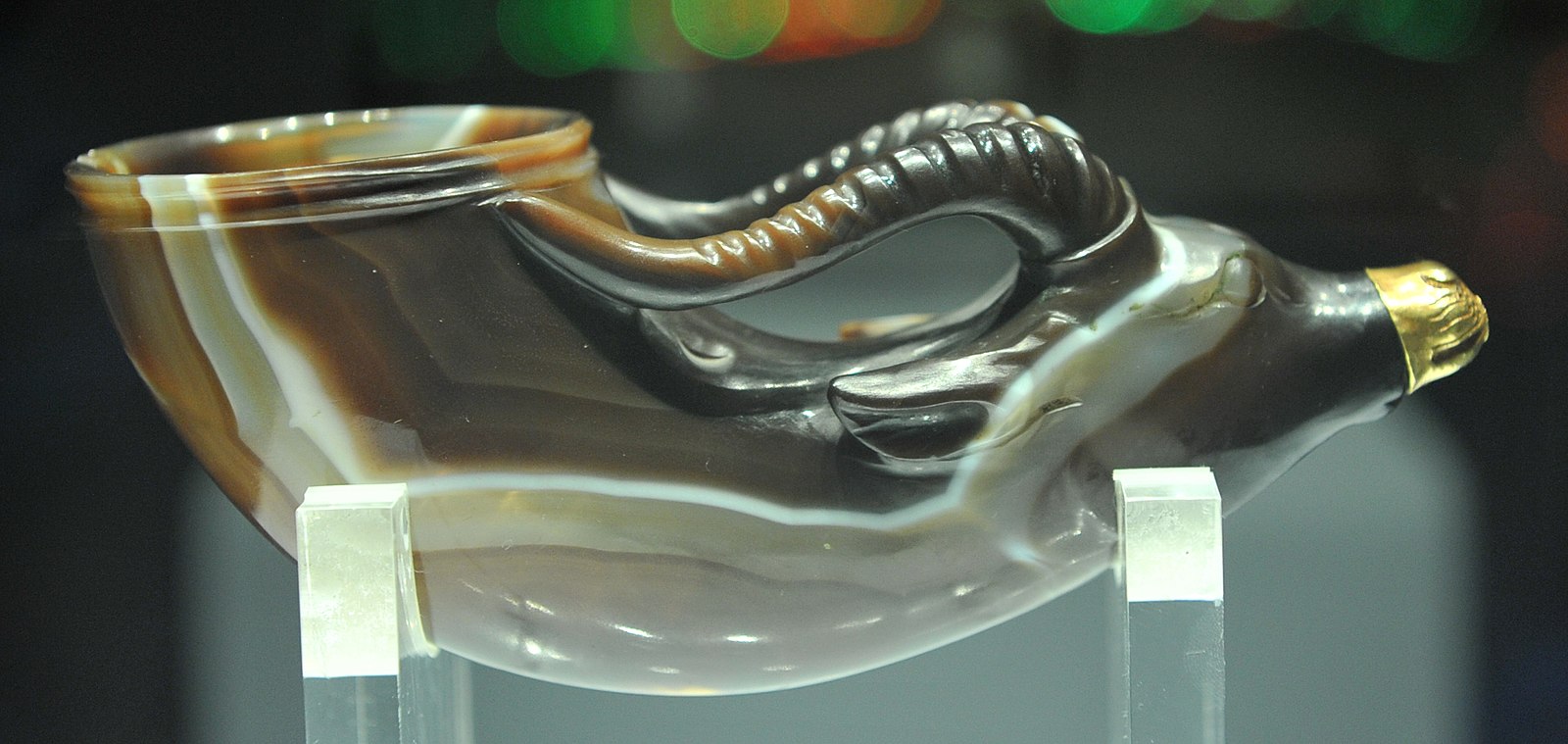
The Connection
Animal-shaped luxury objects such as the Tang beast-head agate cup show how Chinese art repeatedly transformed beasts into vessels of status and story.
Read the full story →Related Themes
Mythic Animals and Cosmic Order
Dragons, beasts, trees, masks, and the invisible structure of the universe
Chinese art repeatedly turns animals and hybrid beings into maps of the cosmos — from Sanxingdui birds and bronze masks to Shang taotie, jade beasts, and porcelain dragons.
6 artifacts →

Sanxingdui Mysteries
A 3,000-year-old civilization that rewrote Chinese history
The bronze masks, gold foil, and towering figures of Sanxingdui belong to a civilization the world did not know existed until 1986 — and many of their secrets remain unsolved.
4 artifacts →
Bronze Dings Through the Ages
The ritual cauldrons that embodied Chinese state power
The ding (鼎) — a three- or four-legged bronze cauldron — was not just a cooking vessel. For 2,000 years, it was the political and spiritual symbol of Chinese civilization itself.
3 artifacts →

Tang Dynasty Silk Road Treasures
When Chang'an was the most cosmopolitan city on Earth
For three centuries, the Tang capital of Chang'an absorbed Persian silver, Sogdian music, Indian Buddhism, and Byzantine gold — and produced artifacts that fused them all.
1 artifact →
Frequently asked questions
What real Chinese artifacts inspired Kung Fu Panda?+
Kung Fu Panda draws on multiple real Chinese artifacts and traditions, most notably: Sacred Bronze Tree, Gold Mask of Sanxingdui, Simuwu Ding (Houmuwu Ding), Beast-Head Agate Cup. Each is documented in a Chinese museum and many are visible to the public today. See the connections section above for specific scene-by-scene references.
Where can I see the artifacts that inspired Kung Fu Panda?+
The artifacts referenced by Kung Fu Panda are held by: Sanxingdui Museum, National Museum of China, Shaanxi History Museum. Most have public galleries with regular visitor hours; a few have travelled to international exhibitions.
Who created Kung Fu Panda?+
Kung Fu Panda was developed by DreamWorks Animation and released in 2008. It is a film produced in United States / China.
Is Kung Fu Panda historically accurate?+
Kung Fu Panda is a creative work, not a documentary. It draws inspiration from real Chinese material culture but adapts and dramatises freely. Our role at China Heritage is to identify which historical references the work is drawing on, with citations to museum primary sources, so curious viewers can separate the historical core from the creative invention.
Where can I learn more about Chinese material culture beyond Kung Fu Panda?+
Browse our Topics index for cross-museum themes (bronze ritual, jade and immortality, blue-and-white porcelain) and our Treasures Abroad index for the 28 great Chinese masterpieces in Western museum collections. Each theme links back to specific artifacts you can read about in detail.