Why this collection pulls search traffic
This page answers a high-intent query with a single, structured path into the museum's Chinese collection. It is ideal for travelers, students, and readers trying to understand how Chinese heritage is represented in London.
Search intent this page covers
Objects in this guide

Original: Eastern Jin · Paintings
Admonitions of the Court Instructress
女史箴图
The earliest surviving Chinese narrative figure painting on silk — illustrations to a 3rd-century Confucian text instructing palace women on proper conduct. The Eastern Jin master Gu Kaizhi is the painter of record; the surviving handscroll is a faithful Tang-dynasty copy.
Yuan dynasty, Zhizheng era · Ceramics
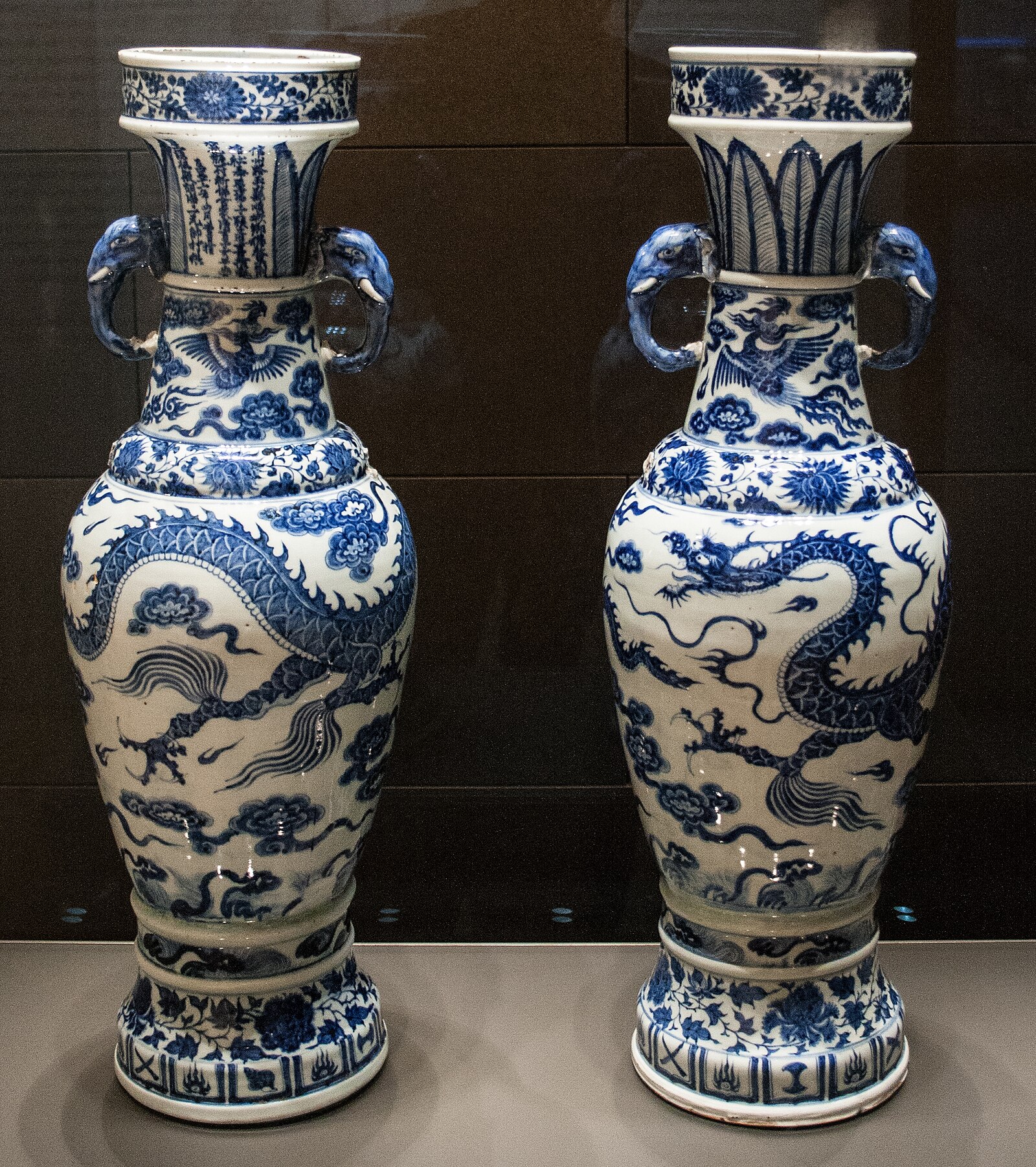
The David Vases
至正型青花云龙象耳瓶
A pair of cobalt-blue temple vases dated by inscription to 1351 — the rosetta stone of blue-and-white porcelain. Until Sir Percival David identified these in 1929, scholars wrongly assumed blue-and-white only began in the Ming dynasty.
Tang dynasty · Books / Prints
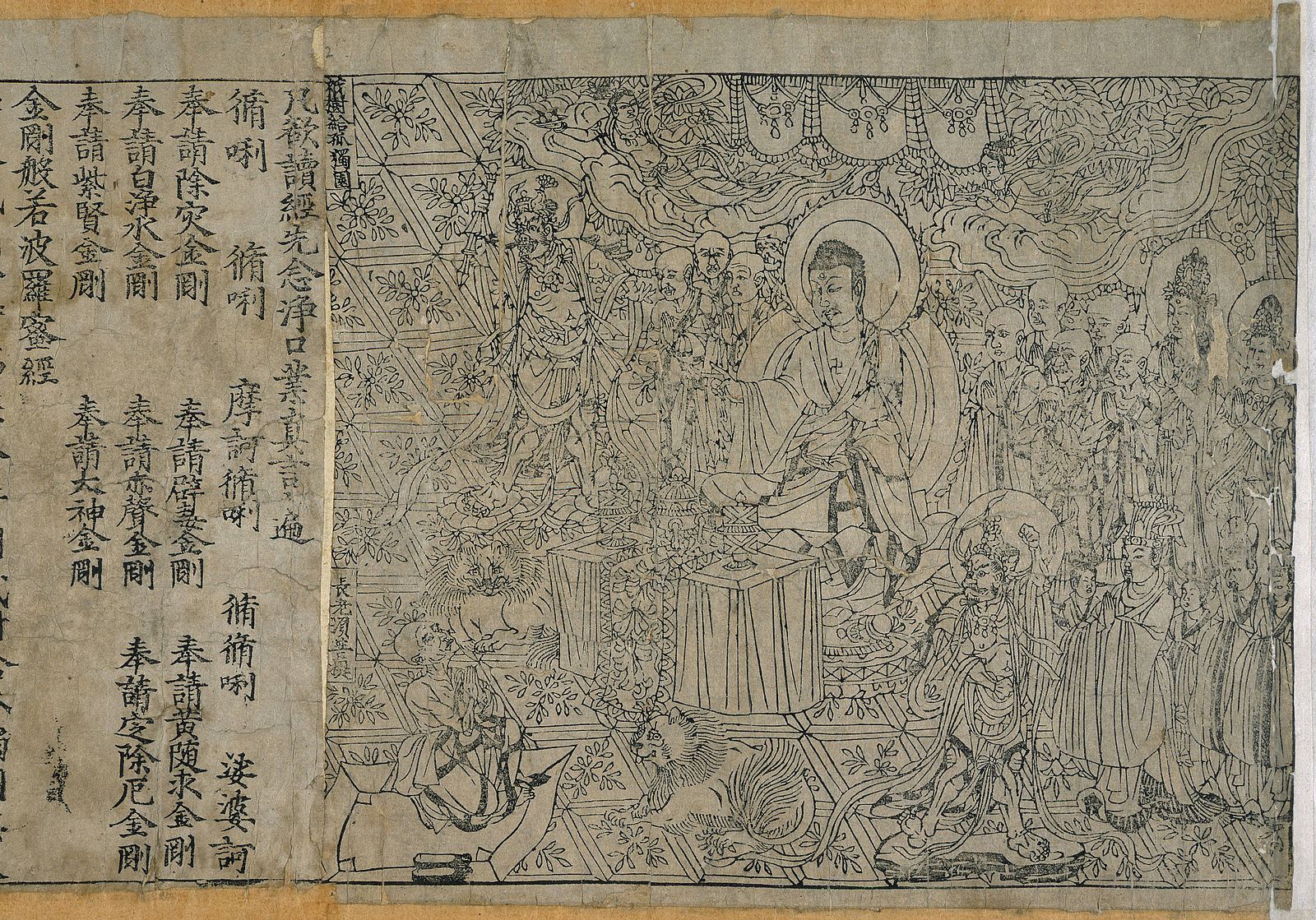
Diamond Sutra (868 CE)
金刚经
The world's earliest complete dated printed book. The colophon names the donor, Wang Jie, and dates the printing to the 13th day of the 4th month, 9th year of the Xiantong reign — 11 May 868 — almost 600 years before Gutenberg.
Liao dynasty · Sculpture
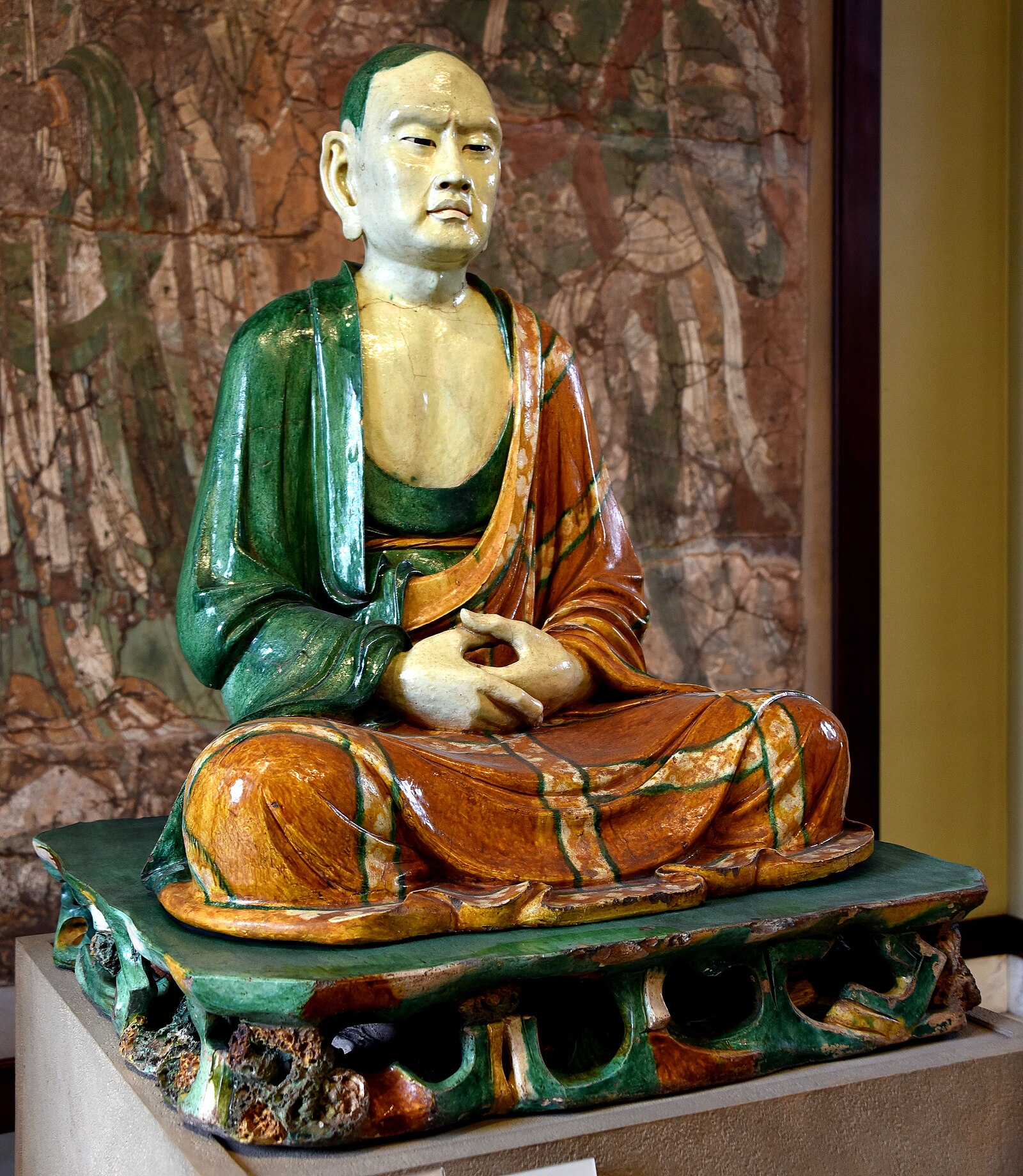
Yixian Luohan
易县三彩罗汉
A life-size glazed-ceramic luohan from a set of about sixteen discovered in 1912 in caves near Yixian, Hebei. He sits cross-legged in meditation, his hands holding a sutra, his face modelled with the unsparing realism of an actual portrait — likely of a senior Liao monk.
Sui dynasty · Sculpture
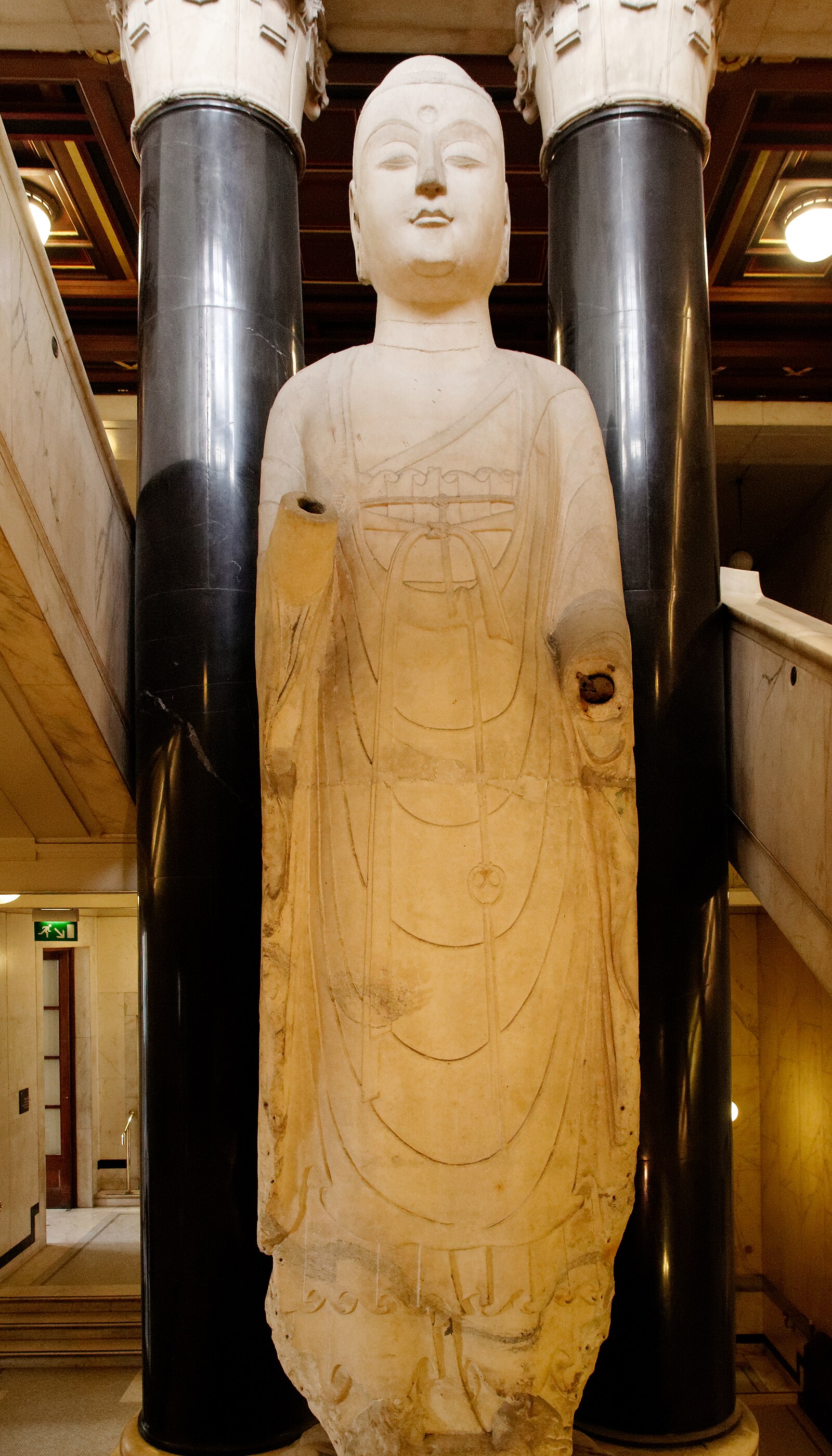
Marble Amitabha Buddha (585 CE)
隋开皇五年汉白玉阿弥陀佛立像
A colossal marble Amitabha standing 5.78 m tall — among the largest free-standing early Buddhist sculptures anywhere. The dedicatory inscription on the pedestal precisely dates the consecration to 585 CE, the 5th year of the first Sui emperor's Kaihuang reign.
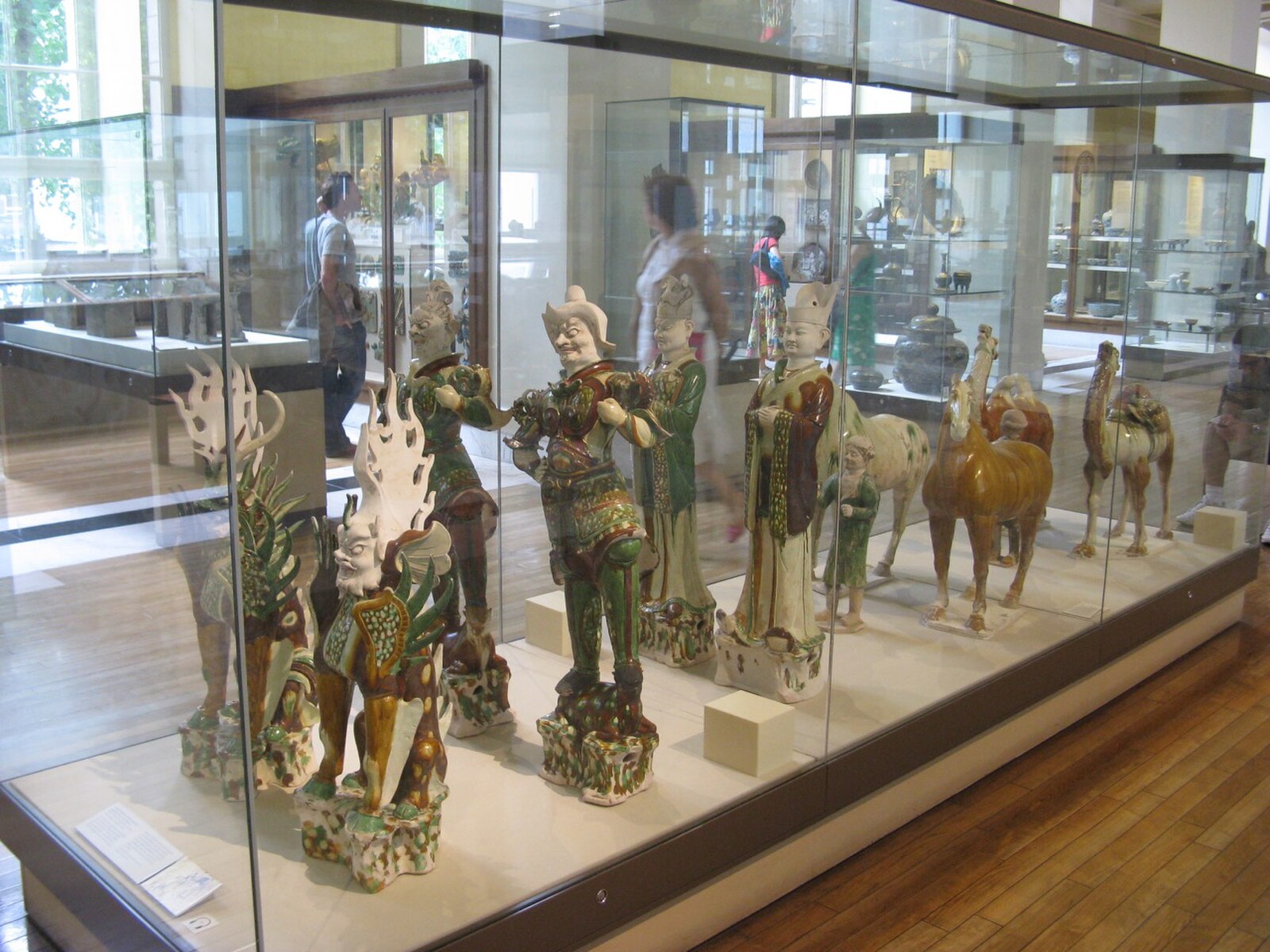
Tang dynasty · Tomb Pottery
Tomb Figures of General Liu Tingxun
唐刘廷洵墓三彩俑组
A complete tomb assemblage of 13 sancai-glazed figures buried with the Tang general Liu Tingxun in 728 CE: two horses, two camels, two civil officials, two military officials, two earth spirits, two guardian kings, and a single tomb attendant. Together they form the choreography of an idealised afterlife court.
Frequently Asked Questions
What is the British Museum Chinese collection best known for?
This page answers a high-intent query with a single, structured path into the museum's Chinese collection. It is ideal for travelers, students, and readers trying to understand how Chinese heritage is represented in London. The strongest themes here are Diamond Sutra and the history of printing, Liao sancai sculpture, Yuan blue-and-white porcelain.
Which objects should I start with?
Start with Admonitions of the Court Instructress, The David Vases, Diamond Sutra (868 CE), Yixian Luohan. These pieces give you the fastest read on the collection's core strengths.
Can I use this page to plan a visit?
Yes. It is designed as a quick orientation page before you check the museum's current hours, gallery numbers, and ticket rules.
Why does this page focus on search intent?
Museum-name searches are some of the highest-intent queries in heritage SEO. This page gives those searches a direct answer and then sends readers into object-level detail.
Are the object records connected to source catalogs?
Yes. Every object card links to the underlying record or collection page, and the surrounding context is written to help you read those records faster.