Oracle Bones of Yinxu
The earliest substantial corpus of Chinese writing: divination inscriptions carved into bones and turtle shells at the Shang capital of Yinxu, recording royal questions about war, harvest, childbirth, weather, and ancestors.

The Story
Oracle bones were first recognized in 1899 when scholar Wang Yirong noticed strange carved marks on 'dragon bones' sold in Beijing pharmacies. The trail led to Anyang, Henan — the last capital of the Shang Dynasty. There, archaeologists uncovered more than 150,000 inscribed bones and shells used in royal divination. Shang kings asked ancestors and high gods about everything from military campaigns and hunting trips to toothaches and eclipses. A diviner drilled hollows into the bone, applied heat until cracks formed, then interpreted the cracks as answers. The inscriptions preserve names of kings, queens, enemies, places, rituals, and calendars, making them the bedrock source for early Chinese history. They also prove that modern Chinese characters descend from an unbroken writing tradition more than 3,000 years old.
Why It Matters
The birth certificate of Chinese writing — essential for understanding Shang Dynasty culture, Creation of the Gods, and the archaeological reality behind mythic Bronze Age China.
Frequently Asked Questions
1. What is Oracle Bones of Yinxu?
The earliest substantial corpus of Chinese writing: divination inscriptions carved into bones and turtle shells at the Shang capital of Yinxu, recording royal questions about war, harvest, childbirth, weather, and ancestors.
2. When was Oracle Bones of Yinxu made?
Oracle Bones of Yinxu dates to c. 1250–1046 BC, during the Late Shang Dynasty.
3. Where can I see Oracle Bones of Yinxu?
Oracle Bones of Yinxu is held by Yinxu Museum in China. Check the linked collection record or museum website before visiting because display rotations can change.
4. Why is Oracle Bones of Yinxu important?
The birth certificate of Chinese writing — essential for understanding Shang Dynasty culture, Creation of the Gods, and the archaeological reality behind mythic Bronze Age China.
5. What is Oracle Bones of Yinxu made of?
Oracle Bones of Yinxu is classified as bone / writing and made of Inscribed ox scapulae and turtle plastrons.
Fun Facts
They were sold as medicinal 'dragon bones' before scholars recognized the writing
Many inscriptions name Lady Fuhao, the Shang queen and military commander
The script is directly ancestral to modern Chinese characters
Oracle bones helped prove that the Shang Dynasty was historical, not legendary
Where to See It
Public collections holding this artifact or closely related pieces.
In Popular Culture
Modern games, films, and TV shows that draw on this artifact.
The Connection
The film's oracle-bone imagery and divination scenes draw from the real Yinxu inscriptions that record Shang royal questions about war, harvest, weather, and ancestors.
Part of These Themes
Bronze Dings Through the Ages
The ritual cauldrons that embodied Chinese state power
The ding (鼎) — a three- or four-legged bronze cauldron — was not just a cooking vessel. For 2,000 years, it was the political and spiritual symbol of Chinese civilization itself.
3 artifacts →
Oracle Bones & Shang Writing
The Oldest Chinese Sentences We Can Still Read
Oracle bones from Yinxu preserve the earliest large body of Chinese writing — royal questions burned into turtle shells and ox bones more than 3,000 years ago.
3 artifacts →

I Ching, Oracle Bones & Chinese Divination
From turtle shells to hexagrams: the artifact history behind the Book of Changes
The modern fascination with the I Ching and Chinese divination has a deep archaeological record: Shang oracle bones, Han silk manuscripts, and later instruments that turned change, time, and direction into readable signs.
4 artifacts →
Related Artifacts
Bronze
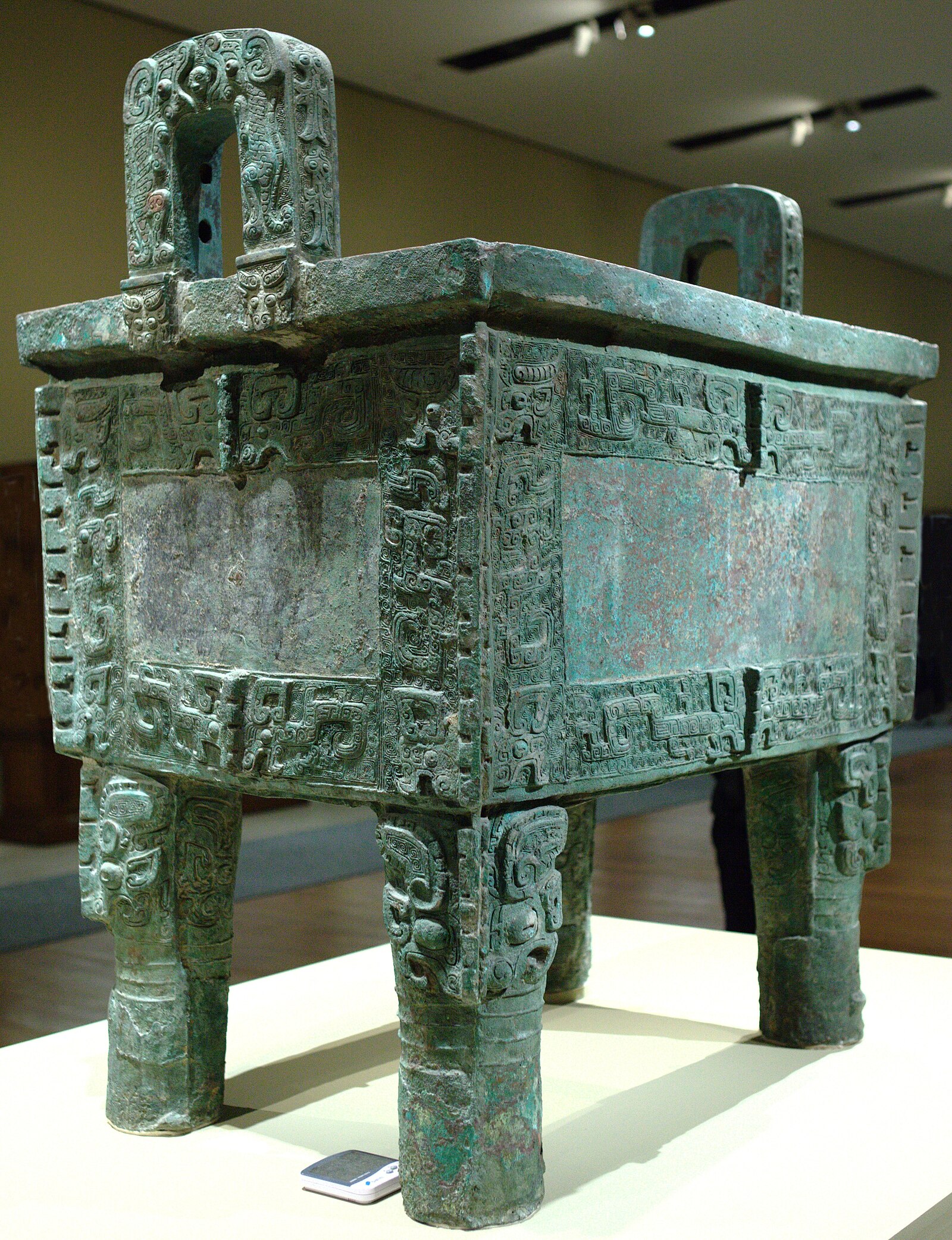
Simuwu Ding (Houmuwu Ding)
The heaviest piece of bronze work ever found in the ancient world — a monumental ritual vessel weighing 832.84 kg that required the coordinated effort of hundreds of craftsmen.
Bronze
Owl-Shaped Zun of Lady Fuhao
A pair of owl-shaped bronze ritual wine vessels from the tomb of Lady Fuhao, the only archaeologically verified female military commander in Chinese history.
Silk / Textile
Mawangdui Silk Manuscript of the I Ching
One of the earliest surviving manuscript witnesses to the I Ching, copied on silk and buried in the Mawangdui Han tombs before later received editions became canonical.
Sources & References
- ·Wikipedia — Oracle bone(CC-BY-SA 3.0)
- ·Wikipedia — Yinxu(CC-BY-SA 3.0)
Content informed by the sources above. Where Wikipedia text is used, it is licensed under CC-BY-SA 3.0.