Famen Temple Gilt Silver Tea Set
The world's oldest and most complete surviving tea set — a gilt silver service including grinder, sieve, container, salt cellar, and bowls — sealed in the Famen Temple crypt in 874 AD as an offering to the Buddha's finger bone relic.
The Story
In 1987, after a rainstorm collapsed part of the Famen Temple pagoda near Xi'an, archaeologists discovered a sealed underground crypt containing treasures donated by Tang emperors to the temple's most sacred relic: a finger bone of the Buddha. Among over 2,000 objects were four sets of Buddhist finger bone relics, hundreds of silk textiles, celadon secret-color (mise) porcelain wares, gold and silver vessels, and this extraordinary tea service — a complete set for grinding, sieving, measuring, and drinking tea according to the Lu Yu method described in the Classic of Tea (Cha Jing, 760 AD). The set proves that by the late Tang, tea culture had reached imperial-level sophistication, with dedicated luxury equipment rivaling modern fine tableware.
Why It Matters
The single most important archaeological discovery for the history of tea — proving Tang Dynasty imperial tea culture's extraordinary sophistication and directly connecting to today's global tea trend.
Frequently Asked Questions
1. What is Famen Temple Gilt Silver Tea Set?
The world's oldest and most complete surviving tea set — a gilt silver service including grinder, sieve, container, salt cellar, and bowls — sealed in the Famen Temple crypt in 874 AD as an offering to the Buddha's finger bone relic.
2. When was Famen Temple Gilt Silver Tea Set made?
Famen Temple Gilt Silver Tea Set dates to c. 869 AD (Xiantong era), during the Tang Dynasty.
3. Where can I see Famen Temple Gilt Silver Tea Set?
Famen Temple Gilt Silver Tea Set is held by Famen Temple Museum in China. Check the linked collection record or museum website before visiting because display rotations can change.
4. Why is Famen Temple Gilt Silver Tea Set important?
The single most important archaeological discovery for the history of tea — proving Tang Dynasty imperial tea culture's extraordinary sophistication and directly connecting to today's global tea trend.
5. What is Famen Temple Gilt Silver Tea Set made of?
Famen Temple Gilt Silver Tea Set is classified as gold and made of Gilt silver with chased and repoussé decoration.
Fun Facts
Sealed underground in 874 AD as a Buddhist offering — undisturbed for 1,113 years
Contains the world's oldest known tea grinder (chamo) and sieve
The crypt also held 'secret-color' (mise) celadon — a legendary porcelain type thought to be mythical until this discovery
The finger bone of the Buddha is now China's most sacred Buddhist relic
Where to See It
Public collections holding this artifact or closely related pieces.
Related Artifacts
Jade & Gemstone
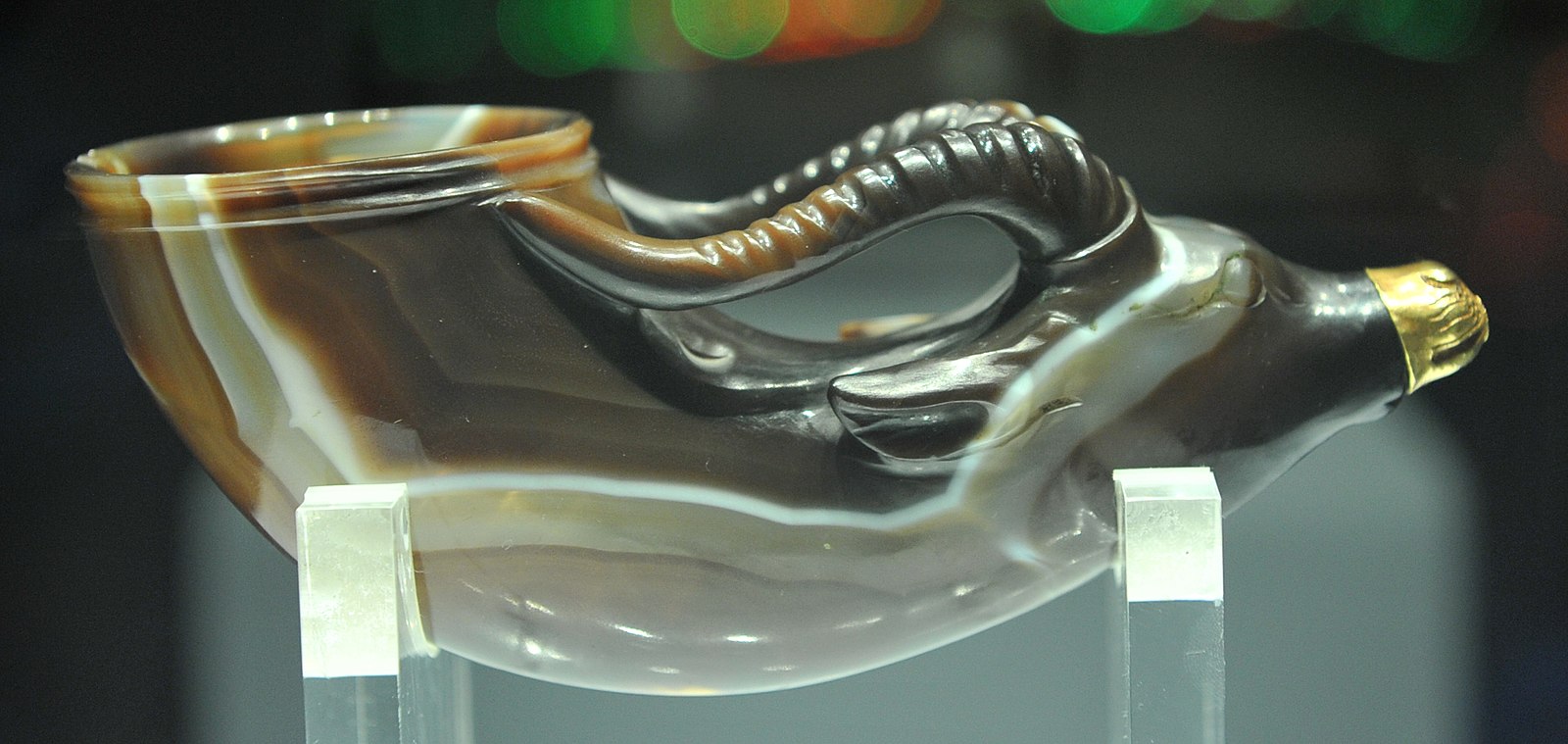
Beast-Head Agate Cup
An exquisite agate rhyton carved into a bull's head — a masterpiece reflecting the cultural fusion of the Silk Road's golden age.

Ceramics
Tang Sancai Three-Color Glazed Camel with Musicians
A tomb figurine depicting a Bactrian camel carrying a musical troupe — a masterpiece of Tang funerary art that captures the cosmopolitan energy of Silk Road trade in a single object.
Sources & References
- ·Wikipedia — Famen Temple(CC-BY-SA 3.0)
Content informed by the sources above. Where Wikipedia text is used, it is licensed under CC-BY-SA 3.0.